Rajnath Singh Backs ₹53,428 Cr NSAP Renewal for 3.2 Cr Beneficiaries
Synopsis
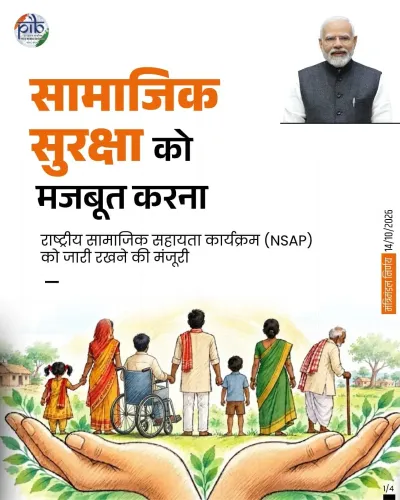
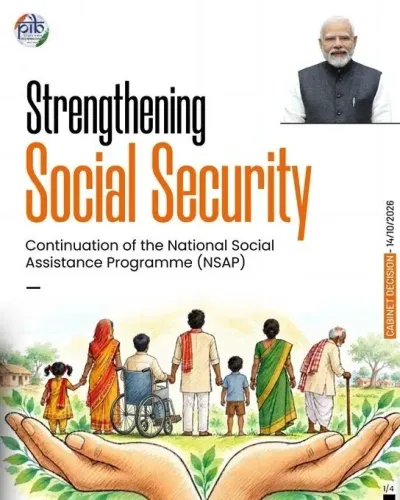
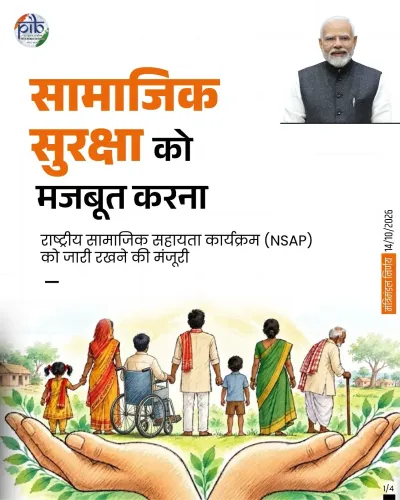
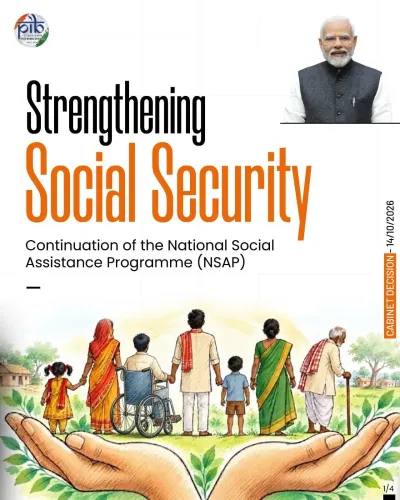
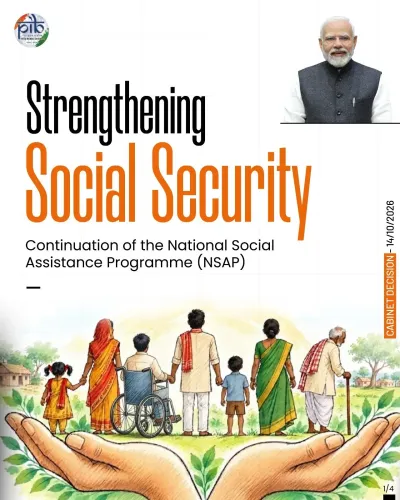
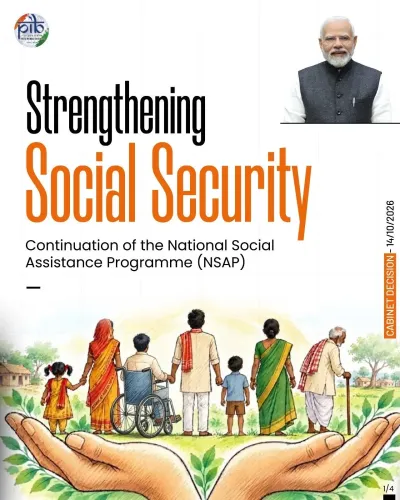
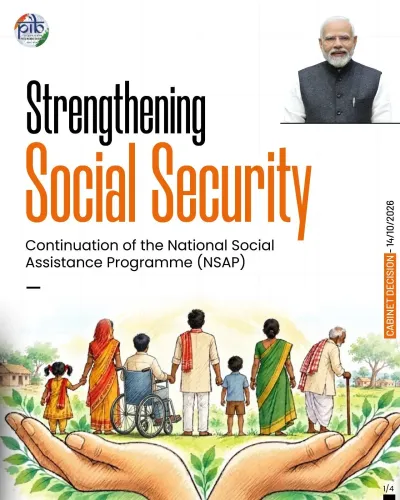
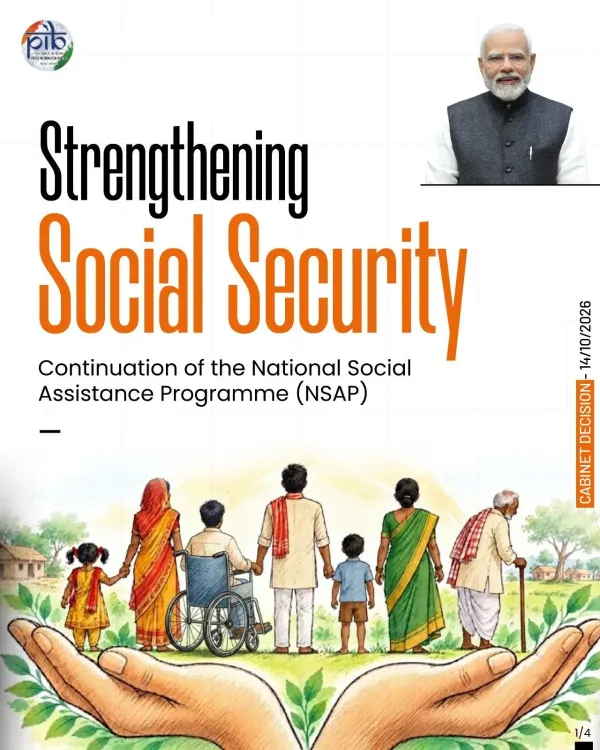
The Union Cabinet has approved ₹53,428 crore for the National Social Assistance Programme from 2026–27 to 2030–31, securing pension and assistance transfers for 3.20 crore elderly, widows and disabled persons across all 36 States and UTs. Defence Minister Rajnath Singh hailed the move as a reaffirmation of Antyodaya values.
Key Takeaways
₹53,428 crore approved by the Union Cabinet for NSAP continuation over five years ( 2026–27 to 2030–31 ).
3.20 crore beneficiaries across all 36 States and Union Territories will be covered under the renewed programme.
NSAP, launched in August 1995 , provides non-contributory pensions to senior citizens, widows, and persons with disabilities outside formal employment.
The decision was framed within the government's Antyodaya philosophy of prioritising the poorest and most vulnerable.
The five-year funding horizon gives state governments a stable window to plan complementary welfare spending at the district level.
A welfare commitment spanning five years and covering every corner of the country just got a firm financial foundation. Union Defence Minister Rajnath Singh on Wednesday, October 14, 2026, welcomed the Union Cabinet's approval of ₹53,428 crore for the continuation of the National Social Assistance Programme (NSAP) from 2026–27 to 2030–31, a decision he described as 'a landmark decision reinforcing our commitment to inclusive growth, social security and dignified living.'
What NSAP is — and who it reaches
Launched in August 1995, the National Social Assistance Programme is one of India's oldest non-contributory social protection schemes. It delivers direct cash pensions and assistance to senior citizens, widows, and persons with disabilities — precisely the groups that fall outside the net of formal employment and contributory provident funds. The scheme operates across all 36 States and Union Territories, functioning as a last-mile lifeline for the unorganised sector.
The freshly approved five-year outlay is designed to benefit 3.20 crore people — a population larger than that of many countries — keeping the transfers flowing without a gap in delivery after the previous funding cycle.
Cabinet's Antyodaya framing and Modi's welfare mandate
The Cabinet, chaired by Prime Minister Narendra Modi, approved the allocation as part of a broader Antyodaya philosophy — the principle, rooted in Indian political thought, of reaching the last person in the queue first. Singh explicitly invoked the term, thanking Modi for his 'unwavering commitment to Antyodaya and the welfare of all sections of society.'
Successive administrations have extended NSAP in multi-year tranches, treating it as a non-negotiable floor in India's social security architecture. The current government has consistently framed such renewals within its 'Sabka Saath, Sabka Vikas' narrative, using them to signal continuity of care for the poorest households regardless of geography or political boundaries.
Five-year horizon and what states will watch
A commitment running to 2030–31 gives state governments a stable planning window to align their own welfare budgets with central transfers. The real test, however, lies in utilisation rates at the district level — whether the funds translate into timely pension credits into beneficiaries' accounts — and whether beneficiary lists or pension amounts are revised upward during mid-term reviews before the cycle closes.
With a single Cabinet decision, over three crore of India's most economically vulnerable citizens have a confirmed safety net for the rest of this decade. The political and humanitarian stakes of delivering on that promise, every month, are equally enormous.
Point of View
₹53,428 crore NSAP tranche fits a long-established pattern of treating direct-benefit welfare transfers as political consensus territory — successive governments have renewed the scheme without structural overhaul, signalling that its core beneficiary base (elderly, widows, disabled) carries bipartisan protection. For the Modi administration, framing it through the Antyodaya lens is deliberate: it connects a technocratic budget line to a moral vocabulary with deep resonance in RSS-BJP thought. The real policy test is whether this cycle finally brings a meaningful revision to pension amounts, which have remained modest since the programme's inception in 1995. If mid-term reviews do not adjust for inflation, the headline outlay risks outpacing the actual purchasing power delivered to beneficiaries.
NationPress
14 Oct 2026
Frequently Asked Questions
What is the National Social Assistance Programme (NSAP)?
NSAP is a centrally sponsored, non-contributory social protection scheme launched in August 1995. It provides monthly pensions and financial assistance to senior citizens, widows, and persons with disabilities who live below the poverty line and are outside formal employment.
How much has the Cabinet approved for NSAP and for how long?
The Union Cabinet has approved ₹53,428 crore for the continuation of NSAP covering the period 2026–27 to 2030–31 — a five-year funding cycle.
How many people will benefit from this NSAP approval?
A total of 3.20 crore (32 million) people across all 36 States and Union Territories of India are set to benefit from this renewed allocation.
What does Antyodaya mean in the context of this scheme?
Antyodaya literally means 'uplift of the last person.' In welfare policy, it refers to prioritising the poorest and most marginalised citizens. The current government has used the term to frame its targeted social protection programmes, including NSAP, as part of a moral and ideological commitment to the most vulnerable.
Who chairs the Union Cabinet that approved this NSAP funding?
The Union Cabinet is chaired by Prime Minister Narendra Modi. It is India's highest executive decision-making body and is responsible for approving major multi-year funding commitments like the NSAP renewal.