CM Bhupendra Patel Highlights Cattle-Shed Scheme Benefiting Gujarat Farmer
Synopsis
Gujarat CM Bhupendra Patel highlighted Mehsana farmer Vasantbhai Desai's experience under the 'VB-G RAM G' scheme, which provided ₹73,000 to build a cattle shed, crediting PM Modi's 25-year public service legacy for extending welfare to livestock.
Key Takeaways
Vasantbhai Desai of Mehsana district received ₹73,000 under the 'VB-G RAM G' scheme to construct a covered cattle shed.
Before the shed was built, his animals suffered from heat, cold, and monsoon rains with no shelter.
Post-construction outcomes include improved animal health, reduced disease, and a notable rise in milk production .
Mehsana is part of Gujarat's core dairy belt, making livestock productivity a direct economic issue for local families.
CM Patel framed the initiative as part of PM Modi's 25 years of public service , extending welfare to 'mute livestock' alongside citizens.
The post was tagged under #SevaSankapAbhiyaan and #SevaKiKahani , a broader campaign surfacing individual beneficiary testimonies.
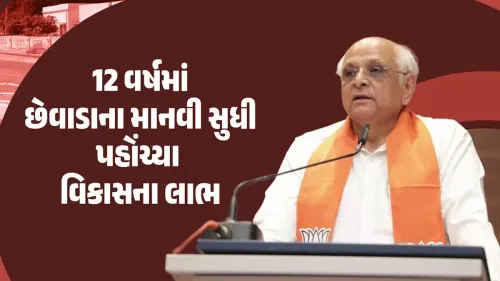
A livestock farmer from Mehsana district in northern Gujarat summed up the impact of a state animal-husbandry scheme in one line — 'માણસોને તો છત મળે છે, પણ આ યોજનાથી અમારા પશુઓને પણ છત મળી' ('People get roofs, but this scheme gave our animals a roof too'). Gujarat Chief Minister Bhupendra Patel shared the testimony of farmer Vasantbhai Desai on 14 October 2026, framing it as proof that welfare policy now extends beyond households to the livestock that sustain them.
Vasantbhai Desai's cattle shed — and what ₹73,000 changed
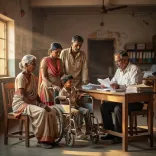
Before the assistance arrived, Vasantbhai's animals endured open-air exposure through all three seasons — scorching summer heat, biting winter cold, and the punishing rains of monsoon. Under the state's 'VB-G RAM G' scheme, he received a financial grant of ₹73,000 specifically to construct a covered cattle shed. The result, according to the post, has been threefold: the animals are healthier and disease-free, they are shielded from temperature extremes, and milk production has risen noticeably.
Vasantbhai is quoted expressing heartfelt gratitude to Prime Minister Narendra Modi, crediting the scheme's sensitivity to livestock welfare as an extension of Modi's broader governance philosophy. CM Patel frames this as emblematic of Modi's 25 years of public service — a period spanning his tenure as Gujarat's Chief Minister and then as Prime Minister — during which, the post argues, the welfare net was stretched to cover 'silent animals' alongside citizens.
Mehsana's dairy backbone and why animal housing matters
Mehsana district is no ordinary rural pocket — it sits at the heart of Gujarat's famed dairy belt, a region whose cooperative milk culture helped inspire the Amul model. Cattle health and productivity here carry direct economic weight for thousands of smallholder families. Poor shelter is a documented drag on livestock health: heat stress and cold stress both suppress milk yield and raise disease susceptibility, making a covered shed a genuinely productive investment rather than a cosmetic welfare gesture.
Gujarat has maintained livestock development programmes across successive administrations, with animal housing, veterinary support, and productivity incentives woven into rural and agricultural policy for decades. The 'VB-G RAM G' scheme, as described in the post, fits within that longer lineage — channelling direct financial assistance to individual farmers to upgrade infrastructure at the farm level.
The #SevaSankapAbhiyaan narrative frame
The post is hashtagged #SevaSankapAbhiyaan and #SevaKiKahani — campaign tags that translate broadly to 'Service Resolve Drive' and 'Stories of Service.' This signals a deliberate outreach effort: rather than announcing a policy number or budget figure, the BJP and Gujarat government are surfacing individual beneficiary voices to illustrate scheme impact at a human (and, here, animal) level. Vasantbhai's testimony is one such 'story of service,' chosen precisely because its emotional register — care for mute, vulnerable creatures — broadens the appeal beyond standard agricultural messaging.
For dairy-dependent families in Gujarat's rural districts, the image of a covered cattle shed is tangible and immediate. The government's bet is that it resonates far more than a spreadsheet of disbursal figures ever could.
Point of View
The BJP and Gujarat government are deploying classic grassroots narrative politics — letting a beneficiary carry the message. The choice of Mehsana, Gujarat's dairy heartland, is deliberate: it targets an audience for whom cattle are livelihood, not merely livestock. Attributing the scheme's empathy to PM Modi's 25-year governance arc also serves a dual purpose — reinforcing Modi's rural credentials while tying state-level delivery to national brand equity. The 'SevaSankapAbhiyaan' campaign frame suggests this is part of a sustained outreach cycle ahead of periodic rural consolidation efforts by the ruling party.
NationPress
14 Oct 2026
Frequently Asked Questions
What is the VB-G RAM G scheme in Gujarat?
The 'VB-G RAM G' scheme is a Gujarat government initiative that provides financial assistance to livestock farmers for constructing cattle sheds, aimed at improving animal shelter, health, and productivity. The exact full form and eligibility details have not been officially confirmed in public records as of this report.
How much money does the Gujarat cattle shed scheme give to farmers?
According to CM Bhupendra Patel's post, Mehsana farmer Vasantbhai Desai received ₹73,000 under the scheme to build a covered cattle shed for his livestock.
What are the benefits of a covered cattle shed for dairy farmers?
A covered shed protects animals from summer heat, winter cold, and monsoon rains. In Vasantbhai Desai's case, the shed led to his animals becoming disease-free and a noticeable increase in milk production, as described in the CM's post.
Why is Mehsana district important for Gujarat's dairy sector?
Mehsana district lies in northern Gujarat and is a central part of the state's cooperative dairy belt. The region's livestock-based rural economy makes cattle health and milk productivity directly significant for thousands of smallholder farming families.
What is the SevaSankapAbhiyaan campaign?
'SevaSankapAbhiyaan' translates broadly as 'Service Resolve Drive' and is a campaign under which the Gujarat government and BJP are sharing individual beneficiary stories — tagged #SevaKiKahani — to highlight scheme impact at a personal level.