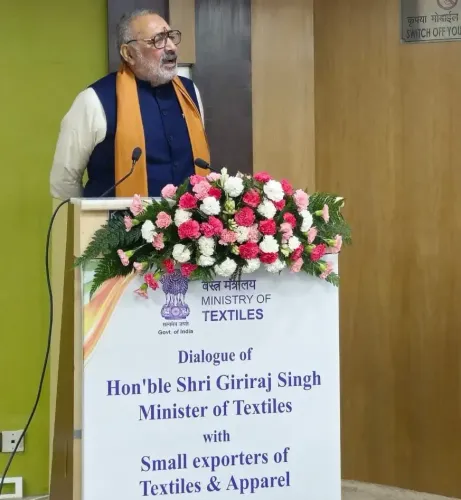
Giriraj Singh flags AI reshaping retail, eyes $250 bn e-commerce market
Synopsis
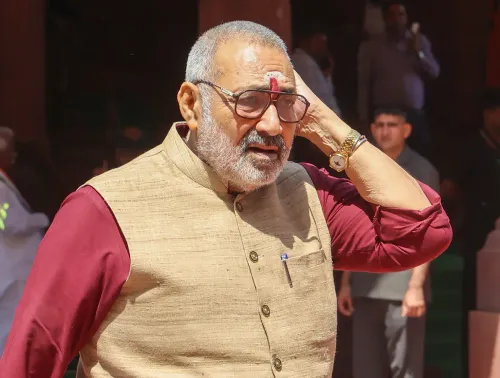
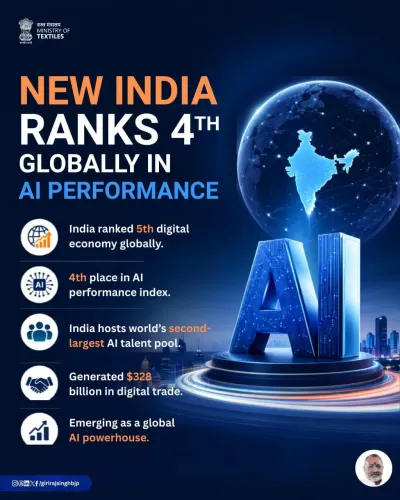
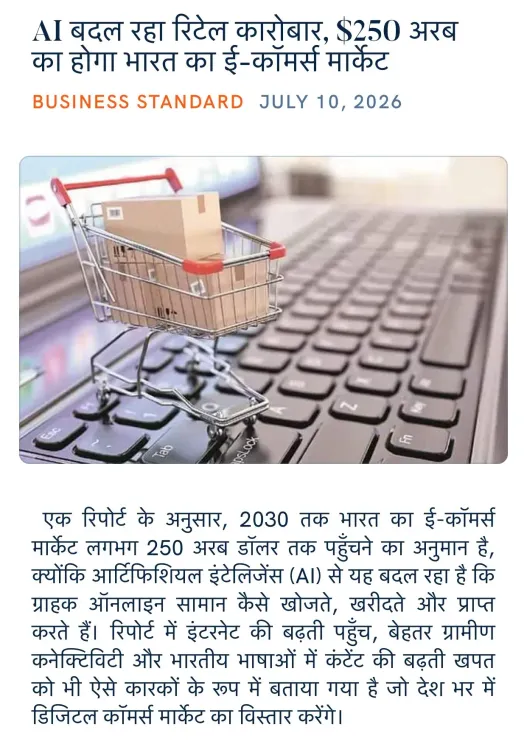
Union Textiles Minister Giriraj Singh flagged on 10 July 2026 that AI is transforming India's retail sector, citing a projection that the country's e-commerce market could reach $250 billion by 2030 — a milestone rooted in Digital India's decade-long infrastructure push and the government's expanding AI mission.
Key Takeaways
Union Textiles Minister Giriraj Singh shared the projection on 10 July 2026 via the NaMo App, highlighting AI's role in reshaping retail.
India's e-commerce market is projected to reach $250 billion by 2030 , driven by AI integration in logistics, inventory, and customer targeting.
The projection builds on the Digital India programme (launched 2015 ) and NITI Aayog's National AI Strategy (released 2018 ).
The IndiaAI Mission is channelling public investment into compute, datasets, and skilling to accelerate AI deployment across sectors including commerce.
Retail MSMEs and the textiles sector — both under policy focus — stand to gain significantly from AI-powered e-commerce growth.
Key policy markers to watch include finalisation of the national e-commerce policy and updates to data protection rules under the Digital Personal Data Protection Act .
Union Textiles Minister Giriraj Singh on Friday, 10 July 2026, shared a projection that India's e-commerce market is on course to touch $250 billion by 2030, highlighting the transformative role of artificial intelligence in reshaping the country's retail landscape.
Context
The minister shared the projection via the NaMo App, noting in Hindi: 'AI बदल रहा रिटेल कारोबार' — 'AI is transforming the retail business.' The post underscores the ruling dispensation's growing emphasis on technology-led economic growth as a pillar of India's development narrative.
The $250 billion figure represents a substantial leap from India's current e-commerce scale, reflecting the compound effect of rising smartphone penetration, expanding internet access, and AI-driven efficiencies in logistics, inventory management, and personalised customer targeting.
Policy Backdrop
India's digital commerce ambitions are rooted in the Digital India programme, launched in 2015, which set out to transform the country into a digitally empowered knowledge economy. That initiative created the foundational infrastructure — broadband, digital payments, and e-governance — that online retail now rides on.
NITI Aayog released India's National Strategy for Artificial Intelligence in 2018, identifying retail and agriculture among the priority sectors for AI adoption. The Department for Promotion of Industry and Internal Trade (DPIIT) circulated a draft national e-commerce policy in 2019, proposing regulatory guardrails for online platforms and data governance — a framework that remains under active deliberation.
More recently, the government has advanced the IndiaAI Mission, which channels public investment into compute infrastructure, datasets, and skilling to accelerate AI deployment across sectors, including commerce.
Stakeholders and Impact
The beneficiaries of an AI-powered e-commerce expansion are layered. Large platforms stand to gain from algorithmic efficiencies, but the more consequential opportunity lies with retail micro, small, and medium enterprises (MSMEs), which number in the millions and have historically struggled to compete with organised retail chains.
AI tools — ranging from demand forecasting and automated customer service to dynamic pricing — are increasingly accessible to smaller sellers through marketplace integrations, potentially levelling the playing field. At the same time, traditional brick-and-mortar retailers face continued pressure to digitise or risk further margin erosion as online penetration deepens in Tier-2 and Tier-3 cities.
The textiles sector, which Minister Singh oversees, is itself a significant beneficiary: online fashion and apparel is one of the fastest-growing categories in Indian e-commerce, and AI-powered size recommendation, virtual try-on, and supply-chain optimisation tools are already being piloted by domestic brands.
What's Next
Attention will now turn to whether the government translates this optimism into concrete regulatory and investment action. Key markers include finalisation of the long-pending national e-commerce policy, updates to data protection rules under the Digital Personal Data Protection Act, and fresh allocations for the IndiaAI Mission in forthcoming budget documents.
Parliamentary sessions in the second half of 2026 are expected to take up several technology-governance bills, and any movement on these fronts will signal how seriously the administration intends to structure the environment in which a $250 billion market is meant to emerge.
Point of View
The minister is reinforcing a political economy argument — that technology adoption under the current dispensation is driving formalisation and scale. The move also has sectoral subtext: as Textiles Minister, Singh has a direct stake in ensuring online fashion and apparel growth translates into manufacturing jobs and MSME upgradation. The post's brevity, however, leaves the harder questions — platform regulation, data governance, and the fate of traditional retailers — unanswered, and those will define whether the projection becomes policy reality or remains an aspirational headline.
NationPress
10 Jul 2026
Frequently Asked Questions
What is the projected size of India's e-commerce market by 2030?
India's e-commerce market is projected to reach $250 billion by 2030 , according to the figure shared by Union Textiles Minister Giriraj Singh on 10 July 2026, driven largely by AI adoption across retail operations.
What did Giriraj Singh say about AI and retail?
Minister Giriraj Singh posted on X that 'AI is transforming the retail business' ( AI बदल रहा रिटेल कारोबार ), sharing a projection that India's e-commerce market will touch $250 billion by 2030 as artificial intelligence reshapes the sector.
What is the IndiaAI Mission and how does it relate to e-commerce?
The IndiaAI Mission is a government initiative that channels public investment into AI compute infrastructure, datasets, and skilling. It is directly relevant to e-commerce because AI tools for logistics optimisation, demand forecasting, and personalised retail are among the key sectoral applications being promoted under the mission.
How does the Digital India programme support e-commerce growth?
Digital India , launched in 2015 , built the foundational infrastructure — broadband connectivity, digital payments, and e-governance — that India's online retail sector now depends on. It is widely credited with enabling the rapid expansion of e-commerce beyond metro cities into Tier-2 and Tier-3 markets.
Will AI in e-commerce benefit small retailers and MSMEs in India?
AI tools such as demand forecasting, automated customer service, and dynamic pricing are increasingly accessible to small sellers through marketplace integrations, which could help retail MSMEs compete more effectively online. However, traditional brick-and-mortar retailers face continued pressure to digitise as online penetration deepens.