Giriraj Singh flags NCERT cyber safety push for school students
Synopsis
The Indian government is introducing revised NCERT lessons and school cyber clubs to teach students online safety, as discussed in the Rajya Sabha. Union Textiles Minister Giriraj Singh amplified the initiative, which builds on the National Education Policy 2020's digital literacy mandate and targets CBSE-affiliated schools nationwide.
Key Takeaways
The government is adding NCERT cyber safety lessons to school curricula to help students navigate the internet safely.
Dedicated cyber clubs will be set up in schools as peer-learning spaces for digital safety awareness.
Teacher training is included as a core component of the rollout.
CBSE -affiliated schools are the primary implementation ground, given their use of NCERT materials.
The initiative aligns with the National Education Policy 2020 's call for digital literacy integration in school education.
A phased rollout across CBSE and state boards will determine the national reach of the programme.
India's schoolchildren are getting a new line of defence against the internet's darker corners — and it starts inside the classroom. Union Textiles Minister Giriraj Singh on Wednesday, 29 July 2026 shared on X that the government is rolling out NCERT lessons and dedicated cyber clubs in schools to help students stay safe online.
NCERT lessons and cyber clubs enter the classroom
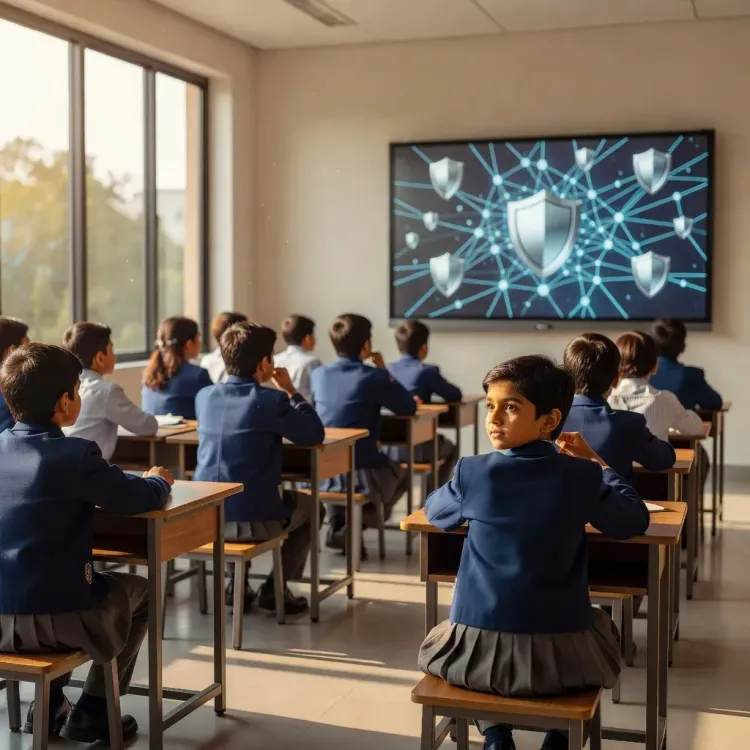
The initiative, discussed in Parliament's Rajya Sabha, pairs revised NCERT curriculum content on cyber safety with school-level cyber clubs — structured spaces where students can learn, discuss, and practise responsible digital behaviour. CBSE-affiliated schools, which collectively serve millions of students across the country, are the primary implementation ground for NCERT materials, meaning the reach of this rollout is national in scale.
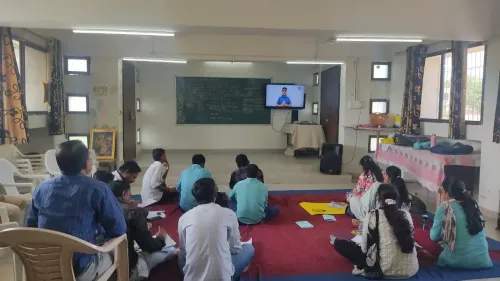
Teacher training is also part of the package. Equipping educators to guide students through online safety concepts is widely seen as the critical link between a revised textbook chapter and actual behaviour change in young internet users.
Why this moment matters for India's connected classrooms
India's student population came online fast. Since 2015, cheap data and affordable smartphones brought hundreds of millions of children into digital spaces — often without structured guidance on risks like phishing, cyberbullying, or data privacy. The National Education Policy 2020 explicitly called for digital literacy and value-based online education to be woven into school curricula, and these NCERT revisions represent a concrete step in that direction.
The broader pattern is incremental but deliberate: the central government has been layering digital citizenship content into syllabi as the scale of the problem has grown. Cyber clubs take that a step further — from passive reading to active, peer-led engagement with online safety.
What the phased rollout will determine
The real test lies in execution. Revised NCERT chapters and teacher training programmes will need to reach not just CBSE schools but also state board institutions, where the majority of India's students are enrolled. How quickly and uniformly that expansion happens will decide whether this remains a metro-school initiative or becomes a genuinely national safety net for the next generation of Indian internet users.
A generation learning to navigate the web safely in school is a generation less vulnerable to the threats that grow alongside it. The curriculum is being rewritten — now the classrooms have to catch up.
Point of View
Which educate the bulk of India's students, will adopt these materials at pace — or whether the initiative remains concentrated in CBSE's relatively urban footprint.
NationPress
29 Jul 2026
Frequently Asked Questions
What are the NCERT cyber safety lessons announced for schools?
The government is introducing revised NCERT curriculum chapters focused on online safety — covering topics like responsible internet use, cyberbullying, and data privacy — to be taught in CBSE-affiliated schools across India.
What is a cyber club in school and how will it work?
Cyber clubs are structured, school-level groups where students actively learn and discuss digital safety practices under teacher guidance, going beyond passive textbook learning to peer-led engagement with online risks.
Which students will benefit from the NCERT cyber safety curriculum?
Students in CBSE-affiliated schools will be the first to benefit, as these schools use NCERT materials. A phased rollout to state board schools is also expected.
How does this connect to the National Education Policy 2020?
The NEP 2020 explicitly mandated the integration of digital literacy and value-based education into school curricula. The NCERT cyber safety lessons and cyber clubs are a direct implementation of that policy direction.
Will teachers also be trained for the cyber safety programme?
Yes. Teacher training is a stated component of the initiative, recognising that educator preparedness is essential for translating new curriculum content into effective classroom instruction.