Giriraj Singh Hails Bharat Tex 2026 Exhibitors' Stories
Synopsis
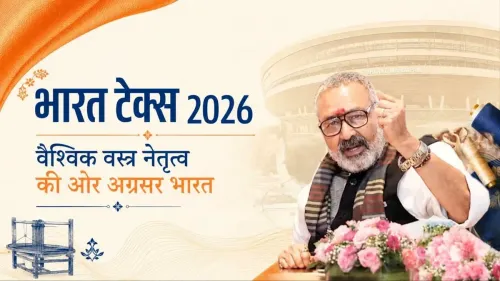
Union Textiles Minister Giriraj Singh on 21 July 2026 hailed Bharat Tex 2026 exhibitors for sharing stories of struggle and success, saying the expo proved that talent finds its identity when given the right platform — echoing the government's Vocal for Local and Make in India agenda.
Key Takeaways
Union Textiles Minister Giriraj Singh posted on 21 July 2026 praising exhibitors at Bharat Tex 2026 .
He described each stall as carrying a distinct story of struggle and success, and each product as rooted in an idea.
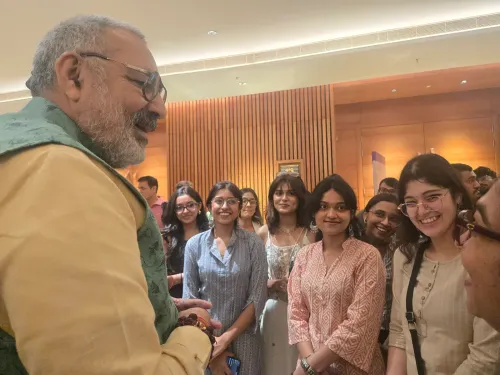
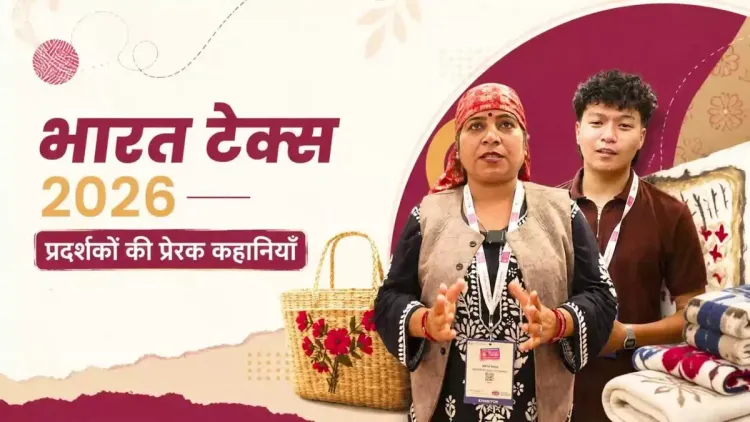
Exhibitors from across India shared their inspiration, journeys, and formative experiences at the event.
The post was tagged #BharatTex2026 , #VocalForLocal , and #MadeInIndia , aligning the event with flagship government campaigns.
The expo serves as a key platform for textile artisans , handloom weavers , and MSME manufacturers to gain commercial visibility.
The ministry's next steps to watch include textiles budget announcements and targets for international fair participation.
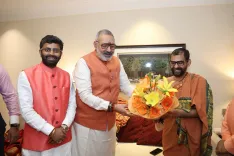
Union Textiles Minister Giriraj Singh on Tuesday, 21 July 2026 praised exhibitors at Bharat Tex 2026, saying every product on display carried a distinct story of struggle and success, and that the expo demonstrated how talent flourishes when given the right platform.
Posting in Hindi on X, the Minister wrote: 'हर उत्पाद के पीछे एक विचार था, हर स्टॉल के पीछे संघर्ष और सफलता की एक अलग कहानी' — 'Behind every product was an idea; behind every stall, a distinct story of struggle and success.' He noted that exhibitors from across the country had shared not just their products but also their inspiration, their journeys, and the experiences that shaped their dreams.
Context
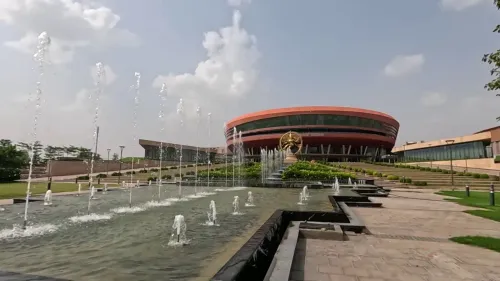
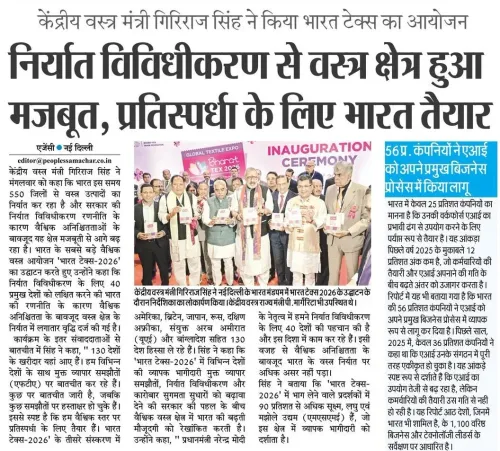
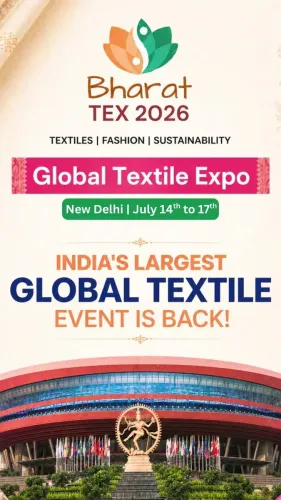
Bharat Tex 2026 is a national-level textile exhibition that brought together exhibitors from across India, providing a platform for artisans, weavers, and MSME manufacturers to showcase domestically produced goods. Giriraj Singh's post, tagged with #BharatTex2026, #VocalForLocal, and #MadeInIndia, underlined the government's framing of such events as more than trade shows — they are, in the minister's telling, forums for personal and entrepreneurial narratives.
The minister emphasised that conversations at the expo revealed how far talent can travel in building its identity when given the right stage. This positions Bharat Tex as a bridge between grassroots producers and mainstream commercial visibility.
Policy Backdrop
The event sits squarely within the central government's long-running policy architecture for domestic manufacturing promotion. The Make in India initiative, launched in September 2014, sought to position India as a global manufacturing hub, with textiles among its priority sectors. The Atmanirbhar Bharat package, announced in May 2020, further reinforced domestic textile value chains as a strategic priority.
The Vocal for Local campaign, which the minister's hashtags directly invoke, has been a recurring government call to consumers and institutions to prefer Indian-made goods. Sector-specific expos for leather, handicrafts, and apparel clusters have been organised along similar lines since the mid-2010s, reflecting a consistent strategy of using curated platforms to link cultural craft traditions with commercial opportunity.
Stakeholders and Impact
The primary beneficiaries of platforms such as Bharat Tex 2026 are textile artisans, handloom weavers, and MSME manufacturers who often lack direct access to buyers, media attention, or export networks. For these producers, a national-level expo can translate into orders, partnerships, and brand recognition that would otherwise require years of independent outreach.
Giriraj Singh's public acknowledgement of individual exhibitor stories also serves a softer purpose: it humanises a policy agenda that can otherwise appear technocratic, reinforcing the government's narrative that economic self-reliance has a human face rooted in local enterprise.
What's Next
The ministry's next signposts will likely be announcements tied to the textiles budget and any new targets for Indian participation in international trade fairs such as Heimtextil. The success of Bharat Tex 2026 in generating exhibitor stories and ministerial engagement could also inform the scale and format of future editions of the expo. Observers of the sector will watch whether the momentum translates into measurable export orders or scheme enrolments for participating MSMEs.
Point of View
The ministry shifts the discourse from policy metrics to human interest — a communication strategy that resonates well beyond the textile community. The invocation of Vocal for Local and Made in India hashtags ties a single expo appearance to a decade-long policy arc, reinforcing continuity of purpose. The approach also signals that as the government eyes export growth targets, domestic visibility events like Bharat Tex are being positioned as the first rung of a ladder leading to global trade fair participation.
NationPress
22 Jul 2026
Frequently Asked Questions
What is Bharat Tex 2026?
Bharat Tex 2026 is a national-level textile exhibition organised in India that brings together artisans, handloom weavers, and MSME manufacturers from across the country to showcase domestically produced textile goods and connect with buyers and partners.
What did Giriraj Singh say about Bharat Tex 2026?
Union Textiles Minister Giriraj Singh said that behind every product at Bharat Tex 2026 was an idea, and behind every stall a distinct story of struggle and success, adding that such dialogues show how far talent can go when given the right platform.
What is the Vocal for Local initiative?
Vocal for Local is a government campaign that encourages Indian consumers, institutions, and businesses to prefer and promote domestically produced goods, forming part of the broader Atmanirbhar Bharat self-reliance policy framework.
How does Bharat Tex relate to Make in India?
Bharat Tex aligns directly with the Make in India initiative launched in September 2014, which identified textiles as a priority manufacturing sector and has since supported domestic producers through policy measures, value-chain strengthening, and promotional platforms.
Who benefits from events like Bharat Tex?
The primary beneficiaries are textile artisans, handloom weavers, and MSME manufacturers who gain access to buyers, media exposure, and commercial networks that would otherwise be difficult to reach independently.