Ramaswamy meets patient helped by his biotech firm's cancer drug
Synopsis
Entrepreneur Vivek Ramaswamy recounted a personal encounter at a Strongsville, Ohio event where a prostate-cancer patient told him he was benefiting from a drug developed by Ramaswamy's firm Roivant Sciences. Ramaswamy expressed gratitude and called for prayers for the man's continued recovery.
Key Takeaways
Vivek Ramaswamy shared on 22 July 2026 that a prostate-cancer patient approached him after an event in Strongsville, Ohio .
The patient said he was benefiting from a drug developed by Ramaswamy's company, Roivant Sciences .
Ramaswamy founded Roivant Sciences in 2014 to accelerate pharmaceutical R&D through a subsidiary-focused model with a focus on clinical-stage assets.
The post highlights the personal dimension of biotech entrepreneurship and patient outcomes.
Ramaswamy's public profile continues to blend his roles as a biotech founder, former 2024 presidential candidate, and DOGE advisory co-lead.
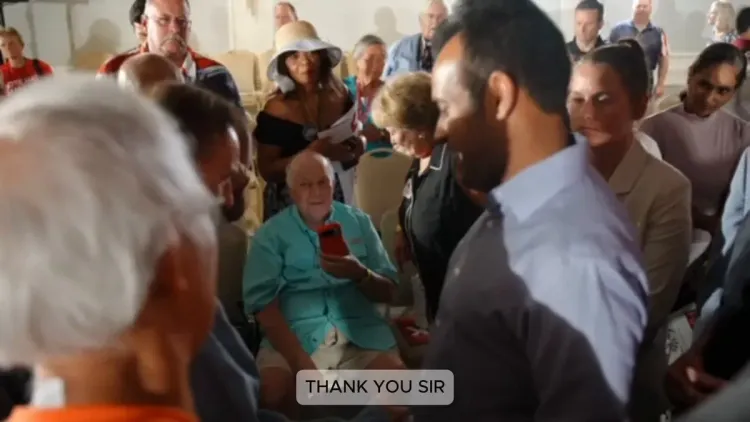
Entrepreneur Vivek Ramaswamy, founder of biopharmaceutical company Roivant Sciences and former co-lead of the US Department of Government Efficiency advisory effort, shared a personal moment on Tuesday, 22 July 2026, recounting how a man approached him after a public event in Strongsville, Ohio, to say he had benefited from a prostate-cancer drug developed by Ramaswamy's company.
Context
Ramaswamy posted on X that the man came up to him following an event in Strongsville, a suburb of Cleveland, Ohio, to share that he was benefiting from the drug his company developed for prostate cancer. Ramaswamy wrote: 'So grateful. Let's pray for his health and continued recovery.' The post, accompanied by a video, underscored a rare, human dimension of pharmaceutical entrepreneurship — a founder encountering, face to face, someone whose life his company's work may have touched.
Policy Backdrop
Ramaswamy founded Roivant Sciences in 2014 with the stated aim of addressing inefficiencies in traditional pharmaceutical research and development, bringing clinical-stage therapies to market more quickly through a subsidiary-focused model. The company has pursued assets across multiple disease areas, including oncology. His background in biotech has remained a consistent thread in his public identity, even as he pivoted toward politics and government advisory work in recent years.
The post arrives against an ongoing national debate in the United States over drug pricing, FDA approval timelines, and the incentives that drive pharmaceutical innovation. Ramaswamy's dual profile — as a biotech founder and a political figure who advised on government efficiency — places his remarks at the intersection of healthcare policy and entrepreneurial advocacy.
Stakeholders and Impact
For cancer patients and their families, moments like the one Ramaswamy described put a human face on the often abstract world of drug development. Prostate cancer is among the most commonly diagnosed cancers in men in the United States, and new therapies developed through companies like Roivant Sciences can represent meaningful options for patients navigating treatment. The biotech sector more broadly watches how founders and executives communicate about patient outcomes, as such narratives shape public trust in pharmaceutical innovation.
Ramaswamy's continued engagement at public events — including campaign-style appearances in states like Ohio — also signals his sustained presence on the American political and civic circuit following his 2024 presidential run and his tenure as co-lead of the DOGE advisory effort.
What's Next
Observers will watch for further updates from Roivant Sciences on its pipeline, particularly in oncology, as well as any health-policy positions that may emerge from Ramaswamy's ongoing public engagements. His ability to draw a direct line between his company's scientific work and a real patient's recovery is likely to remain a feature of his public communication as he continues to straddle the worlds of business and policy.
Point of View
He draws a direct moral line between private-sector pharmaceutical innovation and human welfare — a narrative that counters critics who frame drug companies primarily through the lens of pricing and profit. The moment also illustrates how founder-politicians use anecdote to humanise policy arguments, in this case implicitly advocating for innovation-friendly regulatory and market conditions. For Indian audiences tracking US health policy and the global biotech landscape, it signals that Ramaswamy's public voice on pharmaceutical issues is unlikely to recede.
NationPress
20 Oct 2026
Frequently Asked Questions
What drug did Vivek Ramaswamy's company develop for prostate cancer?
Ramaswamy's post does not name the specific drug. His company, Roivant Sciences, has developed therapies across multiple disease areas including oncology through its subsidiary model, but the particular prostate-cancer drug referenced has not been publicly identified in this post.
What is Roivant Sciences and who founded it?
Roivant Sciences is a biopharmaceutical company founded by Vivek Ramaswamy in 2014. It operates through a subsidiary model focused on developing clinical-stage drug assets across therapeutic areas including oncology.
Where is Strongsville and why was Ramaswamy there?
Strongsville is a suburb of Cleveland, Ohio. Ramaswamy held a public event there, consistent with his pattern of campaign-style appearances across US states following his 2024 Republican presidential run.
What is Vivek Ramaswamy's connection to DOGE?
Vivek Ramaswamy served as co-lead of the US Department of Government Efficiency advisory effort alongside Elon Musk before departing to pursue other endeavours, including ongoing public engagements tied to his business and political profile.
Why is Vivek Ramaswamy significant to Indian audiences?
Ramaswamy, of Indian-American heritage, is a prominent figure in US business and politics. His work in biotech and his roles in US government advisory efforts make him relevant to Indian audiences tracking the American policy landscape and the global pharmaceutical industry.