Tablet-Based Cancer Therapies: VP Radhakrishnan Backs New Alternative in Jaipur
Synopsis
Vice President C.P. Radhakrishnan endorsed tablet-based cancer therapies as a promising chemotherapy alternative at a Cancer Society of India event in Jaipur, while highlighting PM-JAY coverage of up to Rs 15 lakh for indigent patients and commending Rajasthan's proactive cancer-fighting leadership — as India faces over 14 lakh new cancer cases annually.
Key Takeaways
Radhakrishnan endorsed tablet-based cancer therapies as a promising alternative to chemotherapy at the Cancer Society of India event in Jaipur on April 25, 2025 .
Under Pradhan Mantri Jan Arogya Yojana (PM-JAY) , eligible cancer patients can access free treatment worth up to Rs 5 lakh per year ; indigent patients can receive up to Rs 15 lakh in relief.
Approximately 75 per cent of National Health Mission rural funds are currently being used for cancer prevention initiatives .
Cervical cancer is the second most common cancer among women in India , with both Central and State governments deploying vaccination and improved treatment protocols.
Rajasthan Governor Haribhau Bagde called for a dedicated 'Cancer-Free Rajasthan Campaign' modelled on the TB-Free initiative, flagging tobacco use and chemical water contamination as key risk factors.
India records over 14 lakh new cancer cases annually according to ICMR, with projections indicating a sharp rise by 2030 .
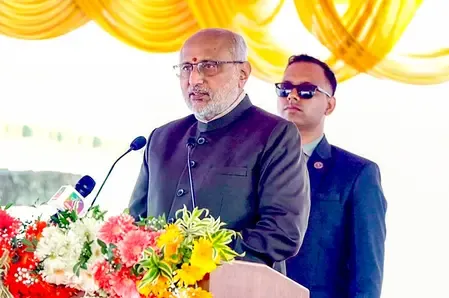
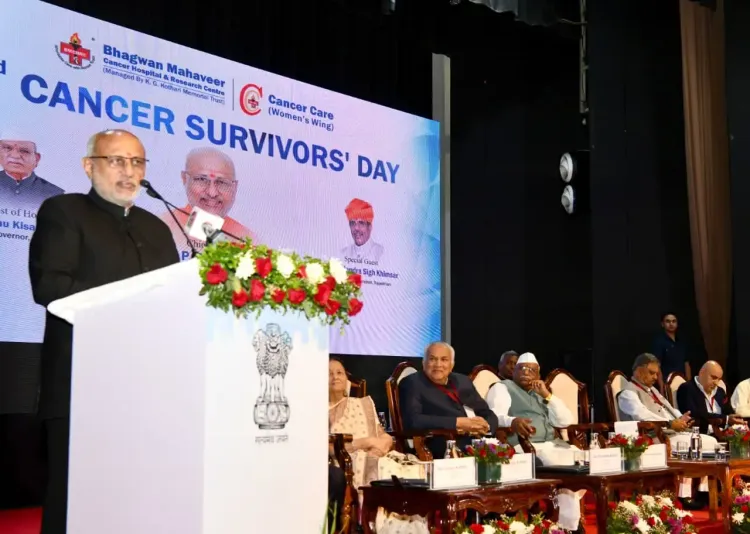
Jaipur, April 25: Vice President C.P. Radhakrishnan on Saturday declared that tablet-based cancer treatments are rapidly emerging as a viable and promising alternative to conventional chemotherapy, as he addressed a major programme organised by the Cancer Society of India in Jaipur. Stressing that mental resilience remains the cornerstone of the battle against cancer, he urged citizens — particularly the youth — to strictly avoid tobacco, intoxicants, and related substances that significantly elevate cancer risk. His remarks signal growing official acknowledgement of next-generation oral therapies that could transform cancer care accessibility across India.
Tablet Therapies and the Shift Away from Chemotherapy
The Vice President highlighted that recent advances in medical research are opening new doors, particularly around oral tablet-based therapies that can serve as less intensive alternatives to chemotherapy. These targeted oral drugs, already in clinical use globally, aim to reduce the debilitating side effects associated with traditional intravenous chemotherapy while maintaining therapeutic efficacy.
This endorsement at the highest constitutional level is significant — it reflects a broader policy push to make cancer treatment not just more effective, but also more patient-friendly and accessible in a country where millions delay treatment due to fear of chemotherapy's harsh side effects. Experts note that oral oncology drugs also reduce the burden on hospital infrastructure, a critical factor for Tier-2 and Tier-3 cities in India.
Government Health Schemes: Financial Relief for Cancer Patients
Radhakrishnan underscored the financial safety nets available to Indian cancer patients. Under the Pradhan Mantri Jan Arogya Yojana (PM-JAY), eligible beneficiaries can access free cancer treatment worth up to Rs 5 lakh per year at empanelled hospitals across the country. The scheme covers surgery, chemotherapy, and radiotherapy for major cancers including breast, lung, and oral cancers.
For indigent patients, additional provisions of up to Rs 15 lakh provide significant financial relief, ensuring that economic hardship does not become a death sentence. He further noted that under the National Health Mission, approximately 75 per cent of allocated rural funds are currently being channelled into cancer prevention programmes — a statistic that underscores the government's stated commitment to grassroots-level intervention.
Cervical Cancer, Clean Water, and Rajasthan's Leadership
The Vice President flagged that cervical cancer is the second most common cancer among women in India, and noted that both Central and State governments are deploying vaccination drives and improved treatment protocols to combat it. He specifically commended Rajasthan for its proactive approach, describing the state as an emerging leader in the national fight against cancer.
He also raised concerns about access to clean drinking water, linking water contamination to rising cancer incidence — a connection increasingly supported by epidemiological research in India's industrial and agricultural belts. The Vice President called for large-scale, sustained public awareness campaigns on cancer prevention to complement medical advances.
Governor and Health Minister Add to the Call for Action
Governor Haribhau Bagde called for a dedicated 'Cancer-Free Rajasthan Campaign', drawing parallels with the relatively successful TB-Free India initiative. He cautioned against tobacco products — particularly bidis and cigarettes — citing their well-documented link to multiple cancers. He also observed that tribal regions of Rajasthan may show lower cancer prevalence due to cleaner environments and traditionally healthier lifestyles, pointing to lifestyle and environmental factors as critical determinants of cancer risk.
The Governor raised alarms about chemical contamination in water sources and the unchecked use of fertilisers in agriculture, calling for urgent policy action to ensure access to chemical-free food and safe drinking water. Health Minister Gajendra Singh Khimsar outlined ongoing state efforts to strengthen healthcare infrastructure and awareness across Rajasthan.
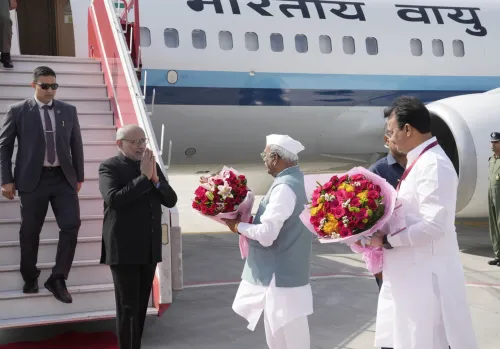
The event also saw the Vice President, Governor, and Health Minister jointly unveil a film honouring cancer survivors. Rajya Sabha MP Radha Mohan Agarwal and other dignitaries were present. Cancer survivors in attendance were lauded by the Vice President as living sources of inspiration for millions battling the disease.
Why This Moment Matters: The Bigger Picture
India records over 14 lakh new cancer cases annually, according to ICMR data, with numbers projected to rise sharply by 2030. The country faces a dual challenge: expanding early detection infrastructure while making treatment affordable and tolerable. The Vice President's endorsement of oral cancer therapies — combined with financial schemes like PM-JAY — reflects a policy direction that could meaningfully shift outcomes if implementation keeps pace with ambition.
Notably, Rajasthan's push for a structured cancer campaign comes at a time when the state is also battling water quality crises in several districts, reinforcing the Governor's concern about environmental carcinogens. As India's cancer burden grows, the convergence of prevention policy, affordable oral therapeutics, and state-level campaigns like Rajasthan's could serve as a replicable national model. Observers will now watch whether these commitments translate into measurable targets, timelines, and budgetary allocations in the upcoming state health policy reviews.
Point of View
Or remains trapped in bureaucratic bottlenecks that have historically plagued health scheme implementation. Rajasthan's Cancer-Free campaign sounds ambitious, but the state simultaneously battles severe water contamination in districts like Barmer and Jalore — the very environmental carcinogens the Governor flagged. Until prevention policy and environmental accountability are treated as inseparable, these well-intentioned declarations risk becoming another round of high-profile optics without ground-level transformation.
NationPress
7 Oct 2026
Frequently Asked Questions
What are tablet-based cancer treatments and how are they different from chemotherapy?
Tablet-based cancer treatments are oral targeted therapies that patients can take at home, unlike intravenous chemotherapy administered in hospitals. They typically have fewer severe side effects and are designed to target specific cancer cell mechanisms, making treatment more manageable and accessible.
What did Vice President C.P. Radhakrishnan say about cancer treatment in Jaipur?
Vice President Radhakrishnan, speaking at a Cancer Society of India event in Jaipur on April 25, 2025, stated that tablet-based cancer therapies are emerging as a promising alternative to chemotherapy. He also urged citizens to avoid tobacco and intoxicants, and highlighted government schemes offering up to Rs 15 lakh in free cancer treatment.
How much free cancer treatment is available under PM-JAY?
Under the Pradhan Mantri Jan Arogya Yojana (PM-JAY), eligible patients can receive free cancer treatment worth up to Rs 5 lakh per year at empanelled hospitals. For indigent patients, additional provisions extend this relief to up to Rs 15 lakh.
Which cancer is most common among women in India according to the Vice President?
Vice President Radhakrishnan noted that cervical cancer is the second most common cancer among women in India. He said both Central and State governments are working on vaccination programmes and improved treatment protocols to address this.
What is the Cancer-Free Rajasthan Campaign?
The Cancer-Free Rajasthan Campaign was proposed by Rajasthan Governor Haribhau Bagde at the Cancer Society of India event in Jaipur on April 25, 2025. It is modelled on the TB-Free campaign and aims to create a structured, state-wide initiative to reduce cancer incidence through prevention, awareness, and treatment outreach.