Has NexCAR19 Made Cancer Treatments More Affordable?
Synopsis
NexCAR19, India's first humanized CAR-T therapy, promises a revolution in cancer treatment by making gene therapies affordable and accessible without compromising patient safety or scientific rigor. This innovative solution is a significant step towards addressing the rising cancer cases in India.
Key Takeaways
NexCAR19 is India's pioneering humanized CAR-T therapy.
It addresses specific relapsed or refractory B-cell cancers.
The therapy is designed to be affordable and accessible .
It was developed by ImmunoACT with governmental support.
DBT is funding initiatives to expand its production capabilities.
New Delhi, Nov 5 (NationPress) NexCAR19, recognized as the world’s pioneering humanized CAR-T therapy engineered in India, is breaking barriers by making gene therapies both affordable and accessible while ensuring high standards of scientific integrity and patient safety, according to statements released by the Ministry of Science and Technology on Wednesday.
NexCAR19 serves as a prescription treatment for certain cases of relapsed or refractory B-cell Non-Hodgkin’s Lymphomas and B-cell Acute Lymphoblastic Leukaemia when initial therapies or other standard treatments fail. It was developed utilizing a lentiviral vector.
“NexCAR19, hailed as India’s inaugural living drug, has rendered gene therapies affordable and accessible without sacrificing scientific rigor or patient safety,” the Ministry affirmed.
Developed by ImmunoACT, a gene therapy firm nurtured at IIT Bombay and backed by the Department of Biotechnology (DBT) and the Biotechnology Industry Research Assistance Council (BIRAC), NexCAR19 was among the three groundbreaking innovations presented to the nation by Prime Minister Narendra Modi during the ongoing ESTIC2025 conclave in the capital.
The other two innovations include QSIP, India’s proprietary quantum security chip, and the 25-qubit QPU, which is India’s inaugural quantum computing chip, aimed at transforming the future of computation.
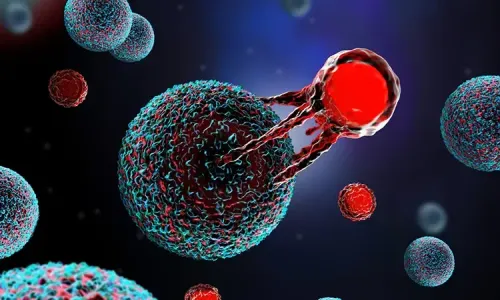
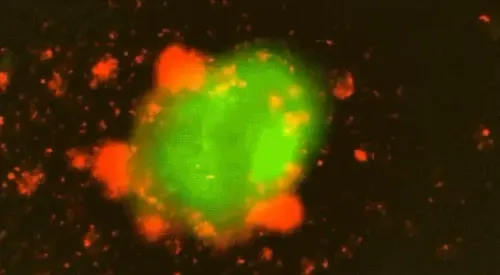
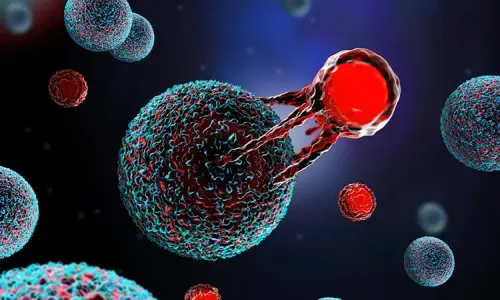
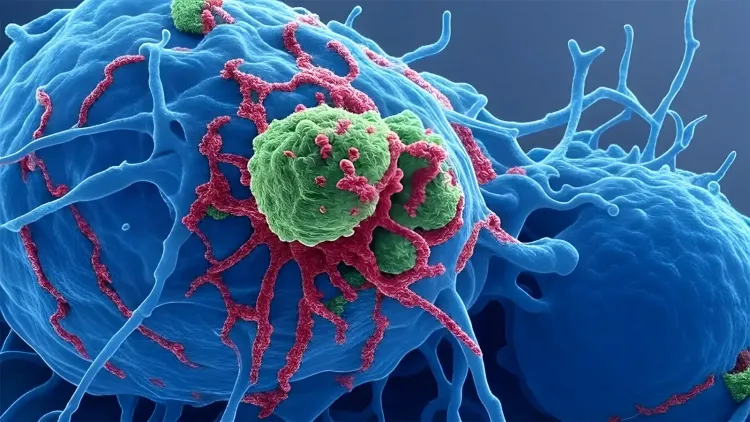
CAR-T, or Chimeric Antigen Receptor T-cell therapy, has emerged as a significant breakthrough in the field of cancer treatment. Global clinical trials have showcased promising outcomes for patients in advanced stages, particularly those suffering from Acute Lymphocytic Leukaemia.
Recently, the DBT, through its Biomanufacturing initiative under the BioE3 Policy, allocated funding to ImmunoACT for establishing a 200L GMP lentiviral vector and plasmid platforms, aimed at scaling up production and enhancing the affordability of this new therapeutic approach.
“This platform is expected to feature advanced bioreactor technologies that encourage high-density cell growth and continuous production, ultimately leading to greater yields and improved performance of lentiviral vectors. The GMP-grade gene delivery vector is anticipated to assist a minimum of 1000 patients annually in cell and gene therapy,” the Ministry stated.
As cancer cases continue to surge in the nation, the DBT is also promoting both early and late translational research to cultivate innovative and indigenous CAR-T-based therapeutics to combat this lethal disease.
Additionally, the DBT is advocating for interdisciplinary teams to explore immunotherapeutic solutions that address a wider array of cancers, encompassing both liquid and solid tumors, while also tackling associated toxicities, the Ministry noted.
This includes cancers such as Multiple Myeloma (MM), Acute Lymphocytic Leukemia, refractory or relapsed B-cell Acute Lymphoblastic Leukemia, glioblastoma, and more.
Point of View
I recognize the monumental impact of NexCAR19 on the healthcare landscape in India. This advancement not only reinforces the nation's commitment to innovative cancer treatments but also highlights the importance of making such therapies accessible to all. It is essential that we continue to support indigenous research and development to combat the rising incidence of cancer in our country.
NationPress
3 Sept 2026
Frequently Asked Questions
How does NexCAR19 ensure patient safety?
The Ministry of Science and Technology emphasized that NexCAR19 maintains high standards of scientific integrity and patient safety throughout its development and application.
Who developed NexCAR19?
NexCAR19 was developed by ImmunoACT, a gene therapy company incubated at IIT Bombay, with support from the Department of Biotechnology (DBT) and BIRAC.
What are the benefits of NexCAR19?
NexCAR19 makes gene therapies affordable and accessible, enabling treatment for a larger number of patients without compromising on quality and safety.
What other innovations were presented alongside NexCAR19?
Alongside NexCAR19, Prime Minister Narendra Modi introduced QSIP, a quantum security chip, and a 25-qubit quantum computing chip during the ESTIC2025 conclave.