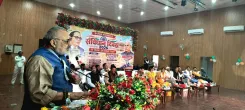
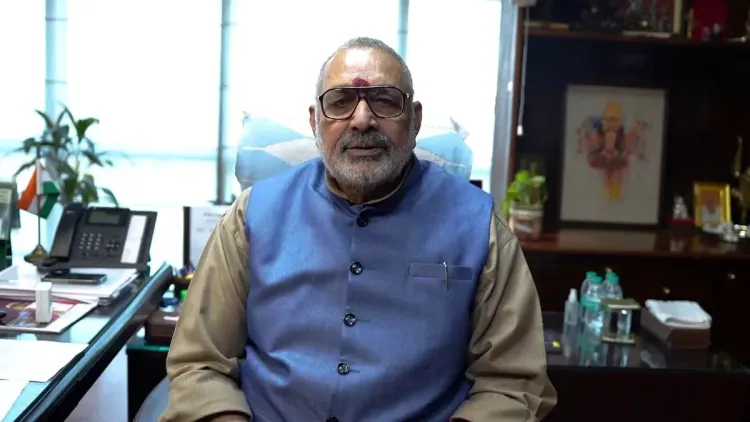
Textiles Minister Giriraj Singh hails Constitution on 26 Nov
Synopsis
Union Textiles Minister Giriraj Singh marked Constitution Day by saluting Dr. B.R. Ambedkar, Dr. Rajendra Prasad and the framers. He said the Constitution guarantees equal rights, dignity and justice, citing RTE, reservation, women's legal rights and the 2019 removal of Article 370.
Key Takeaways
Union Textiles Minister Giriraj Singh paid tributes to Dr.
Bhimrao Ambedkar, Dr.
Rajendra Prasad and other Constitution makers on Constitution Day.
He called the Constitution a strong foundation for equal rights, dignity and justice for every citizen.
The post cited the Right to Education, reservation, legal rights for women, and the removal of Article 370 from Jammu and Kashmir.
India's Constitution was adopted on 26 November 1949 and enforced from 26 January 1950.
The 86th Amendment in 2002 made education a fundamental right under Article 21A; Article 370 was abrogated in August 2019.
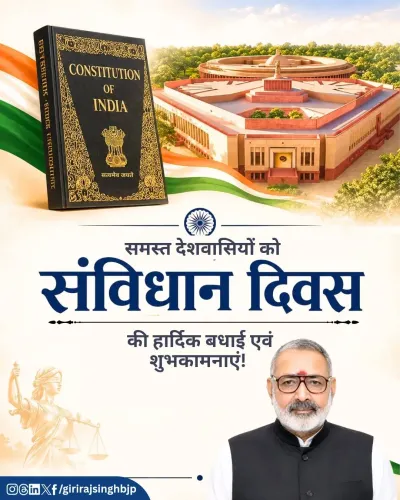
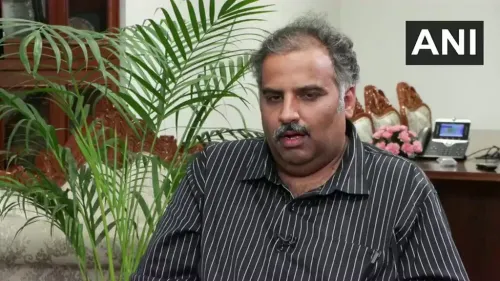
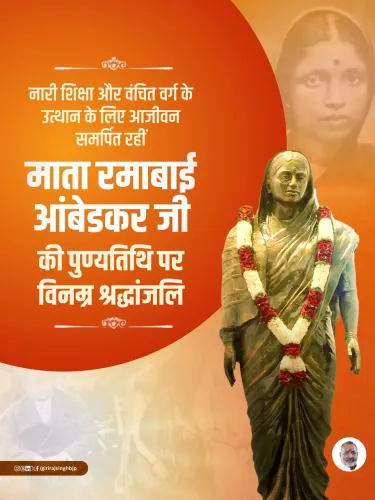
On Constitution Day, Union Textiles Minister Giriraj Singh paid homage to Baba Saheb Dr. Bhimrao Ambedkar and Dr. Rajendra Prasad, placing India's founding charter at the centre of equal rights, dignity and justice. In a message on X, the senior BJP leader and Begusarai MP listed the Right to Education, reservation, legal rights for women, and the removal of Article 370 from Jammu and Kashmir as living proof that the Constitution has powered both national progress and social change.
Naman to Ambedkar, Prasad and the framers
Singh offered naman (salutations) to the Constitution's makers on Samvidhan Diwas. He wrote that the charter is a strong foundation ensuring equal rights, respect and justice for every citizen. That claim tracks the text adopted on 26 November 1949 and brought into force on 26 January 1950, the calendar India still uses to mark the day.
The minister put it plainly: the Constitution ensures equal rights, dignity and justice for every citizen. He closed by calling it the greatest strength of Indian democracy.
RTE, reservation, women's rights and Article 370
The post named four concrete instruments. The Right to Education became a fundamental right under Article 21A through the 86th Constitutional Amendment in 2002. Reservation and legal rights for women sit in the same arc of social reform that Singh said the Constitution has strengthened.
He also called the decision to remove Article 370 from Jammu and Kashmir historic. That temporary special-status provision was ended through a presidential order and parliamentary resolutions in August 2019, after which the former state became a Union Territory. In Singh's telling, that change belongs on the same constitutional ledger as education and gender rights.
How ministers mark 26 November each year
Union ministers from the ruling party have, year after year, used Constitution Day to tie original rights guarantees to later amendments and to the 2019 special-status decision. The message treats the Constitution not as a frozen text but as the legal engine of national integration and social reform.
Winter sessions often bring reservation-related constitutional debates back to Parliament. Similar ministerial statements typically return every 26 November.
On the day India remembers its founding text, Singh's argument was blunt. The Constitution is not a museum piece. It is still rewriting the map of rights.
Point of View
Then fold later political choices into the same constitutional story. By placing the 2019 abrogation of Article 370 beside the Right to Education, reservation and women's legal rights, the message treats special-status removal as social reform, not only a federalism question. That framing will travel through the winter session whenever reservation amendments or Jammu and Kashmir's status return to the floor. The Constitution, in this telling, is both origin story and live instrument.
NationPress
26 Nov 2026
Frequently Asked Questions
What did Giriraj Singh say on Constitution Day?
Union Textiles Minister Giriraj Singh saluted Dr. Bhimrao Ambedkar, Dr. Rajendra Prasad and other Constitution makers. He said the Constitution ensures equal rights, dignity and justice, and cited the Right to Education, reservation, women's legal rights and the removal of Article 370.
When is Constitution Day celebrated in India?
Constitution Day, or Samvidhan Diwas, is observed on 26 November. The Constituent Assembly adopted the Constitution on 26 November 1949, and it came into force on 26 January 1950.
Who was the chief architect of the Indian Constitution?
Dr. B.R. Ambedkar chaired the Constituent Assembly's drafting committee and is regarded as the principal architect of the Constitution. Dr. Rajendra Prasad served as President of the Constituent Assembly and later as India's first President.
What is Article 370 and when was it removed?
Article 370 was a temporary constitutional provision that granted special status to Jammu and Kashmir. It was ended in August 2019 through a presidential order and parliamentary resolutions, after which the former state became a Union Territory.
How is the Right to Education linked to the Constitution?
The 86th Constitutional Amendment of 2002 inserted Article 21A, making free and compulsory education a fundamental right. Giriraj Singh listed that guarantee among the Constitution's tools of social change.