Giriraj Singh Hails UPI Launch in Greece, India's Digital Reach Grows
Synopsis
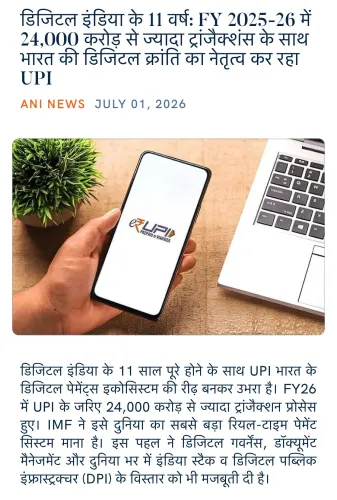
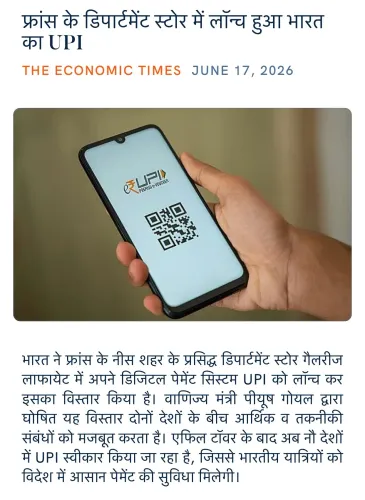
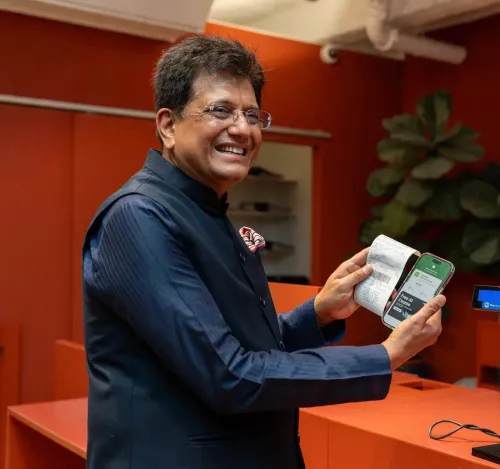
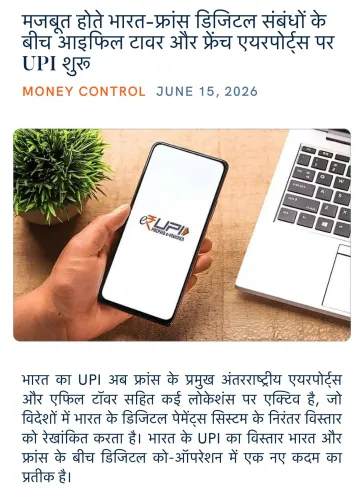
Union Textiles Minister Giriraj Singh highlighted the launch of UPI in Greece on 1 July 2026, extending India's real-time payments network into Europe. The move builds on prior linkages with Singapore, UAE, France and Mauritius, benefiting Indian tourists, the diaspora and Greek merchants.
Key Takeaways
UPI has been launched in Greece , marking India's latest cross-border digital payments expansion into Europe.
Union Textiles Minister Giriraj Singh shared the development on 1 July 2026 via the NaMo App.
UPI is operated by NPCI and has been live since 2016 ; its first cross-border linkage was with Singapore in 2022 .
India has now extended UPI to more than a dozen countries across Asia, the Middle East, and Europe.
The Greece corridor is expected to benefit Indian tourists, the diaspora, and Greek merchants in the hospitality sector.
Further European UPI linkages and RBI settlement circulars are being watched as the next indicators of progress.
Union Textiles Minister Giriraj Singh on Wednesday, 1 July 2026, shared news of UPI's expansion to Greece, calling it an extension of India's global digital payments footprint. The post, shared via the NaMo App, marks another milestone in India's push to internationalise its flagship real-time payments infrastructure.
Context
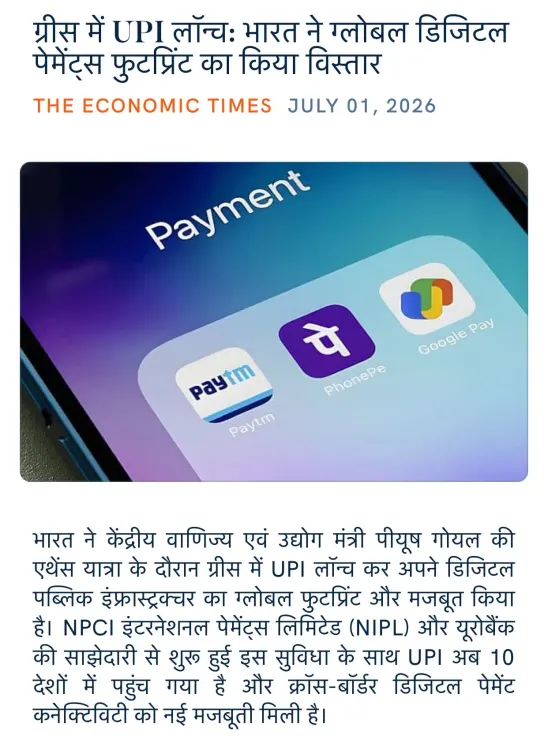
Posting in Hindi, Singh wrote: 'ग्रीस में UPI लॉन्च: भारत ने ग्लोबल डिजिटल पेमेंट्स फुटप्रिंट का किया विस्तार' — translated as 'UPI launched in Greece: India expands its global digital payments footprint.' The post amplifies what is being described as a new chapter for cross-border digital transactions between India and Greece.
Greece, a major European Union member state and one of the continent's top tourist destinations, joins a growing list of countries now connected to India's Unified Payments Interface (UPI) — the real-time inter-bank payment system developed and operated by the National Payments Corporation of India (NPCI).
Policy Backdrop
UPI has been operational since 2016 and has steadily built an international presence. The first major cross-border real-time linkage came in 2022 with Singapore through the UPI-PayNow corridor. This was followed by a rollout in the UAE in August 2023, enabling instant transfers for the large Indian expatriate community there.
During India's G20 presidency in 2023, the government actively championed UPI as a model of Digital Public Infrastructure (DPI) for global financial inclusion, pitching it to partner nations as a low-cost, scalable payments rail. The Greece linkage continues a pattern of targeting tourism-heavy economies — similar deployments have previously been executed in France and Mauritius.
India has now signed UPI linkages with more than a dozen countries across Asia, the Middle East, and Europe, with each new corridor aimed at reducing transaction costs and advancing the internationalisation of the Indian rupee.
Stakeholders and Impact
The Greece expansion is expected to benefit multiple groups: Indian tourists visiting Greece will be able to pay merchants directly through UPI-linked apps, eliminating currency conversion friction. The Indian diaspora in Europe stands to gain from simplified remittance pathways, while Greek merchants in the hospitality and retail sectors gain access to a large base of digitally active Indian consumers.
Fintech companies operating on both ends of the corridor — including payment aggregators and travel-tech platforms — are also positioned to benefit from increased cross-border transaction volumes. For NPCI, the Greece move reinforces its mandate to position UPI as a globally interoperable payments standard.
What's Next
Attention will now turn to NPCI for formal announcements on the technical framework governing the Greece linkage, and to the Reserve Bank of India (RBI) for any circulars authorising rupee-denominated settlement corridors with Europe. Additional European linkages are widely anticipated as India deepens its digital trade ties with the continent.
The Greece launch signals that India's ambition to make UPI a global payments standard is moving from the Indo-Pacific into the heart of Europe — a trajectory that could reshape how Indian travellers and businesses transact abroad over the next decade.
Point of View
Much as SWIFT positioned itself decades ago. The choice of Greece, a tourism-intensive EU economy, mirrors the playbook used in France and Mauritius, suggesting NPCI is systematically targeting high-footfall Indian tourist destinations to build organic adoption. For the BJP government, each new UPI corridor doubles as a soft-power signal, reinforcing the 'Digital India' brand on the world stage. The pace of European expansion will be the real test of whether UPI can achieve the interoperability depth needed to challenge established card networks on their home turf.
NationPress
1 Jul 2026
Frequently Asked Questions
Which countries have UPI payment facility in 2026?
As of 2026, UPI is available in more than a dozen countries including Singapore, UAE, France, Mauritius, and now Greece, with NPCI continuing to expand cross-border linkages across Asia, the Middle East, and Europe.
Can I use UPI in Greece as an Indian tourist?
Yes, following the UPI launch in Greece, Indian tourists can use UPI-linked apps to make payments directly with participating Greek merchants, avoiding currency conversion fees.
What is NPCI and who operates UPI internationally?
NPCI, the National Payments Corporation of India, developed and operates UPI. It manages all international UPI partnerships and technical linkages with foreign payment systems.
When did UPI first go international?
UPI's first major cross-border real-time linkage was with Singapore through the UPI-PayNow corridor, operationalised in 2022, followed by the UAE in August 2023.
Why did Giriraj Singh post about UPI in Greece?
As a senior BJP minister and MP, Giriraj Singh shared the Greece UPI launch via the NaMo App to amplify the government's Digital India achievements and highlight India's expanding global digital payments footprint.