Giriraj Singh Hails Vikram-1 Success, Youth Science Wins
Synopsis
Union Textiles Minister Giriraj Singh on 26 July 2026 lauded the Vikram-1 private rocket's success and Indian students' strong showings at International Science Olympiads, calling youth talent and innovation the greatest strength of New India and linking the milestones to India's expanding private space sector and STEM policy push.
Key Takeaways
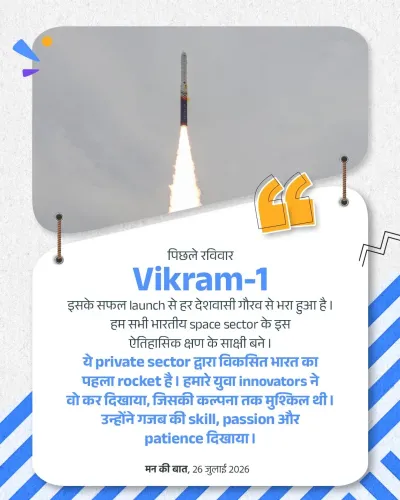
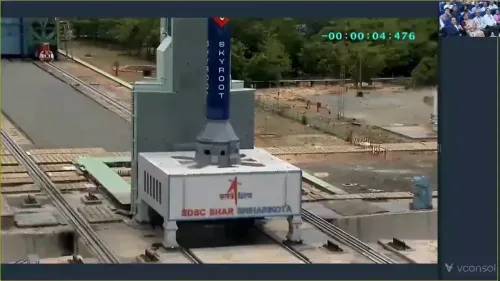
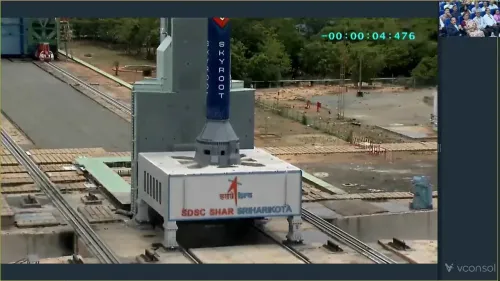
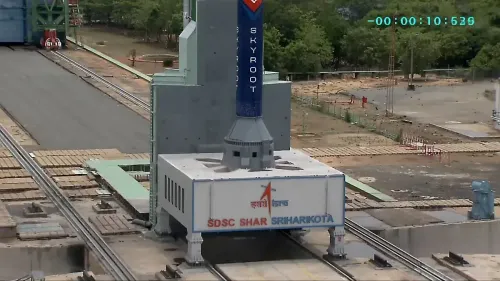
Giriraj Singh on 26 July 2026 praised the historic success of the Vikram-1 small satellite launch vehicle developed by private firm Skyroot Aerospace .
He also highlighted outstanding performances by Indian students at International Science Olympiads in mathematics, physics, chemistry, and informatics.
India's private space sector was opened through reforms in June 2020 and the creation of IN-SPACe , with a formal Space Policy codified in 2023 .
The National Education Policy 2020 expanded support for Olympiad training and STEM talent identification, underpinning student successes.
Singh's post was tagged #MannKiBaat , aligning his messaging with PM Modi's monthly radio programme that regularly spotlights youth and science achievements.
Upcoming private launches under IN-SPACe authorisation and the 2026-27 Olympiad cycle will be key indicators of whether this momentum is sustained.
Union Textiles Minister Giriraj Singh on Sunday, 26 July 2026 praised India's growing youth-driven achievements in space technology and international science competitions, citing the landmark success of the Vikram-1 launch vehicle and strong performances by Indian students at global science olympiads as evidence of the country's rising stature in science and innovation.
Posting on X with the hashtags #Vikram1 #SpaceTech #ScienceOlympiad #MannKiBaat, Singh wrote: 'From the historic success of Vikram-1 to the outstanding performance of Indian students at International Science Olympiads, the youth power of the country is continuously setting new records.' He added that the expansion of private participation in the space sector and India's growing global footprint in science reflect the talent, innovation, and hard work of the young generation — calling them 'the greatest strength of New India.'
Context
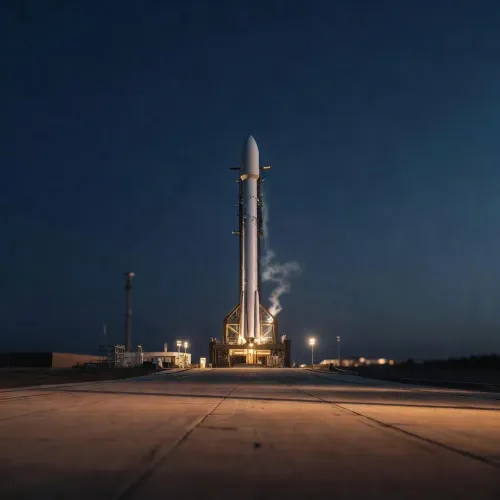
Vikram-1 is a small satellite launch vehicle developed by Skyroot Aerospace, one of India's pioneering private space firms. The vehicle represents a significant milestone in the country's effort to build a commercially competitive private launch industry. On the education front, Indian student teams have in recent years secured multiple medals and top rankings at the International Science Olympiads — annual global competitions spanning mathematics, physics, chemistry, and informatics.
Singh's post was tagged with #MannKiBaat, the monthly radio programme hosted by Prime Minister Narendra Modi that regularly spotlights scientific achievements and youth accomplishments, suggesting the minister's remarks align with the broader communication framework around that platform.
Policy Backdrop
India's push to involve private players in space dates to June 2020, when the central government announced landmark reforms opening the sector to non-governmental entities. The Indian National Space Promotion and Authorisation Centre (IN-SPACe) was established that same year as the nodal agency to regulate and promote private space activities alongside the Indian Space Research Organisation (ISRO).
A comprehensive Space Policy framework released in 2023 further codified the role of private firms in launch services and satellite operations. On the education side, provisions under the National Education Policy (NEP) 2020 have emphasised expanded support for Olympiad training and STEM talent identification, providing institutional backing to the student achievements Singh highlighted.
Stakeholders and Impact
The most direct beneficiaries of the policy environment Singh referenced are India's growing cohort of space startups — companies such as Skyroot Aerospace that are seeking commercial launch contracts and investor confidence. A successful Vikram-1 mission strengthens the case for further private capital flowing into the sector.
For Olympiad students and STEM educators, ministerial recognition at this level signals continued government intent to invest in competitive science training. The framing of youth talent as a 'strategic asset' also reinforces the Atmanirbhar Bharat narrative of reducing dependence on foreign technology through indigenous human capital development.
What's Next
Attention will now turn to the next scheduled private launch attempts authorised under the IN-SPACe framework, which will test whether the momentum around Vikram-1 translates into a reliable commercial launch cadence. Simultaneously, India's performance in the 2026-27 cycle of International Science Olympiads will be closely watched as a benchmark for the country's STEM pipeline.
If private space ventures continue to achieve milestones and student olympiad tallies hold strong, the government is likely to deepen policy support — potentially through dedicated funding windows and expanded training infrastructure — reinforcing India's bid to be a leading force in both the global space economy and frontier science education.
Point of View
Deflecting credit from ISRO alone toward a broader reform story. Linking youth olympiad success to space-sector growth in a single post is a deliberate rhetorical move — it frames India's human capital and technological ambitions as two sides of the same coin. The messaging pattern is consistent with the government's long-running effort to convert demographic size into a strategic technology narrative for both domestic and global audiences.
NationPress
26 Jul 2026
Frequently Asked Questions
What is Vikram-1 and why is it significant for India?
Vikram-1 is a small satellite launch vehicle developed by Skyroot Aerospace , one of India's first private firms authorised for orbital launches. Its success marks a milestone in India's effort to build a commercially competitive private space industry alongside ISRO , following reforms that opened the sector in 2020 .
Why did Giriraj Singh post about space and science olympiads?
Union Textiles Minister Giriraj Singh posted on 26 July 2026 to highlight India's youth achievements in private space technology and international science competitions, framing them as proof of New India's strength. The post was tagged #MannKiBaat , suggesting alignment with PM Modi's monthly radio programme.
What is IN-SPACe and what role does it play in India's space sector?
IN-SPACe (Indian National Space Promotion and Authorisation Centre) was established in 2020 as the nodal agency to regulate and promote private participation in India's space sector. It authorises non-governmental entities to conduct launch and satellite operations alongside ISRO .
How have Indian students performed at International Science Olympiads?
Indian student teams have secured multiple medals and top rankings at International Science Olympiads — global competitions in mathematics, physics, chemistry, and informatics — in recent years. Support from the National Education Policy 2020 has expanded Olympiad training and STEM talent identification programmes.
What is Mann Ki Baat and why was it hashtagged in this post?
Mann Ki Baat is a monthly radio programme hosted by Prime Minister Narendra Modi that frequently highlights scientific achievements and youth accomplishments. Giriraj Singh's use of #MannKiBaat signals that his remarks are part of the broader government communication framework associated with that programme.