Giriraj Singh highlights ₹20,000 family relief on breadwinner death
Synopsis
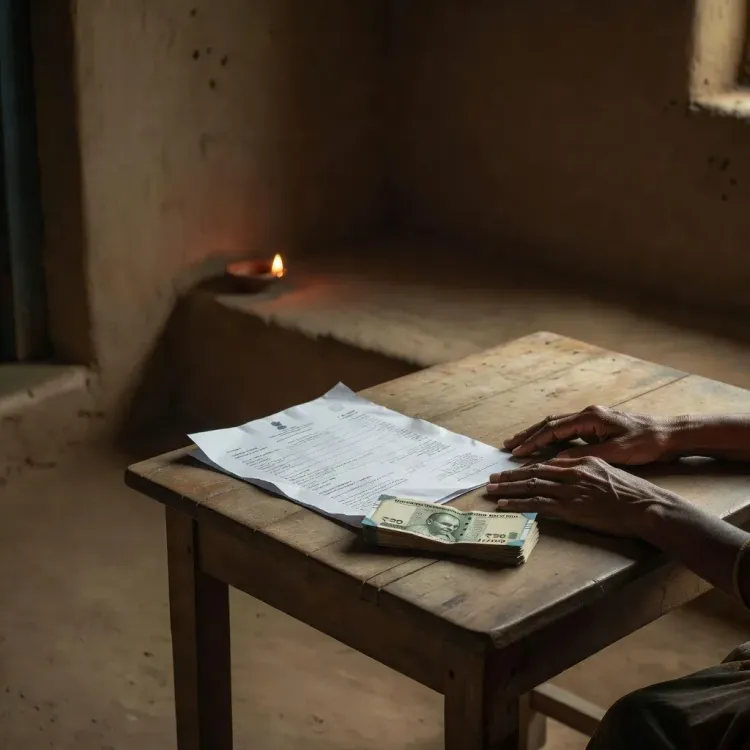
Union Textiles Minister Giriraj Singh spotlighted the Mukhyamantri Parivar Labh Yojana on 23 October 2026, which grants ₹20,000 as immediate one-time financial relief to dependent families upon the sudden death of their earning member, echoing the central National Family Benefit Scheme framework.
Key Takeaways
Union Textiles Minister Giriraj Singh publicised the Mukhyamantri Parivar Labh Yojana on 23 October 2026 .
The scheme provides an immediate one-time payment of ₹20,000 to dependent families on the sudden death of the earning member.
Speed of disbursal — described as tatkal (immediate) — is the scheme's defining feature.
The structure mirrors the central National Family Benefit Scheme (NFBS) , launched in 1995 and revised in 2012 , which also offers ₹20,000 to BPL families.
Giriraj Singh is a Lok Sabha MP from Begusarai, Bihar , and a senior BJP leader amplifying the state's welfare messaging.
When the sole earner of a household dies without warning, the family left behind faces not just grief but immediate financial freefall. Union Textiles Minister Giriraj Singh drew attention to one state-level safeguard against exactly that — the Mukhyamantri Parivar Labh Yojana — on Friday, 23 October 2026, highlighting its provision of an immediate lump-sum assistance of ₹20,000 to dependent families on the sudden death of the earning member.
In his post, the minister wrote: 'मुख्यमंत्री परिवार लाभ योजना के तहत कमाने वाले सदस्य की अकस्मात मृत्यु होने पर आश्रित परिवार को ₹20,000 की तत्काल एकमुश्त आर्थिक सहायता प्रदान की जा रही है।' ('Under the Mukhyamantri Parivar Labh Yojana, an immediate one-time financial assistance of ₹20,000 is being provided to dependent families on the sudden death of the earning member.')
₹20,000 at the moment of crisis: what the scheme does
The scheme's stated purpose is direct and time-sensitive: deliver financial support to vulnerable families before the shock of sudden income loss compounds into long-term destitution. The minister described the core aim as giving 'swift support and financial security to affected families in this hour of crisis.' Speed of disbursal — the word tatkal (immediate) appears prominently — is positioned as the scheme's defining feature.
The architecture of such a scheme echoes a well-established central template. The National Family Benefit Scheme (NFBS), launched under the National Social Assistance Programme in 1995 and revised in 2012, provides a one-time grant of ₹20,000 to below-poverty-line families on the death of the primary breadwinner. State-level schemes like the Mukhyamantri Parivar Labh Yojana operate as supplementary or parallel layers, extending or mirroring that central framework to ensure faster, state-administered delivery.
A senior BJP voice shining a light on welfare delivery
Giriraj Singh, Lok Sabha MP from Begusarai, Bihar, has been a consistent voice amplifying both central and state government welfare initiatives. His decision to highlight this particular scheme is consistent with a broader political pattern: Union ministers from a state frequently publicise state-level programmes that align with the ruling party's welfare narrative, signalling coordination between the centre and state governments on social protection messaging.
Indian states have long maintained supplementary social assistance schemes to cushion low-income households from 'mortality shocks' — the sudden collapse of household income when a primary earner dies. The Mukhyamantri Parivar Labh Yojana fits squarely within that tradition, targeting the precise window between death and the longer-term settlement of any insurance or pension claims.
The questions worth watching now: how many families have received the ₹20,000 disbursement, how quickly after the death, and whether eligibility norms are broad enough to capture the most vulnerable households. Transparent disbursal data would be the real measure of whether speed matches the promise.
Point of View
000 figure is not new — it mirrors the two-decade-old National Family Benefit Scheme — but the political emphasis on 'immediacy' signals a push to differentiate delivery speed rather than benefit quantum. For low-income households facing sudden income loss, the real policy test is whether disbursal mechanisms have genuinely been streamlined or whether the promise of 'tatkal' relief remains aspirational. Watch for disbursal data as the accountability metric.
NationPress
23 Oct 2026
Frequently Asked Questions
What is the Mukhyamantri Parivar Labh Yojana?
It is a state welfare scheme that provides an immediate one-time financial assistance of ₹20,000 to dependent family members on the sudden death of the household's earning member.
Who is eligible for the Mukhyamantri Parivar Labh Yojana?
The scheme targets dependent families who lose their primary earning member to sudden death. Specific eligibility norms, including income criteria, are determined by the state government.
Why did Giriraj Singh post about this scheme?
As a senior BJP leader and Lok Sabha MP from Begusarai, Bihar, Giriraj Singh regularly highlights welfare programmes relevant to his home state, signalling centre-state coordination on social protection messaging.
How is this different from the National Family Benefit Scheme?
The National Family Benefit Scheme is a central government programme launched in 1995 offering ₹20,000 to BPL families on the death of the primary breadwinner. State schemes like the Mukhyamantri Parivar Labh Yojana operate as supplementary or parallel layers with potentially faster, state-administered disbursement.
How quickly is the ₹20,000 assistance paid under the scheme?
The scheme emphasises tatkal (immediate) disbursement, though official data on average processing timelines has not been publicly released.