Telangana CM Revanth Reddy pushes for South India police coordination at SRPCC meet
Synopsis
At a rare gathering of police chiefs from five southern states and three Union Territories, Telangana CM Revanth Reddy offered to share the state's ICCC tech infrastructure region-wide — signalling a bid to build an integrated southern security grid. With cybercrime, drug trafficking, and cross-border crime on the rise, the SRPCC meeting could mark a turning point in how South India polices its borders.
Key Takeaways
Revanth Reddy chaired the SRPCC meeting at the ICCC, Hyderabad on 23 October 2026 .
Police chiefs from Telangana, Andhra Pradesh, Tamil Nadu, Karnataka, Kerala , and Union Territories attended.
Telangana offered to share its ICCC technical infrastructure with neighbouring states.
Telangana was ranked first nationally for cybercrime control at a PRAGATI review chaired by the Prime Minister.
The EAGLE unit scored over 80 per cent from the Centre for drug control performance.
Telangana claimed to be the first state to appoint transgender individuals as Hyderabad Traffic Police assistants.
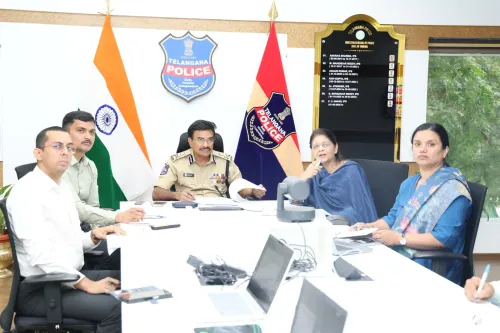
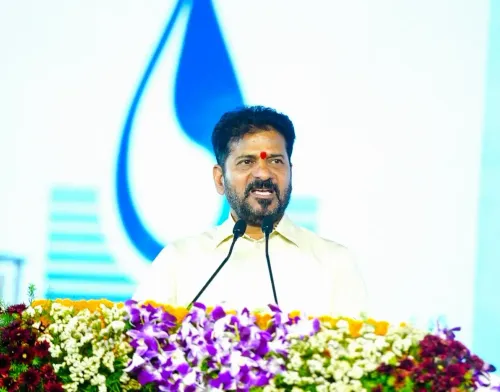
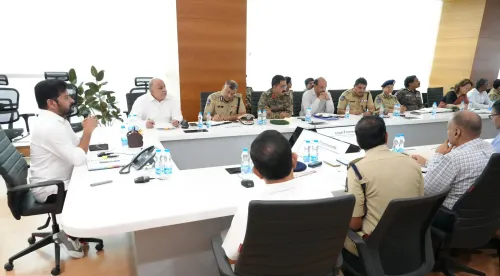
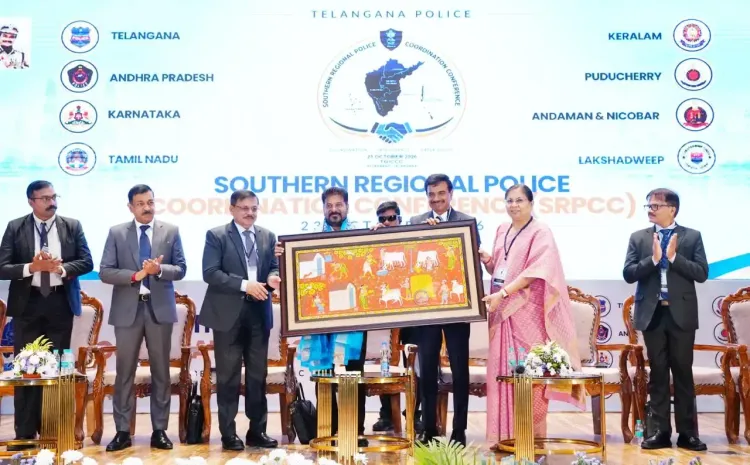
Telangana Chief Minister A. Revanth Reddy on Friday, 23 October 2026, called for robust cross-border coordination among police forces of all Southern states, addressing the Southern Regional Police Coordination Committee (SRPCC) meeting held at the Integrated Command and Control Centre (ICCC) in Hyderabad. The meeting brought together top law-enforcement officials from five states and three Union Territories to deliberate on shared security challenges across South India.
Key Developments at the SRPCC Meeting
Senior police officials in attendance included Telangana DGP CV Anand, Karnataka DGP Dr. M.A. Saleem, Tamil Nadu DGP Dr. Mahesh Aggarwal, Puducherry DGP Shalini Singh, Lakshadweep ADG B. Shankar Jaiswal, Kerala IG Ajitha Begum, and Andhra Pradesh IGP Ravi Krishna. Directors-General and Inspectors-General of Police from Telangana, Andhra Pradesh, Tamil Nadu, Karnataka, and Kerala, along with representatives from the Andaman and Nicobar Islands, Puducherry, and Lakshadweep, as well as senior officials from Central agencies, participated in the deliberations.
What the Telangana CM Said
Chief Minister Reddy stated that the Government of Telangana is fully committed to sharing its technical infrastructure and ICCC systems with neighbouring states. He told officials that they bear the collective responsibility of transforming South India into a secure region.
'In the current climate, where the nature of crime is constantly evolving, platforms like the SRPCC are crucial. Policing strategies must evolve, and reforms must be a continuous process. I am a firm believer in reforms. The resources we allocate to the police force are not merely an expenditure; I view them as an investment toward building a better society and ensuring the safety of our citizens,' Reddy said.
He also noted that Hyderabad's police system has been reorganised into three distinct commissionerates, allowing each Commissioner to focus on a defined jurisdiction for better outcomes.
Telangana's Specialised Units and National Recognition
Reddy highlighted the state's specialised units — HYDRAA, EAGLE, and T-SAFE — each designed to tackle specific crime categories. He noted that during a PRAGATI review meeting chaired by the Prime Minister, Telangana was ranked first in the country for cybercrime control. Union Home Minister Amit Shah has reportedly commended Telangana police for transforming the state into a Naxal-free zone.
The EAGLE unit has received a score of over 80 per cent from the Central Government for its performance in drug control. The Telangana Cyber Security Bureau (TGCSB), headed by Shikha Goel, has set new benchmarks in recovering and returning funds lost by cybercrime victims, according to the Chief Minister.
Reddy also stated that TG-SAFE — modelled after the U.S. FDA — has been launched to coordinate inter-departmental efforts against food adulteration and pharmaceutical regulation, while HYDRAA focuses on protecting lakes, ponds, and government assets.
Welfare of Police Personnel
The Chief Minister stressed that the welfare of police personnel remains a top priority. 'Police personnel fight for the state and work tirelessly for the safety of the public. When necessary, they even sacrifice their lives in the line of duty. Ensuring their welfare and the future of their families is one of my top priorities,' he said. Notably, Reddy claimed that Telangana has become the first state in the country to appoint transgender individuals as traffic assistants within the Hyderabad Traffic Police department.
What This Signals for Southern Security
The SRPCC platform, convened periodically among southern states, gains renewed urgency as threats like cybercrime, drug trafficking, and organised crime increasingly operate across state lines. This meeting signals a concerted push toward an integrated southern security architecture — one that could serve as a template for inter-state policing cooperation nationally. The next steps will depend on whether the commitments made at the ICCC translate into operational protocols and shared data infrastructure among the participating states.
Point of View
Leveraging national rankings in cybercrime and Naxal control to build regional soft power. The harder question is whether voluntary coordination platforms like SRPCC can deliver operational outcomes, or whether they remain ceremonial summits. Inter-state policing in India has historically struggled with jurisdictional jealousies and data-sharing reluctance; Reddy's offer of ICCC access is a meaningful gesture, but the follow-through will require sustained political will across five different state governments.
NationPress
23 Oct 2026
Frequently Asked Questions
What is the Southern Regional Police Coordination Committee (SRPCC)?
The SRPCC is a platform that brings together senior police officials from southern Indian states and Union Territories to coordinate on shared law-enforcement challenges such as cybercrime, drug trafficking, and cross-border crime. The 23 October 2026 meeting was held at the ICCC in Hyderabad and was attended by police chiefs from Telangana, Andhra Pradesh, Tamil Nadu, Karnataka, Kerala, Puducherry, Lakshadweep, and Andaman and Nicobar Islands.
What did Telangana CM Revanth Reddy propose at the SRPCC meeting?
CM Revanth Reddy proposed establishing strong coordination systems across state borders and offered to share Telangana's ICCC technical infrastructure with neighbouring states. He also outlined the state's specialised units — HYDRAA, EAGLE, and TG-SAFE — as models for tackling specific crime categories.
Why was Telangana ranked first for cybercrime control?
According to CM Reddy, Telangana was ranked first in the country for cybercrime control during a PRAGATI review meeting chaired by the Prime Minister. The Telangana Cyber Security Bureau (TGCSB) has also been recognised for recovering and returning funds to cybercrime victims.
What is the EAGLE unit and what score did it receive?
EAGLE is a specialised anti-drug unit established by the Telangana government. It received a score of over 80 per cent from the Central Government for its performance in drug control, according to CM Revanth Reddy's address at the SRPCC meeting.
What is TG-SAFE and how does it work?
TG-SAFE is a newly launched Telangana unit modelled after the U.S. FDA, designed to coordinate inter-departmental efforts to curb food adulteration and regulate pharmaceuticals. CM Reddy described it as part of a broader effort to address non-traditional public safety concerns beyond conventional policing.