Giriraj Singh hits Rahul Gandhi over Election Commission remarks
Synopsis
Union Textiles Minister Giriraj Singh accused Rahul Gandhi of publicly threatening to jail the Chief Election Commissioner, invoking Congress's 1975 Emergency legacy and alleging a pattern of targeting constitutional institutions after electoral defeats.
Key Takeaways
Giriraj Singh posted on 1 November 2026 accusing Rahul Gandhi of threatening to jail the Chief Election Commissioner from a public stage.
Singh invoked Congress's 1975 Emergency — during which civil liberties were suspended and opposition leaders jailed — as proof of the party's 'authoritarian DNA.' The minister alleged a recurring pattern: after electoral defeats, Congress targets the Army, then the Supreme Court, and now the Election Commission of India .
Singh declared these 'conspiracies against the country and the law' would never succeed.
The Election Commission of India is a constitutional body under Article 324; threats to its independence carry significant legal and political weight.
The exchange reflects a long-running battle in Indian politics over which side genuinely defends constitutional institutions.
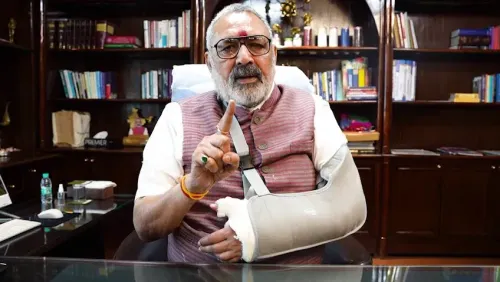
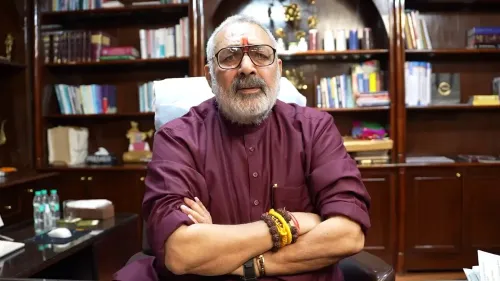
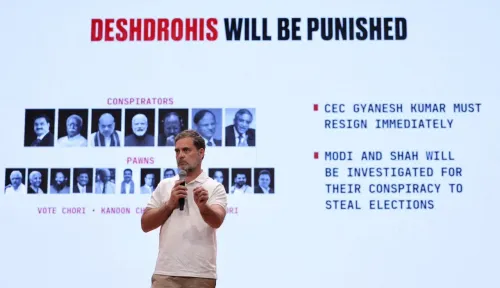
When electoral defeat looms, Union Textiles Minister Giriraj Singh argues, a very old instinct awakens in the Congress — and on Sunday, 1 November 2026, he named it plainly: the 'Emergency DNA.' In a sharp post on X, Singh accused Congress leader Rahul Gandhi of publicly threatening to jail the country's Chief Election Commissioner from a public stage, calling it a continuation of a pattern that has targeted the Army, the Supreme Court, and now the Election Commission of India.
In Hindi, Singh wrote: 'हार जब सामने दिखती है, तो कांग्रेस का आपातकाल वाला डीएनए बाहर आ जाता है!' — 'When defeat stares them in the face, Congress's Emergency-era DNA surfaces!' He demanded to know which Constitution Gandhi was pretending to defend while using language that openly threatened the country's top election official with imprisonment.
The Emergency parallel Singh is invoking
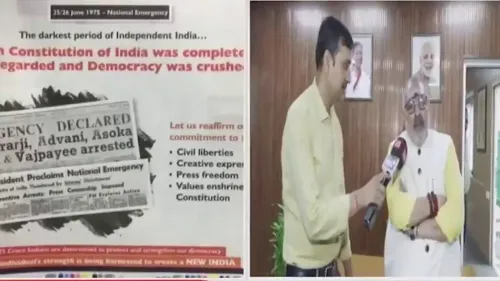
The reference to Congress's 'Emergency DNA' is a deliberate callback to 1975, when the Congress government under Indira Gandhi declared a national emergency, suspended civil liberties, and jailed opposition leaders across the country. For the BJP, that episode has long served as the foundational proof of what they describe as Congress's authoritarian instincts — and Singh is deploying it here as a frame for Rahul Gandhi's alleged remarks about the Election Commission of India (ECI).
The ECI is a constitutional body enshrined under Article 324, responsible for the superintendence and conduct of elections to Parliament and state legislatures. Its independence is considered a cornerstone of India's democratic architecture. Any public statement construed as a threat to the Chief Election Commissioner carries significant constitutional weight — and political charge.
A recurring pattern of institutional targeting, Singh says
The BJP minister's post lays out what he frames as a serial pattern: when the public rejects Congress at the ballot box, a new institution becomes the target. 'Sometimes the Army, sometimes the Supreme Court, and now the Election Commission,' he wrote — a sequence he described as 'conspiracies against the country and the law' that would never succeed.
This is not the first time such accusations have flown in both directions. Indian political discourse has a long and well-documented history of mutual charges between the ruling dispensation and the opposition over alleged attempts to undermine constitutional institutions. These exchanges reliably intensify after electoral reversals, as each side seeks to define the other as the aggressor against democratic norms.
What the charge means for the opposition's institutional credibility
Singh's post frames Gandhi's alleged remarks not merely as poor judgment but as ideologically consistent with the Congress party's foundational DNA — a characterisation designed to go beyond a single statement and indict a systemic disposition. The political cost of being seen to threaten an independent constitutional body is considerable, and Singh is ensuring that cost stays on the front page.
The Election Commission has not commented publicly on the matter. Whether the controversy prompts a formal response from electoral authorities or escalates into a parliamentary confrontation remains the central thread to watch in the days ahead.
An institution that has survived decades of political pressure now sits at the centre of yet another fierce partisan storm — and the argument over who is really defending the Constitution has never been louder.
Point of View
Making the past the prism through which every present controversy is read. By framing Gandhi's alleged remarks as 'Emergency DNA' rather than a one-off misstep, he transforms a single statement into a civilisational argument about which party is constitutionally safe to govern. The targeting sequence Singh outlines — Army, Supreme Court, Election Commission — is also a carefully constructed narrative that positions the opposition as serially anti-institutional, a charge that resonates with a voter base primed to equate Congress governance with democratic backsliding. Whether or not Gandhi's remarks cross any legal threshold, the political damage of being associated with threats to the ECI in an election season is real and lasting.
NationPress
1 Nov 2026
Frequently Asked Questions
What did Giriraj Singh accuse Rahul Gandhi of saying about the Election Commission?
Singh accused Rahul Gandhi of publicly threatening to send the Chief Election Commissioner to jail and using intimidatory language against the constitutional body from a public stage.
What is the '1975 Emergency' that Giriraj Singh referred to?
The 1975 Emergency was a national emergency declared by the Congress government under Indira Gandhi, during which civil liberties were suspended and opposition leaders were detained. The BJP frequently uses it as evidence of Congress's authoritarian tendencies.
What is the Election Commission of India and why does threatening it matter?
The Election Commission of India is an independent constitutional body established under Article 324, responsible for overseeing free and fair elections to Parliament and state assemblies. Any threat to its officials or independence is considered a serious challenge to India's democratic framework.
Has Rahul Gandhi responded to Giriraj Singh's accusations?
No response from Rahul Gandhi to these specific accusations was available at the time of this report.
Why does BJP say Congress targets institutions after electoral defeats?
BJP leaders argue that Congress, when facing electoral setbacks, shifts blame to constitutional bodies like the Army, the Supreme Court, or the Election Commission rather than accepting voters' verdict — a pattern Singh reiterated in his 1 November 2026 post.