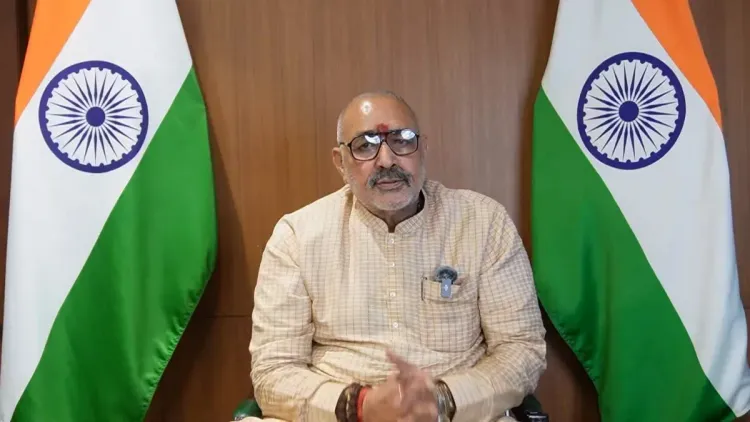
Giriraj Singh marks National Handloom Day, salutes weavers
Synopsis
Union Textiles Minister Giriraj Singh marked National Handloom Day on 7 August 2026, honouring India's weaver families and calling handloom a pillar of cultural heritage and Atmanirbhar Bharat. The day was first observed in 2015 to mark the Swadeshi Movement centenary.
Key Takeaways
National Handloom Day falls on 7 August every year, first observed in 2015 to mark the centenary of the 1905 Swadeshi Movement .
Union Textiles Minister Giriraj Singh called handloom 'the powerful foundation of India's rich cultural heritage and the livelihoods of millions of weaver families.' Singh linked every handloom product to the Atmanirbhar Bharat self-reliance mission.
The Ministry of Textiles frames handloom as both a cultural asset and a decentralised rural employment engine.
The sector supports weaver families across multiple states without requiring factory infrastructure.
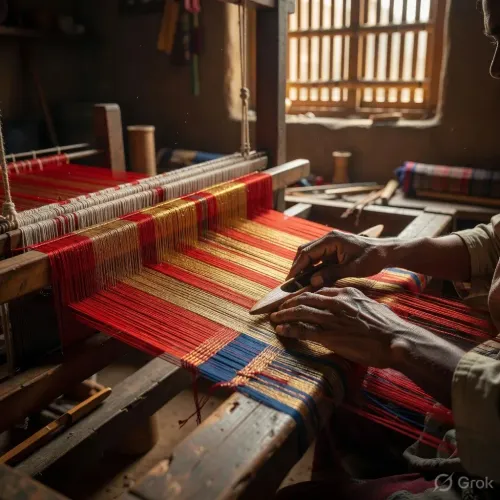
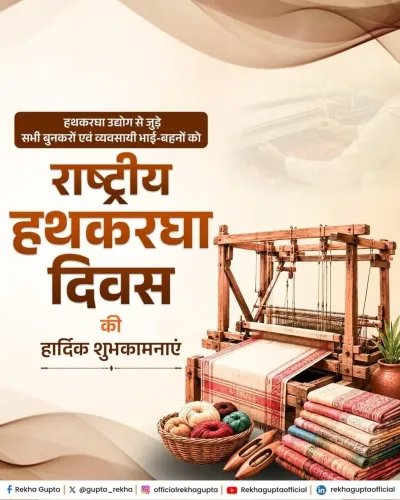
Every thread tells a story — and on National Handloom Day, 7 August 2026, Union Textiles Minister Giriraj Singh used the occasion to remind India that its looms carry not just cloth, but culture, craft, and the livelihoods of millions of weaver families.
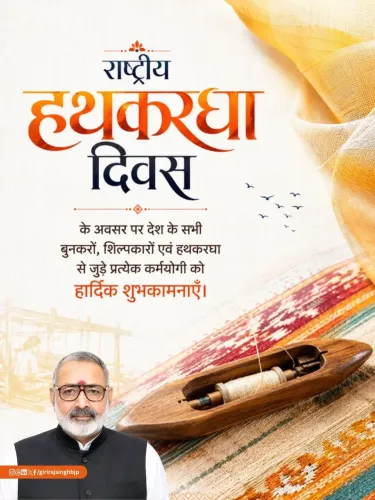
Posting in Hindi, the Minister wrote: 'हथकरघा केवल वस्त्र निर्माण का माध्यम नहीं' — 'Handloom is not merely a means of making fabric, but the powerful foundation of India's rich cultural heritage, exquisite craftsmanship, and the livelihoods of millions of weaver families.' He added that every handloom product is a symbol of weavers' skill, dedication, and the resolve of an Atmanirbhar Bharat — a self-reliant India.
A day rooted in the Swadeshi centenary
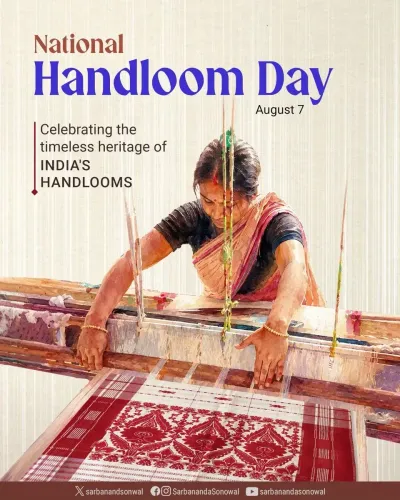
National Handloom Day is observed every year on 7 August — a date chosen deliberately to mark the centenary of the Swadeshi Movement of 1905, when Indians first turned to indigenous cloth as an act of political and economic defiance. The day was formally instituted in 2015, tying a century-old act of resistance to a contemporary push for domestic self-sufficiency.
That lineage gives the annual observance its weight. It is not merely a ceremonial nod to artisans — it is a reminder that the handloom sector sits at the intersection of heritage, rural employment, and national economic philosophy.
Handloom as livelihood, not just legacy
The Ministry of Textiles has consistently framed handloom as a dual asset: a cultural treasure and a decentralised employment engine. Weaver families across states from West Bengal to Telangana, Uttar Pradesh to Assam, depend on the sector for income that flows without factory infrastructure — making it central to any serious rural welfare agenda.
Singh's post reinforced that framing, calling the day an opportunity to 'strengthen the resolve to take Indian handloom to new heights' — language that signals continued policy attention to market access and artisan welfare even as the Ministry eyes textile export targets.
The handloom sector's endurance is its own argument. Mechanised alternatives have not displaced it — partly because of government support, partly because the world market for authentic, handcrafted Indian textiles keeps growing. The question the Ministry faces every year on this day is the same: celebration is easy; sustained, scalable support for weaver incomes is harder.
Point of View
UP, and West Bengal. Successive governments have used this day for rhetorical commitment; the sharper test is whether policy announcements on weaver welfare and market access follow. As the Ministry eyes textile export expansion, how it converts this annual goodwill into measurable income gains for weavers will define whether the day is ceremony or catalyst.
NationPress
7 Aug 2026
Frequently Asked Questions
When is National Handloom Day celebrated in India?
National Handloom Day is celebrated every year on 7 August . It was first observed in 2015 to mark the centenary of the Swadeshi Movement launched on 7 August 1905.
Why did Giriraj Singh post about handloom on 7 August 2026?
As Union Textiles Minister , Giriraj Singh posted greetings on National Handloom Day to honour India's weaver families and reaffirm the government's commitment to promoting handloom as a cultural and livelihood asset.
What is the significance of National Handloom Day?
National Handloom Day honours India's handloom heritage and the contributions of weaver communities. The date, 7 August , commemorates the launch of the Swadeshi Movement in 1905 , which encouraged Indians to use domestically made cloth.
What is Atmanirbhar Bharat and how does it relate to handloom?
Atmanirbhar Bharat is the government's campaign promoting self-reliance through domestic production. The Ministry of Textiles links handloom to this mission, positioning weaver-made products as symbols of indigenous skill and economic independence.
Who is Giriraj Singh?
Giriraj Singh is India's Union Minister of Textiles , a senior BJP leader, and a Lok Sabha MP from Begusarai, Bihar .