Giriraj Singh marks Surgical Strike Day, calls it India's new counter-terror doctrine
Synopsis
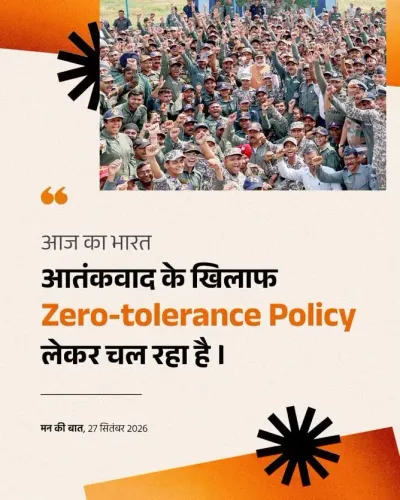
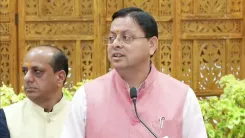
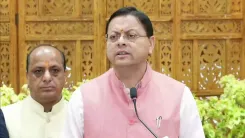
Union Textiles Minister Giriraj Singh marked the 2016 Surgical Strikes anniversary on 27 September 2026, posting in Hindi that the strikes wrote a new chapter in India's counter-terror policy — framing action against terrorism as 'firm resolve', not mere retaliation, under the #MannKiBaat banner.
Key Takeaways
Union Textiles Minister Giriraj Singh posted on 27 September 2026 invoking India's 2016 Surgical Strikes on their anniversary.
He described the strikes as writing a 'new chapter' in India's policy against terrorism.
Singh framed counter-terror action as a 'firm resolve' toward national security — not mere reaction.
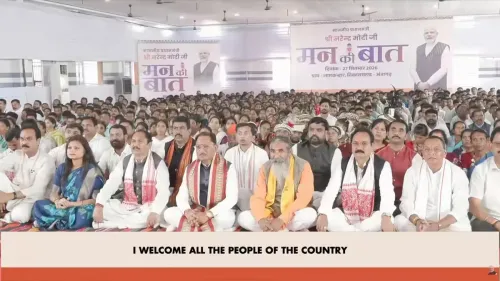
The post was tagged #MannKiBaat , linking the message to Prime Minister Modi's monthly radio address.
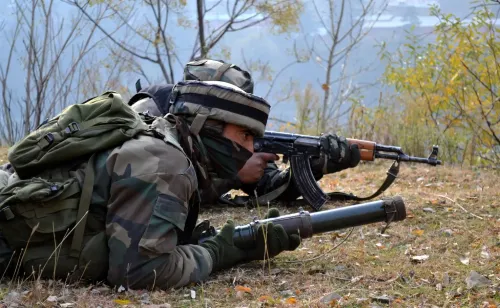
India's 2016 Surgical Strikes targeted terrorist launch pads in Pakistan-occupied Kashmir after the Uri attack killed 19 soldiers .
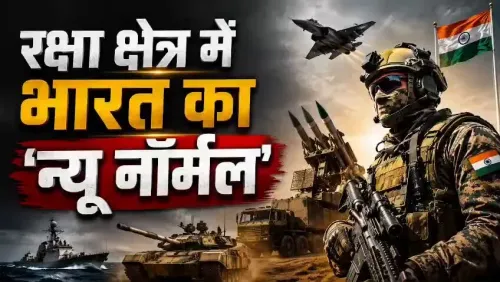
Since 2016 , India has shifted from strategic restraint to publicly acknowledging proactive counter-terror operations as official doctrine.
Ten years after Indian Army commandos crossed the Line of Control under cover of darkness, Union Textiles Minister Giriraj Singh invoked that operation on Sunday, 27 September 2026 to frame India's counter-terrorism posture as deliberate policy — not reactive impulse — using the hashtag #MannKiBaat.
Posting in Hindi, the senior BJP leader wrote: 'Surgical Strike ne aatankvaad ke khilaf Bharat ki neeti ka naya adhyaay likha.' ('The Surgical Strike wrote a new chapter in India's policy against terrorism.'). He added that India has made it clear that action against terror is not merely a reaction, but a 'firm resolve towards the security of the nation.'
What the 2016 strikes established — and why they are still invoked
On 29 September 2016, the Indian Army publicly announced it had conducted surgical strikes against terrorist launch pads in Pakistan-occupied Kashmir, days after a fidayeen attack at the Uri army base in Jammu & Kashmir killed 19 soldiers. The announcement was itself historic — India had conducted such operations before, but never acknowledged them. That single act of transparency rewrote the rules of the engagement.
The strikes became a dividing line in how India communicates its security doctrine. Before 2016, the default posture was strategic restraint — absorb, regroup, calibrate. After, successive governments have publicly framed cross-border counter-terror action as a credible, exercisable option, not a last resort buried in diplomatic ambiguity.
The Mann Ki Baat connection on Surgical Strike Day's anniversary
Singh's post carries the #MannKiBaat tag — Prime Minister Narendra Modi's long-running monthly radio address that frequently touches on themes of national security, governance, and public resolve. The anniversary of the 2016 strikes falls on 29 September, making the last Sunday of September a recurring moment for the ruling dispensation to reinforce the deterrence narrative.
By attaching the tag, Singh links his messaging to a broader government communication exercise — reinforcing a point the BJP has consistently made: that proactive counter-terror action is doctrine, not exception.
From reaction to resolve: India's shifting security vocabulary
The language Singh uses — 'firm resolve' (dridh sankalp) rather than 'retaliation' — is deliberate. India's strategic community has spent a decade building a vocabulary that separates deterrence from escalation. The argument is that signalling capability and willingness to act pre-emptively reduces the probability of an attack in the first place. Whether that deterrence holds is debated. That it has become official vocabulary is not.
For the BJP, the surgical strikes remain one of the most electorally resonant security events of the last decade — a moment, they argue, when India drew a line. Ministers like Singh keep that moment alive in public discourse, connecting it to present-day security pledges. The anniversary, year after year, is their proof of concept.
The question now is whether #MannKiBaat and the broader anniversary messaging signals any new articulation of counter-terror doctrine — or whether it is the established narrative doing what it does best: holding the line.
Point of View
The minister folds individual messaging into the Prime Minister's communication architecture, amplifying its reach. The framing of strikes as 'resolve' rather than 'retaliation' is also strategically significant: it positions India as a proactive security actor, not a reactive one — a distinction with real implications for how future cross-border incidents might be handled and communicated. Ten years on, the strikes function less as a military event and more as an ideological anchor.
NationPress
27 Sept 2026
Frequently Asked Questions
What are India's 2016 Surgical Strikes?
India's 2016 Surgical Strikes were cross-border military operations conducted on 29 September 2016 against terrorist launch pads in Pakistan-occupied Kashmir , announced publicly by the Indian Army days after the Uri attack killed 19 soldiers .
Why did Giriraj Singh post about Surgical Strikes on 27 September 2026?
The anniversary of the 2016 Surgical Strikes falls on 29 September , making the surrounding dates a recurring occasion for BJP leaders to reinforce the government's counter-terror narrative and deterrence doctrine.
What is Mann Ki Baat?
Mann Ki Baat is a monthly radio address by Prime Minister Narendra Modi in which he discusses governance, national security, public issues, and citizen achievements.
What did Giriraj Singh say about the Surgical Strikes?
Singh wrote in Hindi that the Surgical Strikes 'wrote a new chapter in India's policy against terrorism' and that India has made clear that counter-terror action is not merely a reaction but a 'firm resolve towards the security of the nation.'
How have India's Surgical Strikes changed its counter-terror doctrine?
Since 2016 , India has shifted from a posture of strategic restraint to publicly acknowledging proactive counter-terror operations, framing such actions as demonstrations of deterrence rather than retaliatory responses.