Dr. Jitendra Singh Echoes PM Modi's Anti-Terror Warning from Mann Ki Baat
Synopsis
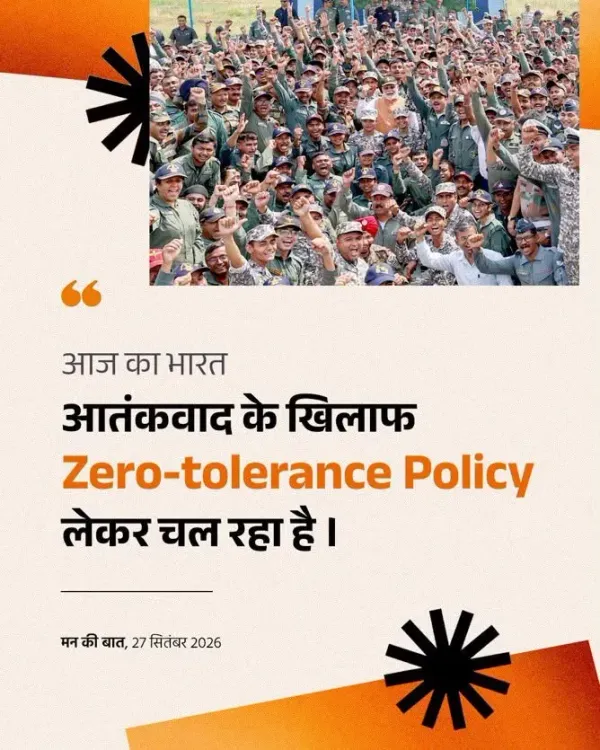
Union Minister Dr. Jitendra Singh amplified PM Modi's Mann Ki Baat declaration on September 27, 2026, reaffirming India's zero-tolerance stance on terrorism and its doctrine of strong, decisive retaliation — a posture underpinned by the Uri surgical strikes and Balakot airstrike precedents.
Key Takeaways
Jitendra Singh quoted PM Narendra Modi 's anti-terrorism statement from Mann Ki Baat on September 27, 2026 .
PM Modi stated: 'India has made it clear that terrorism will be met with a strong and decisive response.' Mann Ki Baat is the Prime Minister's monthly radio address, used to communicate directly with citizens on national issues including security.
India's proactive counter-terrorism doctrine is backed by precedents including the 2016 surgical strikes after Uri and the 2019 Balakot airstrike after Pulwama.
Since 2014 , Indian policy has shifted from restraint-only responses to visible, proactive retaliation against cross-border terrorism.
The message targets both domestic and international audiences, signalling that India's zero-tolerance posture is settled, standing policy.
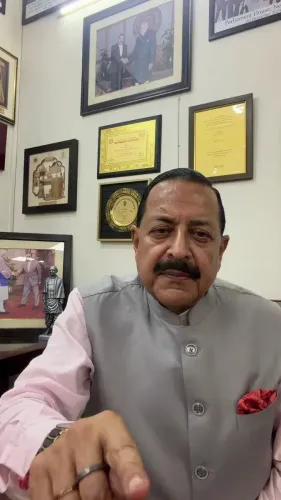
India's resolve on terrorism is not rhetoric — it is doctrine. Union Science and Technology Minister Dr. Jitendra Singh on Sunday, September 27, 2026, amplified Prime Minister Narendra Modi's unambiguous warning on cross-border terrorism, quoting the PM's words from Mann Ki Baat: 'India has made it clear that terrorism will be met with a strong and decisive response.'
PM Modi's Mann Ki Baat and the Anti-Terror Message
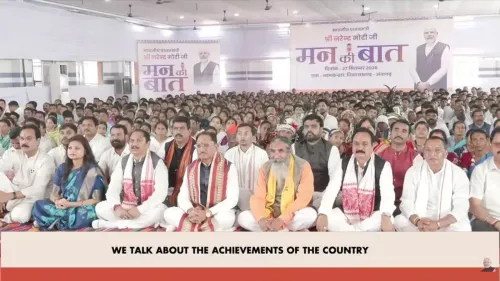
Mann Ki Baat — the Prime Minister's monthly radio address to the nation — has long served as a platform where Narendra Modi speaks directly to citizens on issues ranging from governance to national security. Sunday's edition carried a sharp, unambiguous signal on terrorism that ministers were quick to amplify across social media. Dr. Jitendra Singh's post distilled the PM's message to its sharpest edge: India will respond, and it will respond decisively. The statement fits within a well-established pattern. Since 2014, Indian strategic doctrine has shifted visibly from a posture of restraint to one of proactive and visible response. The 2016 Uri attack was followed by surgical strikes across the Line of Control. The 2019 Pulwama attack triggered the Balakot airstrike — a first-of-its-kind strike on terrorist infrastructure deep inside Pakistani territory. Each episode recalibrated the threshold of Indian tolerance. What Modi reiterated on Sunday is that the threshold has not moved back.A Doctrine Reinforced, Not Invented
The political significance of amplifying this message through Mann Ki Baat — a mass-reach, civilian-facing platform — lies in its dual audience: the domestic public and the international observer. When a Prime Minister uses a radio programme, not a military briefing or a parliamentary statement, to restate zero-tolerance on terrorism, the message is deliberate and layered. It communicates normalised resolve: this is not crisis-mode talk, this is standing policy. Defence forces and border communities remain the most immediate stakeholders of this posture. For communities living along India's sensitive frontiers, the PM's words carry weight that goes beyond political signalling — they are an assurance of institutional backing. The consistency of this messaging across years and platforms — from surgical strikes to airstrikes to radio addresses — is what transforms a statement into a strategic signal. India has built a record, and the record speaks louder than any single line. What Mann Ki Baat did on Sunday was remind everyone that the record stands.Point of View
Creating a unified messaging front. This fits the broader arc since 2014 in which India has sought to make its counter-terrorism doctrine not just operational but openly declaratory — a signal to adversaries that consequences are a matter of policy, not impulse. Watch for whether this messaging precedes or follows any specific security development in parliamentary sessions or subsequent Mann Ki Baat episodes.
NationPress
27 Sept 2026
Frequently Asked Questions
What did PM Modi say about terrorism in Mann Ki Baat?
PM Modi stated that 'India has made it clear that terrorism will be met with a strong and decisive response,' a line shared by Union Minister Dr. Jitendra Singh from the September 27, 2026 edition of Mann Ki Baat.
What is Mann Ki Baat?
Mann Ki Baat is a monthly radio address by Prime Minister Narendra Modi in which he speaks directly to citizens on issues of national importance, including governance, security, and social welfare.
What is India's official stance on terrorism?
India maintains a zero-tolerance policy on terrorism, backed by proactive military responses such as the 2016 surgical strikes after the Uri attack and the 2019 Balakot airstrike following the Pulwama attack.
Why did Dr. Jitendra Singh post about terrorism on X?
Dr. Jitendra Singh, Union Minister of Science and Technology, amplified PM Modi's anti-terrorism statement from Mann Ki Baat on September 27, 2026, as part of a broader government effort to communicate India's national security posture.
What were India's past military responses to terrorism?
India conducted surgical strikes across the Line of Control in 2016 following the Uri attack, and carried out the Balakot airstrike in 2019 after the Pulwama attack — both marking a shift towards visible, proactive counter-terrorism responses.