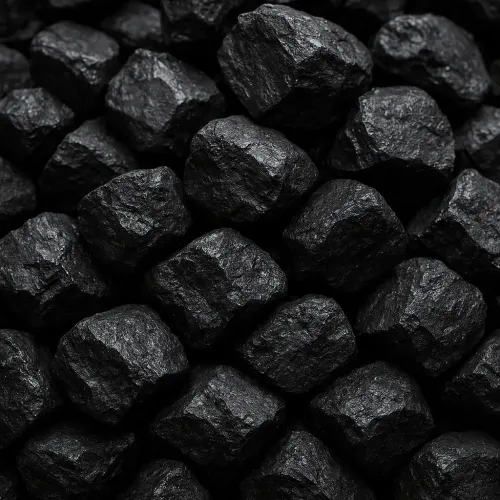
Giriraj Singh backs coal gasification to cut import reliance
Synopsis
Union Textiles Minister Giriraj Singh endorsed India's Coal Gasification Scheme on 11 November 2026, calling it vital for cutting import dependence and boosting domestic urea, methanol, and chemical production under the Atmanirbhar Bharat mission.
Key Takeaways
Giriraj Singh publicly backed the Coal Gasification Scheme on 11 November 2026 , framing it as central to India's self-reliance agenda.
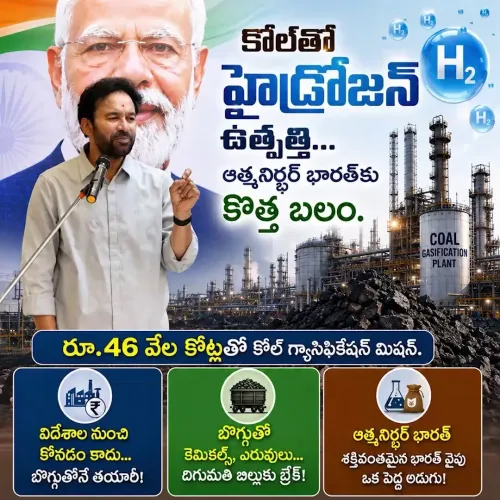
The scheme converts coal into syngas for domestic production of urea, methanol, and industrial chemicals , reducing costly imports.
The Ministry of Coal set a target in 2020 to gasify 100 million tonnes of coal by 2030 .
The initiative aligns with the Atmanirbhar Bharat framework launched in 2020 to cut dependence on imported fertilisers and petrochemicals.
Key sectors set to benefit include the fertiliser industry and chemical manufacturers , both heavily exposed to global import price volatility.
Next milestones to watch: pilot project rollouts and potential incentives in the next Union Budget or coal ministry action plan.
India's coal reserves, long burned for power, could soon become the raw material for fertilisers, fuels, and industrial chemicals — and Union Textiles Minister Giriraj Singh wants the country to move faster on that pivot. On Wednesday, 11 November 2026, Singh took to X to champion India's Coal Gasification Scheme, calling it a critical step toward reducing import dependence and unlocking the potential of domestic natural resources.
Posting in Hindi, Singh wrote: 'कोयला गैसीकरण योजना भारत के प्राकृतिक संसाधनों के बेहतर उपयोग और आयात पर निर्भरता घटाने की दिशा में महत्वपूर्ण पहल है।' ('The Coal Gasification Scheme is an important initiative in the direction of better utilisation of India's natural resources and reducing dependence on imports.') He added that it would boost domestic production of urea, methanol, and other chemicals, and give fresh momentum to energy security, industrial growth, and the Atmanirbhar Bharat mission.
From raw coal to urea: the logic of gasification
Coal gasification converts coal into synthetic gas — or syngas — which can then be processed into a range of high-value products rather than simply combusted for electricity. For India, the strategic prize is urea: the country is one of the world's largest importers of the fertiliser, and replacing even a fraction of that import bill with domestically produced urea would have significant consequences for both the trade deficit and farm input costs.
The Ministry of Coal set a landmark target back in 2020: gasify 100 million tonnes of coal by 2030. That ambition fits neatly into the same year's Atmanirbhar Bharat framework, which pushed hard for domestic manufacturing in precisely these upstream industrial sectors — fertilisers, petrochemicals, and specialty chemicals — where India has historically sent large sums abroad.
Where the fertiliser and chemicals industries stand to gain
The domestic fertiliser industry and chemical manufacturers are the most immediate beneficiaries if the scheme scales. India's reliance on imported urea and methanol leaves both sectors exposed to global price swings and supply-chain disruptions — vulnerabilities made painfully visible in recent years. A reliable domestic feedstock sourced from India's coal belt would change that calculus substantially.
Singh's post does not announce a new policy measure or budget allocation — it is a statement of political and policy intent from a senior cabinet minister, signalling continued government focus on the scheme. The next concrete milestones to watch are the rollout of pilot gasification projects and any new incentives that could appear in the next Union Budget or a coal ministry action plan.
Atmanirbhar Bharat's energy dimension
India's self-reliance campaign has largely been discussed through the lens of electronics, defence, and pharmaceuticals. Coal gasification represents its less-visible but equally consequential energy dimension — the idea that the country's vast, underutilised coal reserves, rather than being a liability in a decarbonising world, can serve as a bridge feedstock for chemicals the economy urgently needs. That reframing is at the heart of what Singh is advocating.
Whether pilot projects accelerate into full commercial scale will determine whether the 2030 target of 100 million tonnes remains achievable. The political pressure from ministers like Singh keeps the agenda visible — and that, in India's policy ecosystem, is rarely inconsequential.
Point of View
Which broadens the scheme's political constituency beyond the coal and fertiliser sectors. For the BJP government, championing value-added coal use also offers a way to defend domestic coal production against decarbonisation pressure while still appearing forward-looking on industrial self-sufficiency. The 2030 gasification target, set six years ago, will increasingly need operational proof points — not just ministerial endorsements — to retain credibility.
NationPress
11 Nov 2026
Frequently Asked Questions
What is India's Coal Gasification Scheme?
India's Coal Gasification Scheme is a government initiative to convert domestic coal into synthetic gas (syngas), which can then be used to manufacture urea, methanol, and other industrial chemicals domestically, reducing the need for imports.
What is India's coal gasification target by 2030?
The Ministry of Coal set a target in 2020 to gasify 100 million tonnes of coal by 2030 to promote alternative, value-added uses of India's domestic coal reserves.
Why did Giriraj Singh comment on coal gasification when he is Textiles Minister?
Senior cabinet ministers in India frequently advocate for cross-sectoral policy priorities, particularly those tied to flagship missions like Atmanirbhar Bharat. Singh's post reflects broad political backing for the scheme rather than a portfolio-specific announcement.
How does coal gasification help reduce India's import dependence?
By producing urea, methanol, and chemicals from domestic coal rather than importing them, India can reduce its exposure to global commodity price swings and lower its trade deficit in these sectors.
What is Atmanirbhar Bharat and how does coal gasification relate to it?
Atmanirbhar Bharat is a self-reliance campaign launched by the Indian government in 2020 to boost domestic manufacturing and reduce imports. Coal gasification supports this mission by enabling domestic production of fertilisers and petrochemicals that India currently imports in large quantities.