Giriraj Singh Meets Chhattisgarh CM Vishnu Deo Sai, Reviews State Development
Synopsis
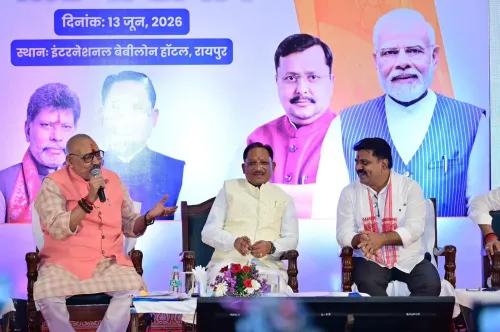
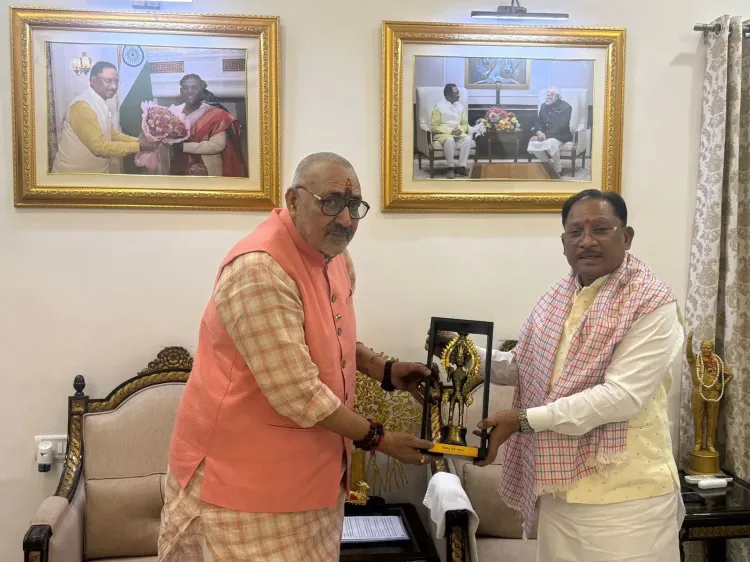
Union Textiles Minister Giriraj Singh met Chhattisgarh Chief Minister Vishnu Deo Sai on 13 June 2026, discussing development works and welfare schemes. Singh invoked the BJP's 'Double Engine Sarkar' narrative, citing PM Modi's leadership as the driver of coordinated centre-state governance in the state.
Key Takeaways
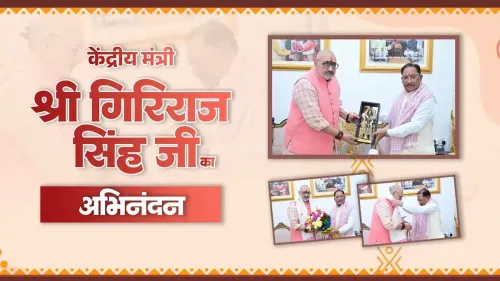
Giriraj Singh , Union Textiles Minister, held a courtesy meeting with Chhattisgarh CM Vishnu Deo Sai on 13 June 2026 .
Discussions covered the state's development works and public welfare schemes.
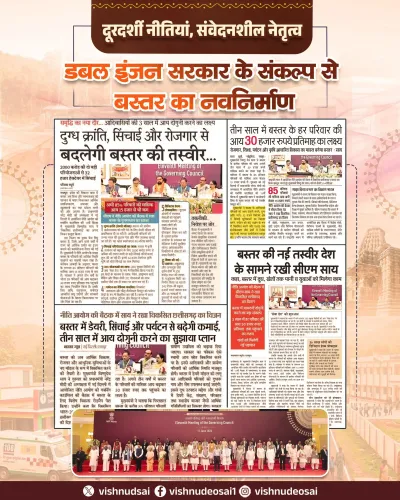
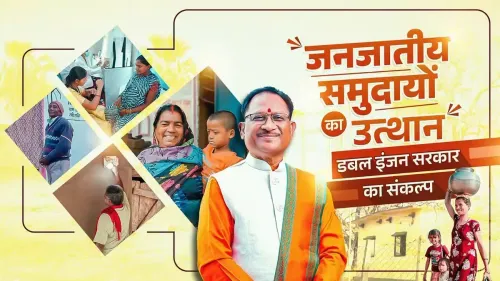
Singh cited PM Narendra Modi's leadership as central to the 'Double Engine Sarkar' model of governance in Chhattisgarh .
Chhattisgarh returned to BJP rule in December 2023 after the party won the state assembly elections.
The 'Double Engine Sarkar' framing describes coordinated development where BJP governs at both Centre and state levels, a narrative active since 2014 .
No specific policy announcements from the meeting were confirmed at the time of reporting.
Union Textiles Minister Giriraj Singh held a courtesy meeting with Chhattisgarh Chief Minister Vishnu Deo Sai on Saturday, 13 June 2026, discussing the state's development works and public welfare schemes. The meeting underscores the BJP's ongoing effort to project administrative coordination between the central government and its party-ruled states.
Context
Singh posted about the meeting on X, writing in Hindi: 'aaj Chhattisgarh ke mananiya Mukhyamantri Shri Vishnu Deo Sai ji se shishṭachar bheṇṭ kar rajya ke vikas karyon evam jankalyankari yojanaon par sarthak charcha ki' — ('Today, I paid a courtesy visit to the honourable Chief Minister of Chhattisgarh, Shri Vishnu Deo Sai, and had a meaningful discussion on the state's development works and public welfare schemes.')
Singh further noted that under the leadership of Prime Minister Narendra Modi, coordinated efforts between the central and state governments are taking the 'Double Engine Sarkar' in Chhattisgarh to new dimensions of development, good governance, and public welfare.
Policy Backdrop
The 'Double Engine Sarkar' formulation has been a central plank of BJP communications since 2014, describing the developmental synergy that the party argues is possible when it holds power simultaneously at the Centre and in a state. Chhattisgarh returned to BJP rule in December 2023, when the party secured a majority in the state assembly elections and Vishnu Deo Sai was sworn in as Chief Minister.
Since that transition, central ministers have periodically engaged with the Chhattisgarh administration to align delivery of centrally sponsored schemes with state priorities. The Textiles Ministry, in particular, has relevance for the state given its handloom and craft traditions.
Stakeholders and Impact
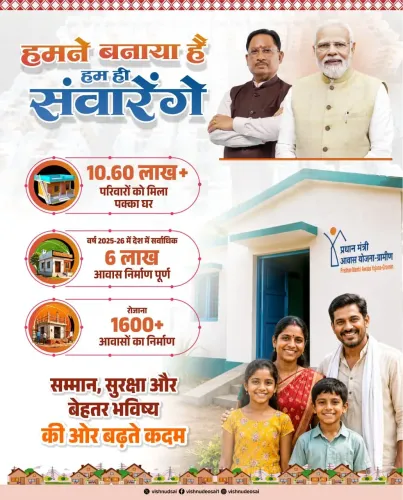
The primary stakeholders in such inter-governmental consultations are Chhattisgarh's citizens, particularly beneficiaries of centrally sponsored welfare schemes covering housing, livelihood, and rural development. The state's artisan and handloom communities also stand to benefit from any coordination between the Union Textiles Ministry and the state administration.
For the BJP, such meetings serve a dual purpose: they reinforce the party's narrative of seamless centre-state governance and provide visible evidence of ministerial outreach ahead of periodic electoral cycles. The broader pattern, accelerated after the 2023 assembly elections that expanded the number of BJP-led states, involves regular high-profile engagements between Union ministers and state chief ministers.
What's Next
Observers will watch for follow-up action from the Textiles Ministry in Chhattisgarh — including potential joint reviews of scheme implementation, announcements related to handloom clusters, or visits by state officials to central bodies. The meeting's framing around 'new dimensions' of welfare delivery suggests further coordination on centrally sponsored programmes is anticipated, though no specific announcements were confirmed at the time of this report.
Point of View
Reinforcing the 'Double Engine Sarkar' brand ahead of any potential electoral or administrative milestones. For Giriraj Singh, whose portfolio in Textiles carries direct relevance for Chhattisgarh's artisan economy, such engagements serve both a governance and a political signalling function. The renewed emphasis on centre-state synergy since the 2023 assembly elections reflects the party's broader strategy of converting electoral wins into a governance narrative. Whether the meeting translates into concrete scheme outcomes for Chhattisgarh residents will be the real test of this coordination.
NationPress
13 Sept 2026
Frequently Asked Questions
Why did Giriraj Singh meet Chhattisgarh CM Vishnu Deo Sai?
Giriraj Singh met Chief Minister Vishnu Deo Sai on 13 June 2026 for a courtesy visit to discuss Chhattisgarh's development works and public welfare schemes, consistent with BJP's centre-state coordination efforts.
What is the 'Double Engine Sarkar' concept?
'Double Engine Sarkar' is a BJP formulation, active since 2014, that describes accelerated development when the party holds power at both the central government and a state government simultaneously.
When did BJP come to power in Chhattisgarh?
The BJP won the Chhattisgarh assembly elections in December 2023, after which Vishnu Deo Sai was sworn in as Chief Minister.
What is Giriraj Singh's current role?
Giriraj Singh is the Union Minister of Textiles and a senior BJP leader. He is a Lok Sabha MP from Begusarai, Bihar.
Were any new schemes announced for Chhattisgarh after the meeting?
No specific policy announcements or new scheme launches from the 13 June 2026 meeting have been confirmed in publicly available records at the time of this report.