Giriraj Singh: New India answers with strength, not fear
Synopsis
On Independence Day 2026, Union Textiles Minister Giriraj Singh warned Pakistan that a 'New India' responds to threats through strength, not fear, calling the tricolour a symbol of national power and resolve. The statement fits the BJP government's long-held zero-tolerance posture on cross-border terrorism.
Key Takeaways
Giriraj Singh posted a sharp Independence Day warning to Pakistan on August 15, 2026 .
He declared that 'New India' responds to threats through strength, not intimidation.
Singh accused Pakistan of 'nurturing terrorism' and warned it would feel India's power every time it challenges the country.
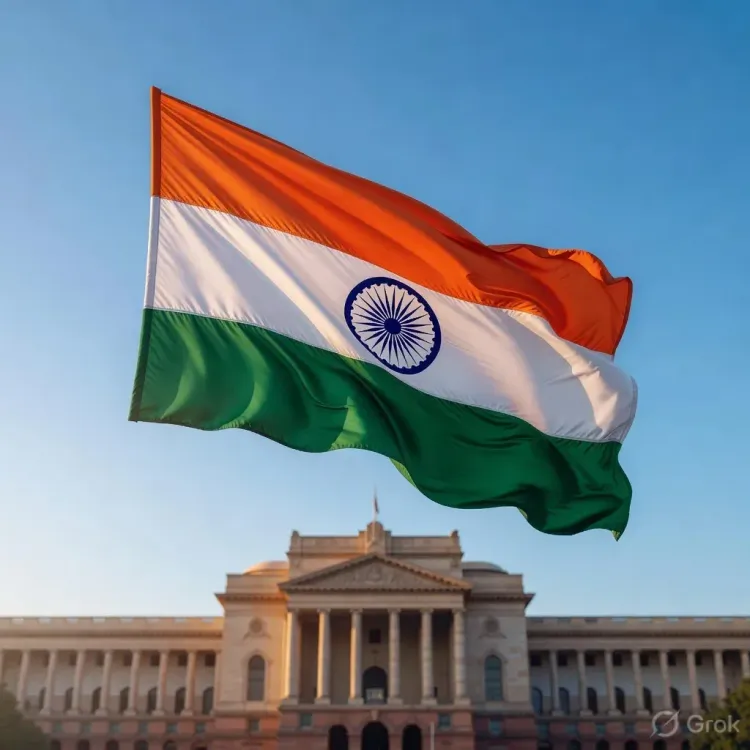
He called the tricolour a symbol of India's 'strength and resolve', not merely national pride.
The statement fits the BJP government's post- 2016 Uri attack doctrine of overt, calibrated responses to cross-border terrorism.
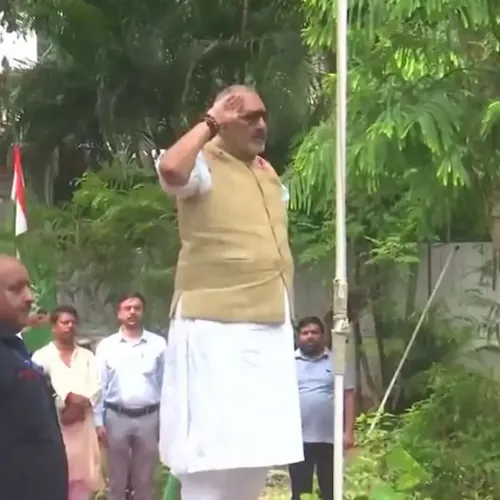
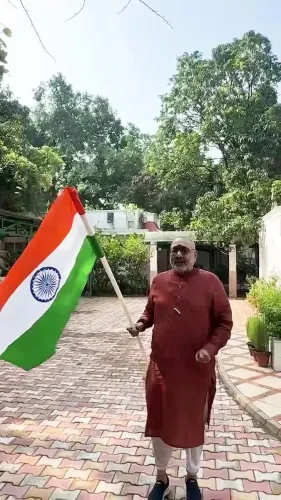
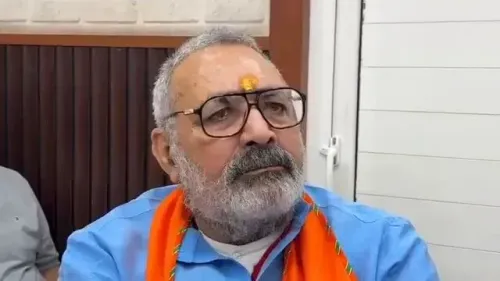
On Independence Day, August 15, 2026, as India marked another year of freedom, Union Textiles Minister Giriraj Singh sent a pointed message toward Islamabad — one that cut through the ceremonial mood with the sharp edge of a security warning. The tricolour, he declared, is not merely a symbol of pride; it is a declaration of power and resolve.
Posting in Hindi on X, Singh wrote: 'Aaj jab Bharat apni swatantrata aur sambhuta ka utsav mana raha hai, tab Pakistan ko yeh samajh lena chahiye ki yeh naya Bharat hai' — 'Today, as India celebrates its freedom and sovereignty, Pakistan must understand that this is a new India, one that responds not to threats but through its own strength.' He added that Pakistan, which 'nurtures terrorism', would be made to feel India's power every time it dares to challenge the country.
The 'New India' doctrine on Independence Day
Singh's language is deliberate and familiar within BJP's political vocabulary. Since 2014, the ruling dispensation has consistently framed India's posture toward Pakistan around a 'zero tolerance for terrorism' doctrine — a break, it argues, from what it characterises as a more passive earlier era. The phrase 'naya Bharat' (new India) has been a recurring rhetorical pillar, signalling a government willing to act rather than merely protest.
The pivot point in that narrative was the 2016 Uri attack, after which India publicly announced surgical strikes across the Line of Control — a moment the ruling party has repeatedly cited as proof that cross-border terrorism now carries a tangible military cost. Singh's Independence Day post channels that same logic: provocations will be met with demonstrated capability, not diplomatic restraint alone.
Why senior leaders signal on August 15
Independence Day is not a random backdrop for this kind of statement — it is a calculated one. The occasion concentrates the nation's attention on sovereignty, sacrifice, and the armed forces, giving political messaging on national security its sharpest resonance. Senior leaders across the spectrum use the day to stake out positions on defence and foreign policy, knowing the audience is primed.
Singh, a Lok Sabha MP from Begusarai, Bihar, has a track record of outspoken public statements on security and national identity. His post on this occasion fits a broader pattern: Independence Day rhetoric from the ruling party's senior ranks frequently doubles as a signal to both domestic and international audiences about where India's red lines sit.
The tricolour, Singh concluded, is 'Bharat ki shakti aur sankalp ka prateek' — 'a symbol of India's strength and resolve.' On a day when every statement is amplified, that closing line lands as both a celebration and a warning.
Point of View
And Pakistan-focused messaging on this day carries deliberate dual-audience intent — rallying domestic sentiment while projecting resolve abroad. The 'New India' framing is the party's preferred shorthand for a muscular foreign-policy posture anchored in the 2016 surgical-strikes moment. What makes this worth watching is whether it foreshadows any Ministry of External Affairs follow-up, or remains part of the routine high-decibel Independence Day cycle.
NationPress
15 Aug 2026
Frequently Asked Questions
What did Giriraj Singh say about Pakistan on Independence Day 2026?
Giriraj Singh warned Pakistan that 'New India' responds to threats through its own strength, not fear, and that Pakistan — which he accused of harbouring terrorism — would be made to feel India's power every time it challenged the country.
Who is Giriraj Singh?
Giriraj Singh is India's Union Minister of Textiles, a senior BJP leader, and a Lok Sabha MP from Begusarai, Bihar, known for outspoken statements on national security and sovereignty.
What is the 'New India' doctrine in the context of Pakistan?
'New India' is a political phrase used by the BJP-led government since 2014 to signal a shift toward overt, calibrated responses to cross-border terrorism — most visibly demonstrated by the publicly announced surgical strikes after the 2016 Uri attack.
Why do Indian leaders make strong statements about Pakistan on Independence Day?
Independence Day concentrates national attention on sovereignty and the armed forces, making it a high-resonance occasion for political messaging on defence and foreign policy, aimed at both domestic and international audiences.
What is the significance of the tricolour in Giriraj Singh's post?
Singh described the tricolour not just as a symbol of national pride and honour, but as a representation of India's strength and resolve — framing it as a statement of capability rather than mere sentiment.