Giriraj Singh: Opposition Fears Viksit Bharat 2047 Vision
Synopsis
Union Textiles Minister Giriraj Singh accused the opposition of daily theatrics to derail PM Modi's Viksit Bharat 2047 vision, asserting India runs on democracy — not anyone's whims. The post continues a long-running BJP pattern of framing opposition dissent as sabotage of national development goals.
Key Takeaways
Giriraj Singh posted on October 17, 2026 accusing the opposition of 'new theatrics every day' to stall India's development.
The post directly defends PM Modi's Viksit Bharat 2047 goal, first announced on Independence Day, August 15, 2022 .
Singh described opposition conduct as born of satta ki baukhlahat — 'the frenzy of being out of power.' He closed by invoking democracy as both India's governing principle and its guarantee against arbitrary disruption.
The post continues an established BJP pattern of framing parliamentary opposition protests as obstacles to national progress since 2014 .
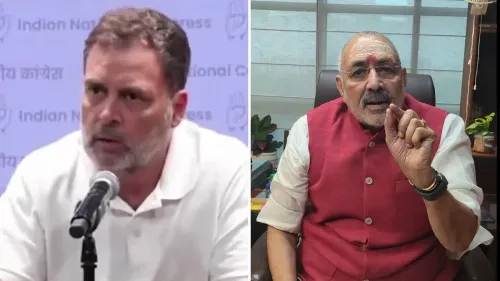
The ambition to transform India into a developed nation by 2047 has become a flashpoint in Indian politics — and Union Textiles Minister Giriraj Singh is not letting the opposition forget it. On Saturday, October 17, 2026, the senior BJP leader and Lok Sabha MP from Begusarai, Bihar posted a sharp broadside on X, accusing the opposition of daily theatrics designed to derail the country's development trajectory.
Posting in Hindi, Singh wrote: '2047 tak Bharat ko viksit banane ka mananiya Pradhanmantri ji ka sankalp vipaksh ki aankhon mein khatkta hai' — 'The Honourable Prime Minister's resolve to make India a developed nation by 2047 is a thorn in the opposition's eye.' He accused the opposition of staging 'new theatrics every day' in a frenzy born of being out of power, and of trying to obstruct national progress. His closing line carried a pointed democratic assertion: 'Remember — India is not run by anyone's whims, but by democracy, and it will continue to be run by democracy alone.'
The Viksit Bharat pledge and its political weight
Prime Minister Narendra Modi first articulated the Viksit Bharat 2047 goal in his Independence Day address on August 15, 2022 — the country's 75th anniversary of independence. The vision frames the next 25 years as India's decisive window to achieve developed-nation status, drawing a straight line between current policy ambition and the centenary of the republic. Since then, the goal has been embedded in virtually every major government communication, from Union Budgets to flagship scheme launches.
That ambition, precisely because it is so central to the BJP's political identity, has made it a recurring battleground. Singh's post fits a well-worn pattern: senior BJP ministers framing opposition protests and parliamentary disruptions not as legitimate dissent but as sabotage of a national mission. The argument is deliberately pitched at a patriotic register — questioning the government's policies is cast as questioning India's future itself.
A recurring charge, sharpened for the moment
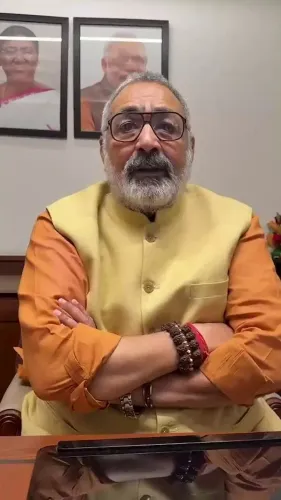
The rhetoric Singh deploys is not new — similar language has surfaced from the ruling party during every major parliamentary session since 2014, particularly when opposition walkouts or adjournments disrupt government business. What gives his post its edge today is the video attached to it: a one-video media payload that suggests a specific trigger, even if the precise incident remains unverified at this point.
The opposition camp, for its part, has consistently argued that disruptions are a last resort when legitimate questions on economic policy, institutional independence, and governance accountability go unanswered. That counter-narrative is entirely absent from Singh's framing — by design.
Democracy as the closing argument
The most rhetorically careful line in Singh's post is also the final one. By invoking democracy as the system that both enables and constrains all actors — government and opposition alike — he implicitly positions the BJP as democracy's custodian and the opposition as its obstacle. It is a move that insulates the ruling party from being branded authoritarian while simultaneously delegitimising dissent as 'nautanki' — nautanki, meaning political drama or farce.
Whether that framing lands with voters will depend on what happens next in Parliament. Every disruption the opposition stages becomes material for posts like this one; every smooth legislative session removes the ammunition. The Viksit Bharat 2047 clock is ticking — and both sides know the narrative around it matters as much as the policy beneath it.
Point of View
Then brand any challenge to it as anti-national disruption. By anchoring the attack to Viksit Bharat 2047 — a goal with a fixed, emotive deadline — he gives the rhetoric a permanence that outlasts any single parliamentary session. The democracy invocation at the close is particularly calculated: it simultaneously answers charges of authoritarianism and frames the opposition as the real threat to democratic governance. The post signals that as the 2047 milestone becomes a more proximate political reference, both the BJP and the opposition will sharpen their competing narratives around it.
NationPress
17 Oct 2026
Frequently Asked Questions
What is Viksit Bharat 2047?
Viksit Bharat 2047 is Prime Minister Narendra Modi's vision to make India a developed nation by 2047, the centenary of India's independence, first announced in his Independence Day address on August 15, 2022.
What did Giriraj Singh say about the opposition?
Singh accused the opposition of staging 'new theatrics every day' to obstruct national progress, saying PM Modi's 2047 development goal is 'a thorn in the opposition's eye.'
Who is Giriraj Singh?
Giriraj Singh is India's Union Minister of Textiles, a senior BJP leader, and Lok Sabha MP representing Begusarai constituency in Bihar.
Why does the BJP call opposition protests 'nautanki'?
The BJP frequently uses the term 'nautanki' (political drama or farce) to delegitimise opposition protests, framing them as performative disruption rather than substantive dissent — a pattern visible across multiple parliamentary sessions since 2014.
What does 'satta ki baukhlahat' mean in Giriraj Singh's post?
'Satta ki baukhlahat' translates to 'the frenzy of being out of power,' used by Singh to suggest the opposition acts out of desperation rather than genuine public interest.