Giriraj Singh pays tribute on Kakori Train Action anniversary
Synopsis
Union Textiles Minister Giriraj Singh marked the anniversary of the 1925 Kakori Train Action on 9 August, saluting revolutionaries Ram Prasad Bismil, Ashfaqulla Khan, Chandrashekhar Azad, Roshan Singh, and Rajendra Nath Lahiri for their sacrifice against British rule.
Key Takeaways
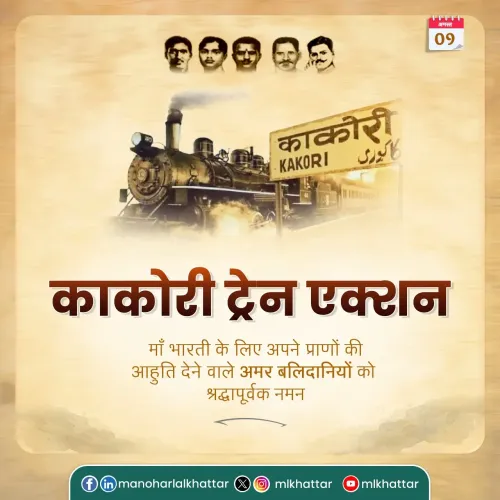
Union Textiles Minister Giriraj Singh posted a tribute on 9 August marking the anniversary of the Kakori Train Action .
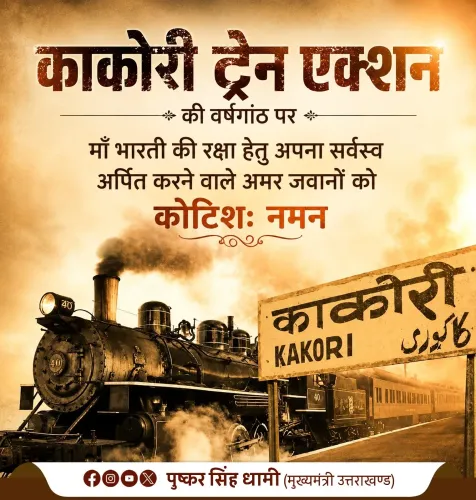
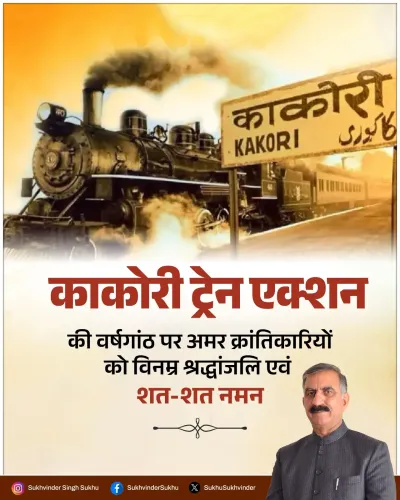
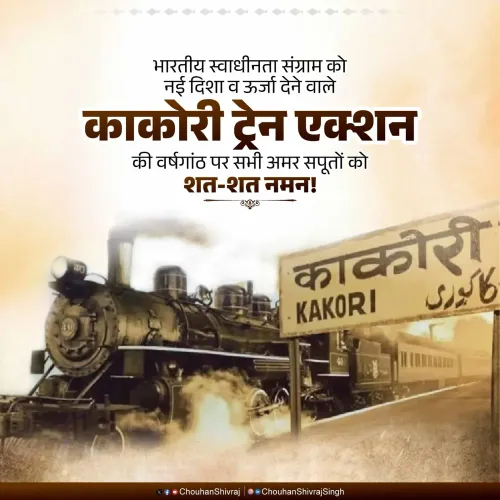
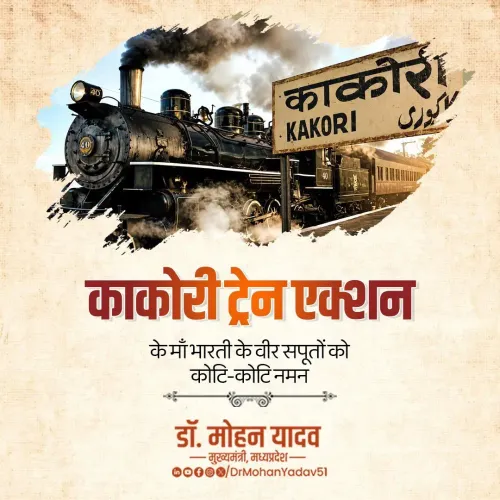
The Kakori Train Action took place on 9 August 1925 , when members of the Hindustan Republican Association seized a government treasury chest from a train near Kakori, Uttar Pradesh .
Singh named five revolutionaries: Ram Prasad Bismil, Ashfaqulla Khan, Thakur Roshan Singh, Rajendra Nath Lahiri , and Chandrashekhar Azad .
Bismil, Ashfaqulla Khan, Roshan Singh , and Lahiri were executed by the British in 1927 ; Azad died in a police encounter in 1931 .
9 August is doubly significant in Indian nationalist history as it also marks the launch of the Quit India Movement in 1942 .
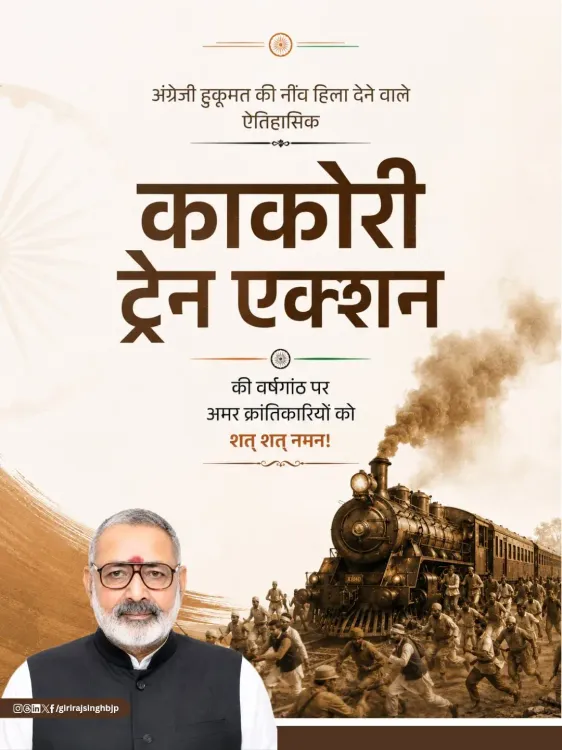
On the 101st anniversary of one of colonial India's most audacious acts of defiance, Union Textiles Minister Giriraj Singh on Sunday, 9 August paid solemn homage to the revolutionaries of the Kakori Train Action, calling their courage and sacrifice an eternal inspiration for every Indian.
Posting in Hindi, the minister wrote: 'माँ भारती के अमर क्रांतिकारियों को शत-शत नमन' — 'a hundredfold salute to the immortal revolutionaries of Mother India' — naming five towering figures of the independence struggle whose lives were cut short by the British state.
What happened at Kakori on 9 August 1925
On 9 August 1925, a small band of young men belonging to the Hindustan Republican Association (HRA) stopped a passenger train near Kakori, Uttar Pradesh, and seized its government treasury chest. The act was not random banditry — it was a calculated strike to fund armed resistance against British rule. The colonial administration responded with one of its most sweeping crackdowns on the nationalist underground. Pandit Ram Prasad Bismil, the principal organiser and a celebrated revolutionary poet, was arrested, tried, and hanged in 1927. Ashfaqulla Khan, his closest comrade and a symbol of Hindu-Muslim unity in the freedom struggle, met the same fate the same year. Thakur Roshan Singh and Rajendra Nath Lahiri were also executed in the aftermath of the British trials. Chandrashekhar Azad, who evaded capture at Kakori, continued his revolutionary work until he died in a police encounter at Alfred Park, Allahabad, in 1931 — famously shooting himself rather than surrender.Five names, one defiant generation
Giriraj Singh's post singles out all five by name — Bismil, Ashfaqulla Khan, Roshan Singh, Lahiri, and Azad — a deliberate roll-call that underlines the cross-community character of the HRA's membership. The Kakori action is remembered not merely as a robbery but as a declaration: that young Indians were willing to die on a gallows or in a gunfight rather than accept subjugation. Their trials became public platforms; their final statements, literature. Anniversary tributes to Kakori are a fixture of the Indian political calendar, particularly around 9 August — a date that also marks the launch of the Quit India Movement in 1942, doubling its resonance in the nationalist imagination. State-level memorial events and educational programmes at Kakori and related sites in Uttar Pradesh are held each year around this date. A century on, their names still carry the weight of a choice made without hesitation. That, Singh's tribute suggests, is the point.Point of View
But the deliberate naming of all five figures — including Ashfaqulla Khan, a Muslim revolutionary — signals an implicit counter to any attempt to cast the freedom struggle in a single-community frame. For a senior BJP leader, the gesture carries particular weight in a political environment where the composite character of nationalist resistance is sometimes contested. The post fits a broader pattern in which ruling-party figures invoke pre-Independence revolutionary icons to reinforce a narrative of sacrifice-driven nationalism. The choice of 9 August, which also marks Quit India Day, amplifies the symbolic density of the tribute.
NationPress
9 Aug 2026
Frequently Asked Questions
What was the Kakori Train Action?
The Kakori Train Action was an armed robbery carried out on 9 August 1925 by members of the Hindustan Republican Association , who stopped a train near Kakori, Uttar Pradesh , and seized a British government treasury chest to fund revolutionary activities against colonial rule.
Who were the main revolutionaries involved in the Kakori case?
The principal figures were Ram Prasad Bismil , Ashfaqulla Khan , Thakur Roshan Singh , Rajendra Nath Lahiri , and Chandrashekhar Azad . Bismil, Khan, Roshan Singh, and Lahiri were executed by the British in 1927 ; Azad died in a police encounter in 1931 .
Why is 9 August significant in Indian history?
9 August marks two major events: the Kakori Train Action of 1925 and the launch of the Quit India Movement in 1942 , making it one of the most symbolically loaded dates in India's independence history.
Who is Giriraj Singh?
Giriraj Singh is India's Union Minister of Textiles , a senior BJP leader, and a Lok Sabha MP from Begusarai, Bihar .
What was the Hindustan Republican Association?
The Hindustan Republican Association (HRA) was a revolutionary organisation active in the 1920s that sought to overthrow British rule through armed resistance. It organised the Kakori Train Action in 1925 and counted figures such as Bismil, Ashfaqulla Khan , and Chandrashekhar Azad among its members.