CM Himanta hails Oil India's record ₹2,870 cr quarterly profit
Synopsis
Oil India Limited posted a record standalone quarterly PAT of ₹2,870 crore — a 2.5x year-on-year jump — alongside a daily crude production record and NRL's 167% PAT surge, as Assam CM Himanta Biswa Sarma highlighted the milestones as a point of pride for the state and India's energy security.
Key Takeaways
Oil India Limited recorded its highest-ever standalone quarterly PAT of ₹2,870 crore , a 2.5x year-on-year increase.
Consolidated PAT reached ₹4,027 crore , up 97% year-on-year .
Daily crude oil production hit an all-time high of 10,921 MT (84,109 barrels) ; quarterly crude output was 0.950 MMT .
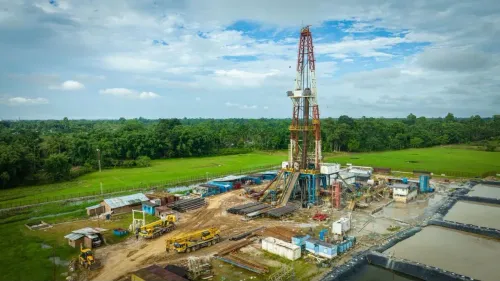
OIL achieved a horizontal displacement record of 3,116 metres in an onshore Assam well.
Numaligarh Refinery Limited (NRL) posted a 167% PAT growth to ₹1,305 crore , with a GRM of $35.95/bbl and Distillate Yield of 87.58% .
OIL is actively pursuing natural gas exploration in the Andaman Basin , a frontier offshore sedimentary zone.
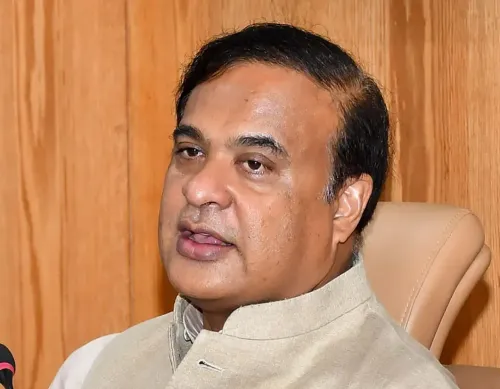
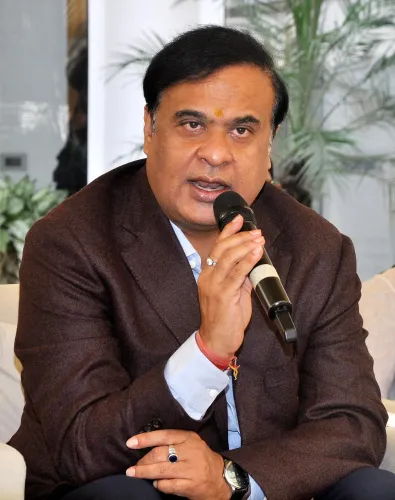
Assam's oil belt just rewrote its own record books. Assam Chief Minister Himanta Biswa Sarma on Sunday, August 9, 2026, shared that Oil India Limited (OIL) posted its highest-ever standalone quarterly Profit After Tax of ₹2,870 crore — a staggering 2.5x year-on-year jump — powered by an 11% rise in crude oil production and strong price realisation.
A quarter that broke every benchmark OIL had set
The numbers are striking in their sweep. On a consolidated basis, OIL's PAT came in at ₹4,027 crore, up 97% year-on-year — nearly doubling in a single quarter. Crude oil output reached 0.950 MMT, with a single-day record of 10,921 metric tonnes (84,109 barrels) — the highest daily crude production OIL has ever logged from its onshore fields. The company also drilled to a horizontal displacement of 3,116 metres in an onshore well in Assam, another all-time high for the PSU.
CM Sarma, who has consistently championed OIL's expansion as a pillar of Assam's economic identity, called the results 'a matter of pride for Assam and a strong contribution to India's energy security.' For a state where oil fields have been producing since the mid-20th century, these are not incremental gains — they are a step-change.
NRL's 167% PAT surge and the $35.95 refining margin
Numaligarh Refinery Limited (NRL), operating under the Ministry of Petroleum and Natural Gas and tagged @NRL_MoPNG in the post, delivered its own headline: PAT growth of 167% to ₹1,305 crore. NRL achieved a Gross Refining Margin of $35.95 per barrel and a Distillate Yield of 87.58% — figures that place it among the more efficient refineries in the country's downstream landscape.
GRM is the spread between the price of crude oil and the combined value of refined products; a margin above $35/bbl in the current global environment signals both operational efficiency and a favourable product slate. A distillate yield of nearly 88% means NRL is converting an exceptionally high proportion of crude into high-value fuels rather than lower-value residues.
Andaman Basin exploration and the frontier push
Beyond the profit lines, OIL flagged an active natural gas exploration programme in the Andaman Basin — an offshore sedimentary basin that India has targeted under the Hydrocarbon Exploration and Licensing Policy (HELP) introduced in 2016 to open frontier and deepwater acreages to accelerated drilling. Results from the Andaman programme, when they arrive, will be watched closely as a signal of whether India's next material gas reserve lies offshore in the Bay of Bengal.
India's dependence on crude imports remains one of its most persistent macroeconomic vulnerabilities. Every incremental barrel produced domestically by a PSU like OIL directly trims the import bill. The quarter's output numbers, set against that backdrop, carry weight well beyond Assam's borders.
What the OIL team delivered — and what comes next
CM Sarma closed his post by appreciating 'the entire OIL team for these impressive milestones.' The acknowledgement matters: sustained production records from mature Assam fields require intensive reservoir management and drilling innovation, not just favourable commodity prices. The horizontal displacement record of over 3,116 metres in an onshore well is a technical marker of exactly that kind of engineering push.
The next test is whether OIL can sustain this trajectory into subsequent quarters — and whether the Andaman Basin exploration translates from a line item on a highlights list into a genuine reserve discovery. If it does, India's energy security calculus shifts in a meaningful way.
Point of View
Making domestic PSU output gains politically as well as economically significant. For CM Sarma, championing these numbers serves a dual purpose: reinforcing Assam's identity as the cradle of India's oil industry and positioning the state's PSU ecosystem as a contributor to national energy self-reliance — a theme that resonates with the central government's 'Atmanirbhar Bharat' framing. The Andaman Basin exploration footnote is the sleeper detail: if that programme yields a commercial find, it would represent a material new chapter in India's upstream story, one that OIL — and by extension Assam's political leadership — will want full credit for.
NationPress
23 Sept 2026
Frequently Asked Questions
What is Oil India Limited's highest-ever quarterly profit?
Oil India Limited posted a standalone Profit After Tax of ₹2,870 crore in its latest quarter, the highest ever recorded by the company, representing a 2.5x year-on-year growth .
What is Numaligarh Refinery Limited's PAT growth this quarter?
Numaligarh Refinery Limited (NRL) recorded a 167% growth in PAT to ₹1,305 crore , alongside a Gross Refining Margin of $35.95 per barrel and a Distillate Yield of 87.58% .
What is Oil India's daily crude oil production record?
OIL achieved its highest-ever daily crude oil production of 10,921 metric tonnes (84,109 barrels) , surpassing all previous single-day output records from its onshore fields.
What is the Andaman Basin and why is OIL exploring there?
The Andaman Basin is an offshore sedimentary basin in the Bay of Bengal. OIL is conducting natural gas exploration there under India's Hydrocarbon Exploration and Licensing Policy (HELP) , which was introduced in 2016 to accelerate activity in frontier basins and reduce import dependence.
Why did Assam CM Himanta Biswa Sarma comment on Oil India's results?
OIL's primary onshore operations are based in Assam , making its performance directly relevant to the state's economy and energy sector. CM Sarma called the results 'a matter of pride for Assam and a strong contribution to India's energy security.'