ADB cuts Bangladesh FY27 growth forecast to 4% on banking stress, energy crisis
Synopsis
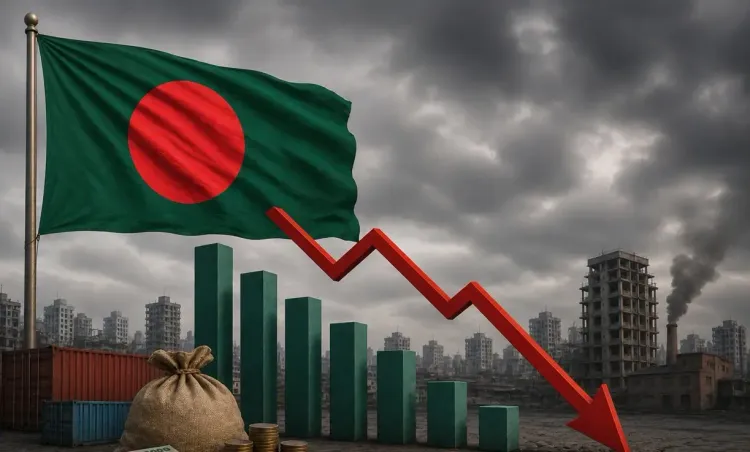
The ADB has now cut Bangladesh's FY27 growth forecast twice in the same cycle — from 4.5% in July to 4% now — as banking stress, energy shortages and trade headwinds compound. With inflation heading toward 9% and industrial growth expected at just 3.3%, the window for reform is narrowing fast.
Key Takeaways
The ADB cut Bangladesh's FY2027 growth forecast to 4% , down from 4.5% projected in July 2026 .
Banking-sector stress — including high non-performing loans, weak balance sheets and elevated borrowing costs — is restricting private credit access.
Industrial growth is forecast to slow to 3.3% in FY27 due to energy shortages, rising costs and weak external demand.
The services sector is the sole projected growth engine, expected to expand 4.7% on remittance inflows.
Average inflation is forecast to rise to 9% in FY27, up from 8.7% in FY2026 and above the earlier estimate of 8.8% .
ADB Country Director Qingfeng Zhang called for accelerated reforms in macroeconomic management, energy security and the financial sector.
The Asian Development Bank (ADB) has lowered its economic growth forecast for Bangladesh in FY2027 to 4%, down from 4.5% projected in July, citing persistent banking-sector stress, structural bottlenecks, and severe energy shortages. The revision marks a fresh blow to an economy already navigating fragile post-political-transition conditions.
Why the ADB Downgraded Bangladesh
The Manila-based lender pointed to a combination of financial and structural headwinds driving the downgrade. High non-performing loans, weak bank balance sheets, elevated borrowing costs, and banks' preference for government securities were identified as key factors restricting private-sector access to credit.
'The downgrade for FY2027 reflects trade headwinds, energy import volatility and weather-related disruptions impacting agriculture and output across South Asia,' the ADB said in a statement. Unreliable energy supplies, logistics constraints, and lengthy regulatory procedures were also flagged as compounding factors that limit the economy's ability to respond to fiscal stimulus.
Sector-by-Sector Outlook
Industrial growth is projected to slow to just 3.3% in FY27, weighed down by persistent energy shortages, rising production costs, weak external demand, and investment uncertainty affecting manufacturing. The services sector, however, is expected to be the sole bright spot, forecast to expand by 4.7%, supported by solid remittance inflows and a modest uptick in domestic activity.
On the inflation front, average price pressures are expected to worsen, rising to 9% in FY27 from 8.7% in FY2026 — exceeding the previously anticipated 8.8%. The ADB warned that a less restrictive monetary policy stance and expanded liquidity support could push inflation even higher, though demand-driven pressures are expected to remain largely contained by sluggish credit growth and subdued economic activity.
What the ADB Country Director Said
ADB Country Director Qingfeng Zhang acknowledged that Bangladesh's economy has begun a recovery, but cautioned that the pace and depth depend heavily on external shocks and domestic constraints. 'This is an important moment to accelerate reforms in macroeconomic management, the financial sector, energy security, and the business environment. These reforms will be essential to unlock private investment, create quality jobs, and place Bangladesh on a stronger, more inclusive, and resilient growth path,' Zhang said.
Broader Context and What Comes Next
Bangladesh has been grappling with a protracted banking sector crisis, marked by governance lapses and capital adequacy concerns at several major lenders. The energy shortfall — stemming partly from import volatility and foreign exchange pressures — has repeatedly disrupted industrial output, particularly in the garment sector, which accounts for the bulk of the country's export earnings.
This is the second downward revision to Bangladesh's growth forecast within the same fiscal cycle, underscoring the ADB's view that structural vulnerabilities are not being addressed quickly enough. For South Asia broadly, the lender cited weather-related disruptions and trade headwinds as shared risks across the region. Whether Bangladesh can arrest the slide will depend significantly on the pace of financial sector reform and progress on energy security — both of which remain unresolved.
Point of View
Not a routine tweak. The ADB's diagnosis points to a structural rot — non-performing loans, governance gaps and an unreliable energy grid — that cannot be resolved by monetary easing alone. In fact, the bank's own warning that a looser monetary stance could push inflation beyond 9% reveals a policy trap: Bangladesh needs stimulus but cannot afford the inflationary cost of delivering it. The garment sector's vulnerability, largely unaddressed in this forecast, deserves sharper attention given its outsized role in export earnings and female employment. Without a credible banking clean-up and energy reform timetable, the 4% figure may itself prove optimistic.
NationPress
23 Sept 2026
Frequently Asked Questions
Why did the ADB cut Bangladesh's FY27 growth forecast?
The ADB lowered its FY2027 growth forecast for Bangladesh to 4% from 4.5% citing persistent banking-sector stress, high non-performing loans, severe energy shortages, and structural bottlenecks such as logistics constraints and lengthy regulatory procedures. Trade headwinds and weather-related disruptions across South Asia were also cited as contributing factors.
What is the inflation outlook for Bangladesh in FY2027?
Average inflation in Bangladesh is projected to rise to 9% in FY2027, up from 8.7% in FY2026 and higher than the previously anticipated 8.8%. The ADB warned that a less restrictive monetary policy stance and expanded liquidity support could push prices even higher.
Which sectors are expected to grow or contract in Bangladesh in FY27?
Industrial growth is forecast to slow sharply to 3.3% due to energy shortages, rising costs, and weak external demand. The services sector is the only bright spot, expected to grow 4.7%, driven by remittance inflows and a modest recovery in domestic activity.
What reforms did the ADB recommend for Bangladesh?
ADB Country Director Qingfeng Zhang called for accelerated reforms across macroeconomic management, the financial sector, energy security, and the broader business environment. He said these reforms are essential to unlock private investment, create quality jobs, and place Bangladesh on a more resilient growth path.
How does this forecast compare to Bangladesh's earlier growth projections?
This is the second downward revision to Bangladesh's FY2027 growth forecast within the same fiscal cycle. The ADB had previously projected 4.5% growth as recently as July 2026 before cutting it to 4% in its latest assessment, reflecting a deteriorating domestic and external outlook.