Supreme Court takes suo motu cognisance of Patna HC acquittal in attempted rape case
Synopsis
The Supreme Court has stepped in for the second time in weeks to scrutinise a High Court's reasoning in an attempted rape case — this time targeting a Patna High Court judgment that recharacterised serious sexual assault as mere outraging of modesty and acquitted the accused. The Bench's pointed remark that there are 'offending observations' signals that the apex court views judicial framing of sexual offences as a systemic problem requiring correction from the top.
Key Takeaways
The Supreme Court took suo motu cognisance on 23 September 2026 of a Patna High Court judgment acquitting a man convicted of attempted rape.
The High Court had reclassified the alleged conduct under Section 354 IPC (outraging modesty) instead of Sections 376/511 IPC (attempted rape), and acquitted Himanshu Kumar Pathak alias Mithiya Pathak .
A Bench of CJI Surya Kant , Justice Joymalya Bagchi , and Justice V.
Mohana flagged 'offending observations' in the High Court ruling.
The matter is registered as Suo Moto Writ Petition (Crl.) No.
5 of 2026 ; the Bihar government has been directed to serve notice on the accused via local police.
The suo motu action follows the Supreme Court's 14 July 2026 judgment setting aside a similar Allahabad High Court ruling, and its direction to the National Judicial Academy to frame guidelines on judicial sensitivity in sexual offence cases.
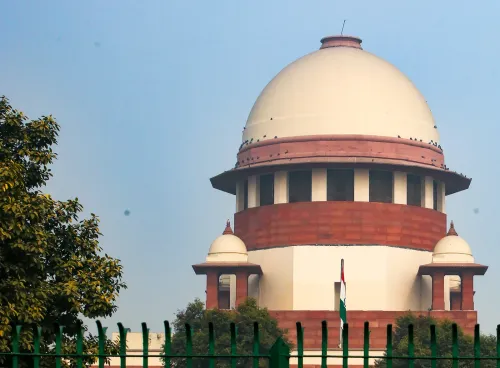
The Supreme Court on Wednesday, 23 September 2026, took suo motu cognisance of a Patna High Court judgment that acquitted a man originally convicted of attempted rape, flagging what it called 'some offending observations' in the ruling. The High Court had recharacterised the alleged conduct — including an attempt to remove the victim's salwar, undressing himself, and physically molesting her — as outraging a woman's modesty under Section 354 of the Indian Penal Code (IPC), rather than an attempt to commit rape under Sections 376/511 IPC.
What the Supreme Court Said
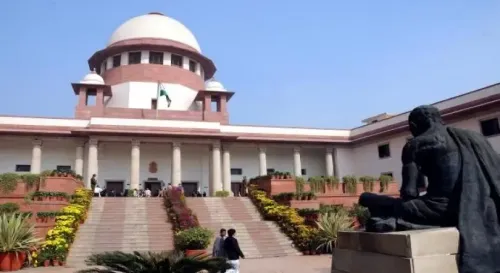
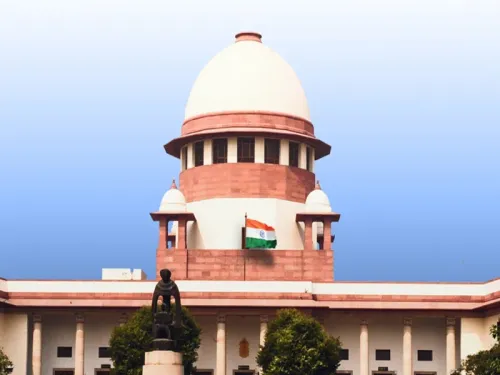
A Bench comprising Chief Justice of India (CJI) Surya Kant, Justice Joymalya Bagchi, and Justice V. Mohana issued notice in the suo motu case and made clear it would examine the controversial observations in the Patna High Court judgment. 'There are some offending observations,' the CJI-headed Bench told Bihar Advocate General S.D. Sanjay during the hearing.
The Bench clarified that it could set aside the observations only after hearing the accused, and directed the Bihar government to ensure the accused was served with the apex court's notice through local police. The matter has been registered as Suo Moto Writ Petition (Crl.) No. 5 of 2026, titled 'In Re: Order dated 09.07.2026 passed by the High Court of Judicature at Patna in Criminal Appeal (SJ) No. 775/2013 and ancillary issues'.
Background: The 2008 Amarpur Case
The case originated from an incident on 19 January 2008 at a photography studio in Amarpur, Banka district, Bihar. According to the prosecution, the victim had accompanied her father to the studio of the accused, Himanshu Kumar Pathak alias Mithiya Pathak. After taking her photograph, the accused allegedly asked the father to view the image on a computer and closed the studio door from inside. The victim alleged that the accused attempted to remove her salwar, undressed himself, and physically molested her with the intention of committing rape. Her father reached the door after she raised an alarm, upon which the accused opened it and fled.
The trial court convicted Pathak and sentenced him to three years' rigorous imprisonment under Section 376/511 IPC and six months' imprisonment under Section 342 IPC, to run concurrently.
How the Patna High Court Ruled
A single-judge Bench of Justice Purnendu Singh, in its judgment of 9 July 2026, re-appreciated the evidence and held that the prosecution had failed to establish the ingredients of attempted rape. The court noted the absence of evidence of penetration and the non-production of medical evidence. It also recorded that the investigating officer who had submitted the charge sheet was not examined at trial.
The High Court observed that the accused had confined the victim inside the studio, closed the door, attempted to remove her salwar, and physically molested her by pressing her chest. It held: 'These acts clearly establish the use of criminal force upon a woman with the intention, or at least the knowledge, that such acts were likely to outrage her modesty, thereby satisfying the essential ingredients of Section 354 IPC.' It consequently acquitted the accused of all charges and directed the refund of any fine deposited.
The Broader Pattern: Allahabad HC Precedent
The Supreme Court's intervention follows its 14 July 2026 judgment in a separate suo motu case arising from an Allahabad High Court ruling in another attempted rape matter. In that case, the apex court had set aside the High Court's finding that allegations of grabbing a minor's breasts, breaking her pyjama string, and attempting to drag her beneath a culvert did not prima facie constitute an attempt to rape.
The Supreme Court had then held that the Allahabad High Court's reasoning reflected a 'patently erroneous application of the settled principles of criminal jurisprudence', reiterating the distinction between 'preparation' and 'attempt' — and confirming that an attempt begins immediately after the completion of preparation. Notably, the apex court had also directed the National Judicial Academy to constitute an expert committee to prepare guidelines on judicial sensitivity when dealing with sexual offences and cases involving vulnerable victims. The Patna High Court case was registered pursuant to the CJI's directions flowing from those earlier proceedings, signalling that the Supreme Court is treating judicial approach to sexual offence cases as a systemic issue, not an isolated one.
The next hearing will determine whether the Patna High Court's observations are formally set aside, and how far the apex court's scrutiny of lower-court reasoning in such cases will extend.
Point of View
Now the Patna High Court — point to a systemic concern the apex court can no longer address case by case. The core issue is a persistent tendency among some courts to treat the absence of penetration as a near-decisive factor in determining attempt, effectively narrowing the legal definition of attempted rape in ways that the law does not sanction. The direction to the National Judicial Academy to frame sensitivity guidelines is welcome, but guidelines without accountability mechanisms rarely shift entrenched judicial habits. What the apex court has not yet resolved is whether the Patna High Court's acquittal itself will be reversed, or merely its reasoning — a distinction that will matter enormously to the survivor at the centre of this case.
NationPress
23 Sept 2026
Frequently Asked Questions
Why did the Supreme Court take suo motu cognisance of the Patna High Court judgment?
The Supreme Court intervened because the Patna High Court's judgment contained what the CJI-headed Bench called 'offending observations' — it had acquitted a man convicted of attempted rape by reclassifying the alleged conduct as merely outraging a woman's modesty under Section 354 IPC, rather than attempted rape under Sections 376/511 IPC. The apex court will now examine whether that legal reasoning was correct.
What did the Patna High Court actually decide?
A single-judge Bench of Justice Purnendu Singh, in a judgment dated 9 July 2026, set aside the trial court's conviction of Himanshu Kumar Pathak and acquitted him of all charges. The High Court held that the alleged acts — confining the victim, attempting to remove her salwar, and molesting her — satisfied the ingredients of Section 354 IPC but not attempted rape, citing the absence of penetration and medical evidence.
Who was convicted in the original trial and on what charges?
Himanshu Kumar Pathak alias Mithiya Pathak was convicted by the trial court for a 2008 incident in Amarpur, Banka district, Bihar. He was sentenced to three years' rigorous imprisonment under Sections 376/511 IPC (attempted rape) and six months under Section 342 IPC (wrongful confinement), to run concurrently.
How does this case connect to the earlier Allahabad High Court suo motu case?
On 14 July 2026, the Supreme Court had set aside an Allahabad High Court ruling that found allegations of grabbing a minor's breasts and breaking her pyjama string did not prima facie constitute attempted rape. It held the High Court's reasoning showed a patently erroneous application of criminal jurisprudence. The Patna HC case was formally registered as a suo motu matter pursuant to the CJI's directions flowing from those proceedings.
What guidelines has the Supreme Court directed for handling sexual offence cases?
Following its July 2026 ruling in the Allahabad HC matter, the Supreme Court directed the National Judicial Academy to constitute an expert committee to prepare guidelines on judicial sensitivity and the approach of judges while dealing with sexual offences and cases involving vulnerable victims. Those guidelines are expected to inform how courts across India assess evidence and apply legal standards in such cases.