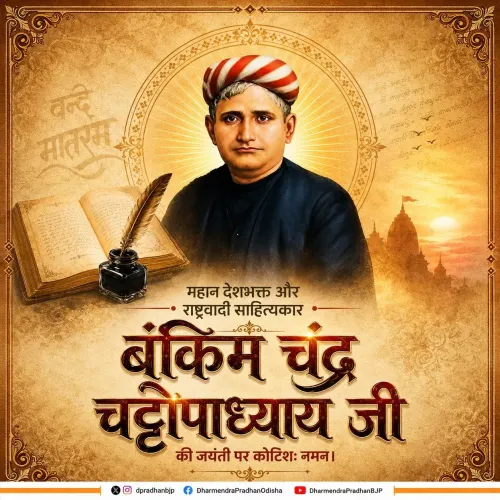
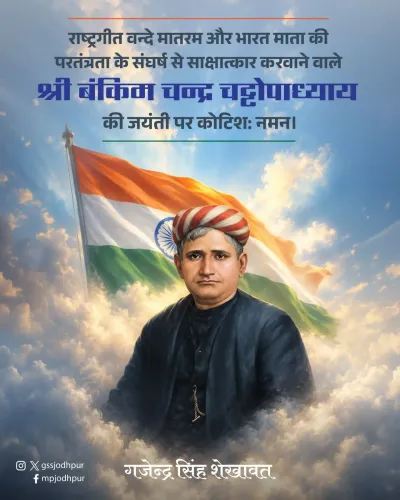
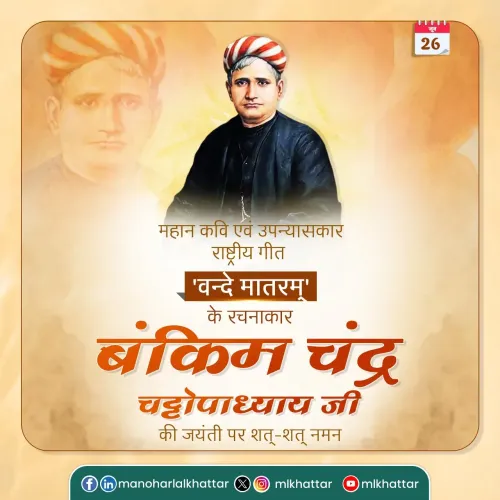
Giriraj Singh pays tribute to Bankim Chandra on birth anniversary
Synopsis
Union Textiles Minister Giriraj Singh marked the birth anniversary of Bankim Chandra Chattopadhyay on 26 June 2026, honouring the 19th-century Bengali novelist as the immortal composer of Vande Mataram and a great freedom fighter.
Key Takeaways
Union Textiles Minister Giriraj Singh posted a tribute to Bankim Chandra Chattopadhyay on his birth anniversary on 26 June 2026 .
Bankim Chandra Chattopadhyay (1838–1894) authored Anandamath (1882), in which Vande Mataram first appeared.
Vande Mataram was adopted as India's national song by the Constituent Assembly on 24 January 1950 .
Singh described Chattopadhyay as the 'immortal composer of the national song, a great freedom fighter and eminent literary figure.' BJP ministers regularly issue public tributes on Bankim Chandra's anniversary, framing him within a cultural-nationalist tradition.
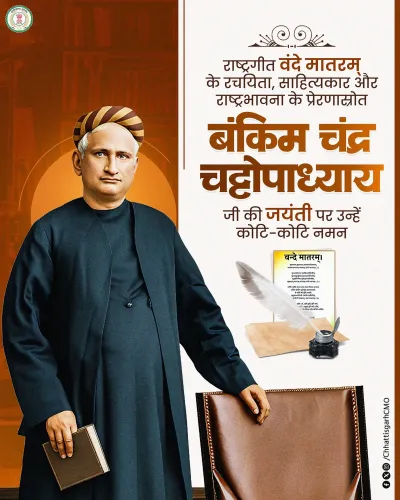
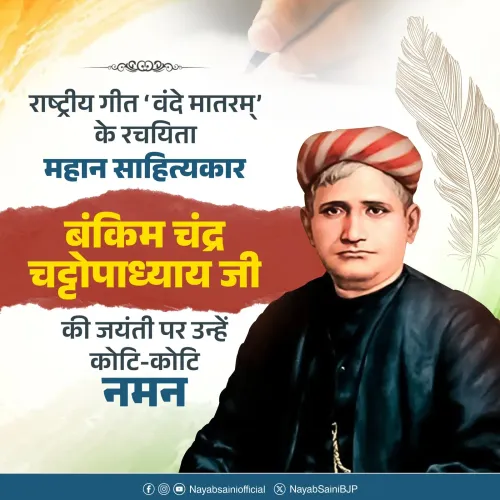
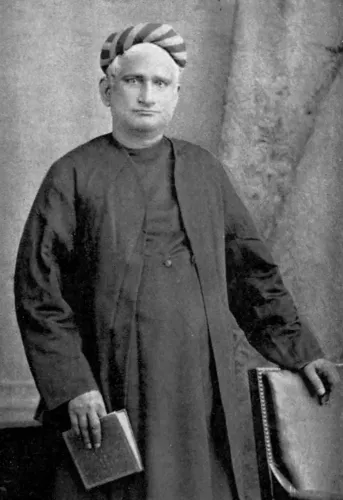
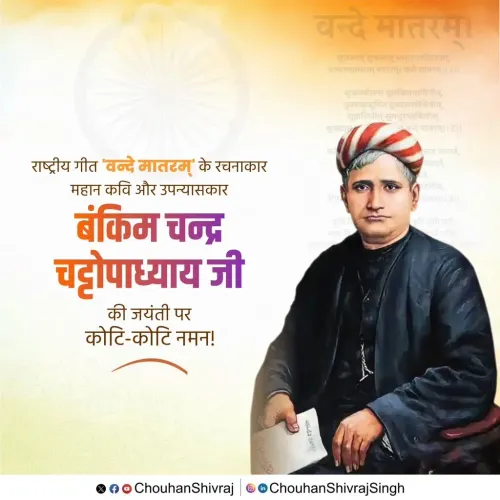
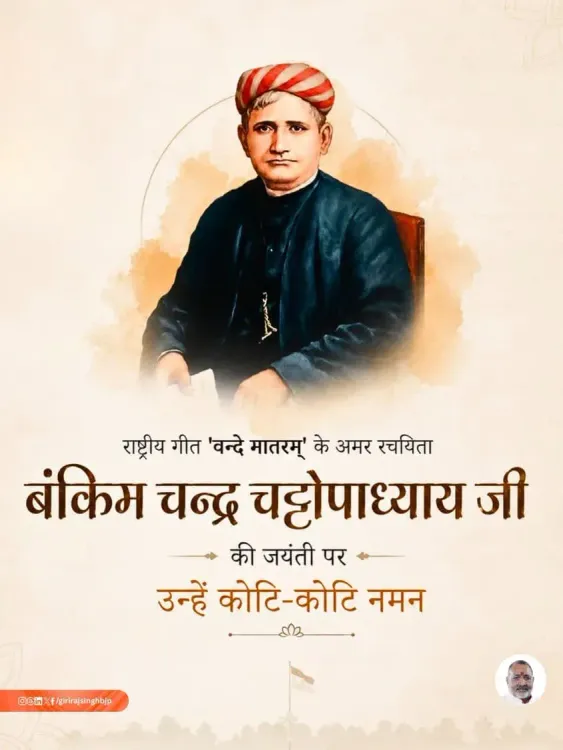
Union Textiles Minister Giriraj Singh on Friday, 26 June 2026, paid homage to Bankim Chandra Chattopadhyay, the 19th-century Bengali novelist and freedom fighter, on the occasion of his birth anniversary, calling him the immortal composer of India's national song Vande Mataram.
Posting on X, Singh wrote: 'Rashtra geet Vande Mataram ke amar rachayita, mahaan swatantrata senani aur prakhyat sahityakar Bankim Chandra Chattopadhyay ji ki jayanti par unhe koti-koti naman' — translating to: 'I offer countless salutations to Bankim Chandra Chattopadhyay, the immortal composer of the national song Vande Mataram, a great freedom fighter and eminent literary figure, on his birth anniversary.'
Context
Bankim Chandra Chattopadhyay (1838–1894) was a pioneering Bengali novelist whose 1882 work Anandamath introduced the song Vande Mataram, which went on to become a rallying cry of India's anti-colonial movement. The song was subsequently adopted as India's national song by the Constituent Assembly on 24 January 1950, alongside Jana Gana Mana as the national anthem. Chattopadhyay is widely regarded as one of the foundational figures of modern Bengali literature and Indian nationalist thought.
Policy Backdrop
BJP leaders and Union ministers have regularly issued public tributes on Bankim Chandra's birth anniversary, situating 19th-century Bengali literary figures within a broader cultural-nationalist framework that emphasises pre-Gandhian resistance to colonial rule. Singh's tribute follows this established pattern, framing Chattopadhyay not only as a literary giant but also as a swatantrata senani (freedom fighter) whose work carried ideological weight for Hindu unity and national awakening.
The invocation of Vande Mataram carries particular resonance in the current political climate, where the song continues to serve as a marker of cultural and nationalist identity in public discourse.
Stakeholders and Impact
Cultural nationalists, literary historians, and scholars of Bengali literature mark the anniversary with events across West Bengal and other states. Chattopadhyay's legacy is claimed across the political spectrum in Bengal, though the emphasis placed on his nationalist and Hindu-inflected writings is more pronounced in BJP circles. His birth anniversary is observed in schools, cultural institutions, and state government programmes.
What's Next
Observers will watch for state-level commemorations tied to the anniversary, as well as any policy moves — such as possible inclusion of Anandamath excerpts in revised school curricula — that could give Chattopadhyay's legacy a more formal institutional footprint. Singh's public tribute adds to the chorus of official recognition that the anniversary typically draws from the ruling dispensation at the Centre.
Point of View
The ruling party connects its present-day nationalism to a pre-Gandhian lineage that emphasises Hindu cultural assertion. This pattern of anniversary diplomacy serves a dual purpose: honouring a widely respected literary figure while reinforcing a particular reading of Indian nationalist history. The practice also signals the Centre's continued interest in shaping how foundational cultural icons are remembered in public and institutional spaces.
NationPress
26 Jun 2026
Frequently Asked Questions
Who was Bankim Chandra Chattopadhyay?
Bankim Chandra Chattopadhyay (1838–1894) was a pioneering Bengali novelist, poet, and journalist, best known for writing Vande Mataram in his 1882 novel Anandamath. He is considered one of the founders of modern Bengali literature and a key figure in Indian nationalist thought.
What is Vande Mataram and why is it significant?
Vande Mataram is India's national song, originally composed by Bankim Chandra Chattopadhyay and first published in his novel Anandamath in 1882. The Constituent Assembly adopted it as the national song on 24 January 1950, alongside Jana Gana Mana as the national anthem.
Why did Giriraj Singh pay tribute to Bankim Chandra Chattopadhyay?
Giriraj Singh paid tribute on the occasion of Bankim Chandra Chattopadhyay's birth anniversary on 26 June 2026, honouring him as the composer of Vande Mataram, a freedom fighter, and an eminent literary figure.
When was Vande Mataram adopted as India's national song?
Vande Mataram was adopted as India's national song by the Constituent Assembly on 24 January 1950.