CM Sukhu: HP scheme to boost women's financial security
Synopsis
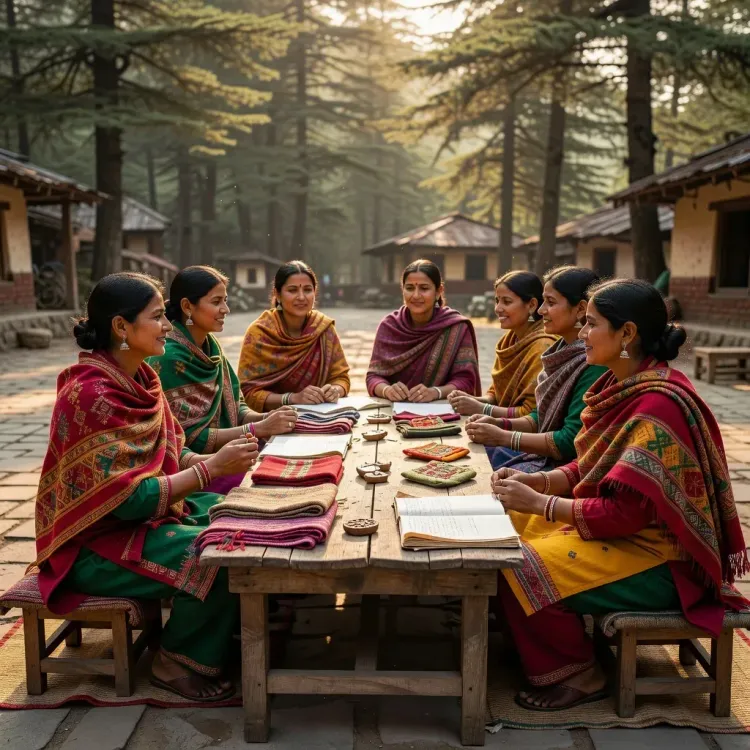
Chief Minister Sukhvinder Singh Sukhu has stated that a welfare initiative by the Himachal Pradesh government will assist women in meeting daily needs and foster economic security and self-reliance, reinforcing the state's focus on gender-focused development.
Key Takeaways
CM Thakur Sukhvinder Singh Sukhu made the statement via the official Chief Minister's Office account on 26 June 2026 .
The initiative is aimed at helping women — described as 'mothers and sisters' — meet their daily livelihood needs .
The stated twin goals are economic security and self-reliance (aatmanirbharta) for women in Himachal Pradesh.
Women's self-help groups are key stakeholders and likely delivery channels for such welfare measures.
The announcement builds on the foundation of the National Rural Livelihoods Mission (2011) and state-level adaptations for gender-focused welfare.
Scheme details, beneficiary criteria, and budget allocations are yet to be formally notified.
The Chief Minister's Office of Himachal Pradesh, citing Chief Minister Thakur Sukhvinder Singh Sukhu, shared a statement on Friday, 26 June 2026, affirming that a welfare initiative will help the state's women meet their daily needs and advance their economic independence.
In the post, CM Sukhu stated: 'इससे हमारी माताओं-बहनों को अपनी दैनिक आवश्यकताओं की पूर्ति में सहायता मिलेगी और उनके जीवन में आर्थिक सुरक्षा एवं आत्मनिर्भरता को बढ़ावा मिलेगा।' ('This will help our mothers and sisters fulfil their daily needs and promote economic security and self-reliance in their lives.')
Context
Himachal Pradesh has pursued targeted welfare programs for women since CM Sukhu assumed office in December 2022. The Chief Minister's public communication has consistently framed women's economic empowerment as a central pillar of the state government's agenda. The statement reflects a continuing emphasis on direct assistance and livelihood support for rural and semi-urban women across the state.Policy Backdrop
The initiative draws on a broader national architecture of women-focused welfare. The National Rural Livelihoods Mission, launched in 2011, has underpinned women's self-help groups and financial inclusion efforts in Himachal Pradesh for over a decade. State-level adaptations of such central schemes have increasingly stressed self-reliance — aatmanirbharta — as a measurable outcome alongside direct cash or in-kind transfers. Indian states have progressively expanded direct assistance models to address gaps in daily livelihood security, particularly for women in hill and rural geographies. Himachal Pradesh's terrain and dispersed population make targeted delivery mechanisms especially significant. The current government has signalled intent to align state budgetary priorities with gender-focused development outcomes.Stakeholders and Impact
The primary beneficiaries identified in the Chief Minister's statement are women — specifically described as 'mothers and sisters' — who face daily expenditure pressures. Women's self-help groups operating under state and central frameworks are likely conduits for any financial or material assistance flowing from such a scheme. Economic security at the household level, particularly for women in low-income rural settings, is the stated goal. Broader stakeholders include the state's rural development machinery, district-level implementation agencies, and civil society organisations working on women's livelihoods in the Himalayan region. Successful rollout would also have political resonance, reinforcing the government's positioning on gender welfare ahead of future electoral cycles.What's Next
Detailed scheme guidelines, beneficiary criteria, and budget allocations are expected to provide clarity on the scope and scale of the initiative. Observers will watch Himachal Pradesh's next fiscal cycle for dedicated line items reflecting this commitment. Legislative updates or formal scheme notifications from the state government would be the next concrete markers of progress. If implementation follows the trajectory of similar state-level programs, the focus will shift to enrolment metrics, disbursement timelines, and third-party assessments of impact on women's household income — benchmarks that will determine whether the stated goal of economic self-reliance translates into measurable change on the ground.Point of View
Even as the state charts its own welfare path. Framing beneficiaries as 'mothers and sisters' is a time-tested rhetorical device in Indian welfare politics, designed to broaden emotional resonance across demographics. The absence of specific scheme details in the post, however, means the announcement functions more as a signal of intent than a concrete policy commitment — the real test will be in implementation metrics.
NationPress
26 Jun 2026
Frequently Asked Questions
What did CM Sukhu say about women's welfare in Himachal Pradesh?
CM Sukhvinder Singh Sukhu stated that a welfare initiative will help women in Himachal Pradesh meet their daily needs and promote economic security and self-reliance in their lives.
Which scheme is Himachal Pradesh launching for women in 2026?
The specific scheme has not been formally named or notified in the post. The Chief Minister's statement indicates a welfare initiative focused on women's daily needs and financial independence, with details expected to follow.
How does Himachal Pradesh support women's self-help groups?
Himachal Pradesh supports women's self-help groups through state-level adaptations of central programs such as the National Rural Livelihoods Mission, launched in 2011, which promotes financial inclusion and livelihood support for women.
Who is the Chief Minister of Himachal Pradesh?
Thakur Sukhvinder Singh Sukhu has been the Chief Minister of Himachal Pradesh since December 2022, with a focus on social welfare and women's economic initiatives.
What is the government of Himachal Pradesh doing for women's economic empowerment?
The Himachal Pradesh government, under CM Sukhu, has been pursuing targeted welfare programs and financial assistance schemes aimed at promoting economic security and self-reliance among women, particularly in rural areas.