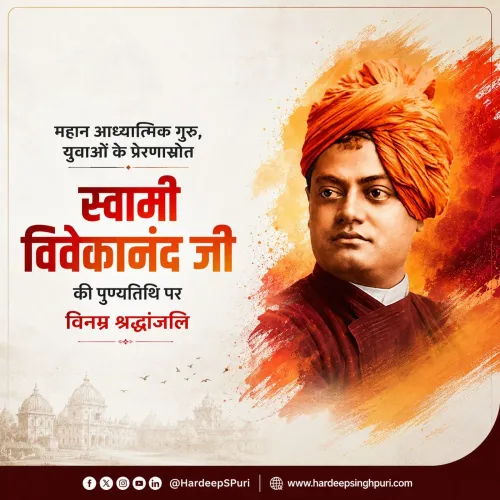
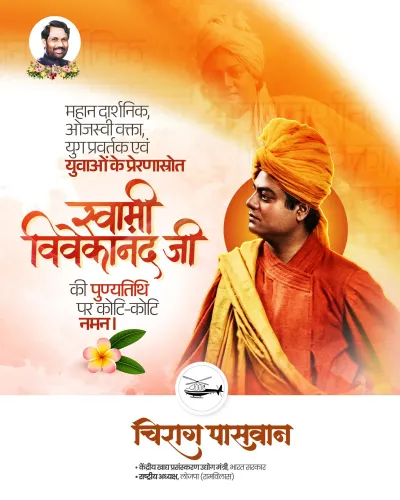
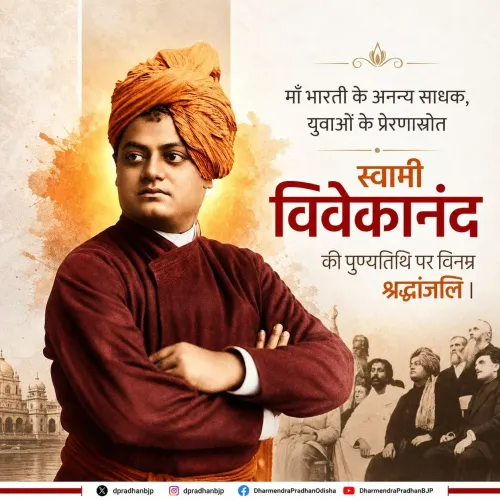
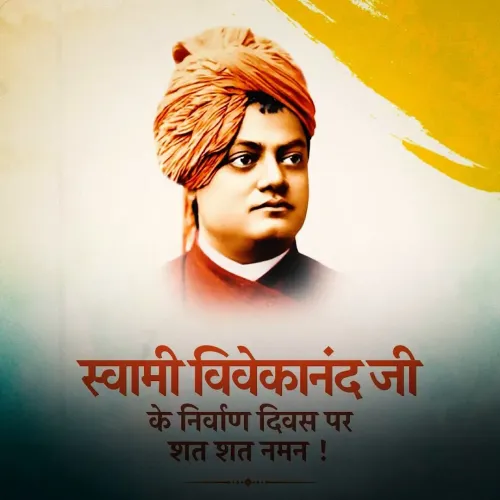
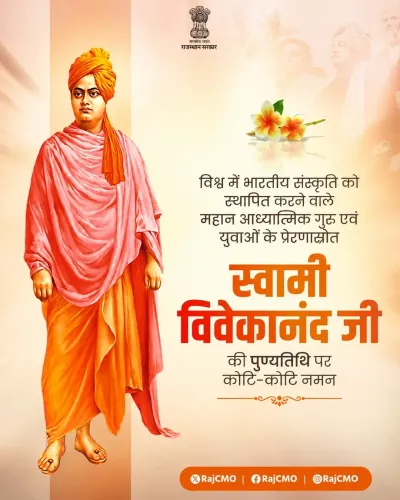
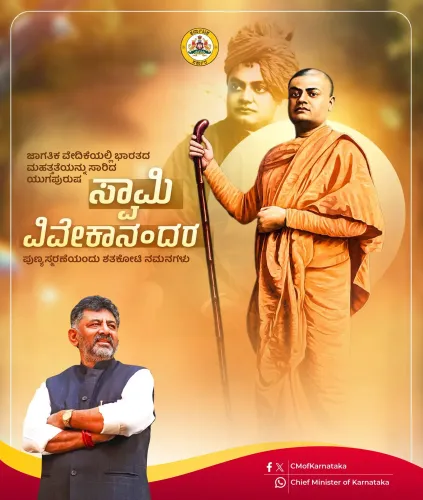
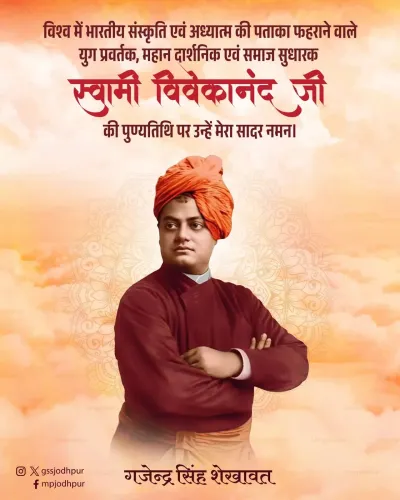
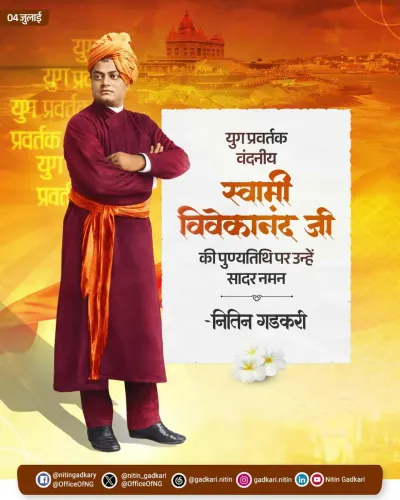
Giriraj Singh pays tribute to Swami Vivekananda on death anniversary
Synopsis
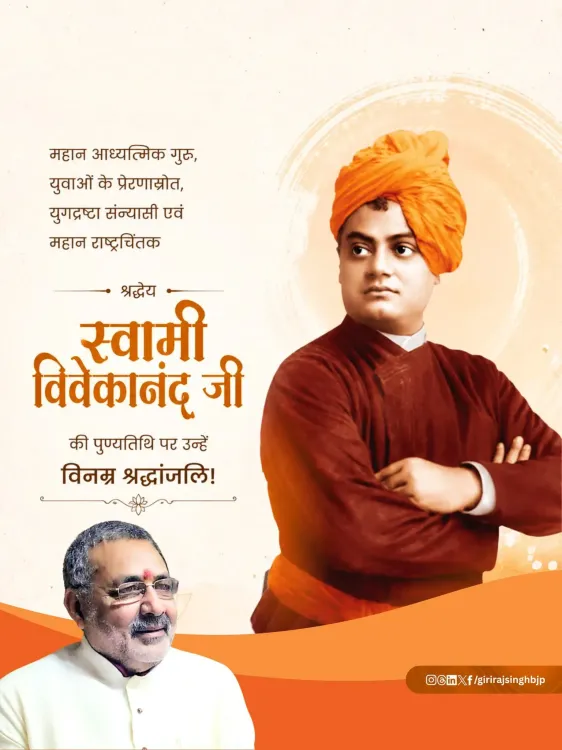
Union Textiles Minister Giriraj Singh paid homage to Swami Vivekananda on his death anniversary on 4 July 2026, calling the 19th-century monk a timeless inspiration for Indian youth and a visionary patriot whose ideas will guide generations to come.
Key Takeaways
Giriraj Singh , Union Textiles Minister and BJP MP from Begusarai , posted a tribute to Swami Vivekananda on 4 July 2026 , the monk's death anniversary.
Singh described Vivekananda as a 'great spiritual guru, source of inspiration for youth, visionary ascetic and great thinker of the nation.' Swami Vivekananda was born on 12 January 1863 and died on 4 July 1902 at Belur Math, Bengal , aged 39.
Vivekananda founded the Ramakrishna Mission in 1897 , which continues educational and social-service work rooted in Vedanta.
The Government of India designated 12 January as National Youth Day in 1984 in honour of Vivekananda's birth anniversary.
BJP leaders routinely invoke Vivekananda on cultural anniversaries, framing his philosophy as central to contemporary nation-building narratives.
Union Textiles Minister Giriraj Singh on Saturday, 4 July 2026, paid homage to Swami Vivekananda on the monk's death anniversary, describing him as a great spiritual guru, inspiration to youth, and a visionary ascetic devoted to the nation.
Posting in Hindi on X, Singh wrote: 'महान आध्यात्मिक गुरु, युवाओं के प्रेरणास्रोत, युगद्रष्टा संन्यासी एवं महान राष्ट्रचिंतक श्रद्धेय स्वामी विवेकानंद जी की पुण्यतिथि पर उन्हें कोटि-कोटि नमन एवं विनम्र श्रद्धांजलि!' ['On the death anniversary of the revered Swami Vivekananda — great spiritual guru, source of inspiration for youth, visionary ascetic and great thinker of the nation — I bow to him a crore times and offer my humble tribute!']. He added that Vivekananda's thoughts and spirit of patriotism 'will continue to guide the youth of the country for ages to come.'
Context
Swami Vivekananda was born on 12 January 1863 in Calcutta and died on 4 July 1902 at Belur Math, Bengal, aged 39. A chief disciple of Sri Ramakrishna, he is best remembered for his address at the 1893 Parliament of the World's Religions in Chicago, where he introduced Vedanta and yoga to a Western audience and spoke of universal brotherhood.
His death anniversary falls on 4 July each year and is observed by spiritual organisations, cultural bodies, and political figures across India. The Ramakrishna Mission, the organisation he founded in 1897, continues to run educational institutions and social-service programmes rooted in his teachings.
Policy Backdrop
The Government of India declared 12 January — Vivekananda's birth anniversary — as National Youth Day in 1984, formally linking his message of character-building and patriotism to national youth-mobilisation efforts. His emphasis on self-reliance and inner strength has since been cited repeatedly in parliamentary debates and policy documents aimed at young Indians.
BJP leaders have consistently invoked Vivekananda on both his birth and death anniversaries, framing his 19th-century ideas on spiritual nationalism as a template for contemporary nation-building. Singh, a Lok Sabha MP from Begusarai, Bihar, is among the senior party figures who regularly issue such tributes on cultural occasions.
Stakeholders and Impact
Vivekananda's legacy resonates most directly with Indian youth, cultural and religious organisations such as the Ramakrishna Mission, and the broader ecosystem of Vedanta study centres operating across the country. His writings and speeches remain part of school and university curricula in several states.
Tributes from serving ministers carry institutional weight, signalling the government's continued alignment with the cultural and philosophical tradition Vivekananda represents. For youth-focused civil-society groups, such statements reinforce public interest in his ideas around self-improvement and national service.
What's Next
Commemorative events marking Vivekananda's legacy are expected to intensify around National Youth Day on 12 January 2027, when government-sponsored programmes typically reference his teachings in the context of youth welfare schemes. Any new youth-focused policy announcements in the months ahead may draw on his philosophy of disciplined, service-oriented action as a rhetorical anchor.
Point of View
Singh's post connects to a broader party effort to position Vivekananda as a non-partisan but ideologically resonant figure for young voters. The institutional weight of a serving Union Minister's tribute — posted on the death anniversary rather than the more prominent National Youth Day — signals year-round, not merely seasonal, engagement with this legacy. Over time, such statements cumulatively shape the public framing of Vivekananda's philosophy as aligned with the current government's nation-building agenda.
NationPress
4 Jul 2026
Frequently Asked Questions
When did Swami Vivekananda die and why is 4 July observed?
Swami Vivekananda died on 4 July 1902 at Belur Math in Bengal, aged 39. The date is observed annually as his death anniversary ( punyatithi ) by spiritual organisations, cultural bodies, and political leaders across India.
Why did Giriraj Singh pay tribute to Swami Vivekananda?
Giriraj Singh , Union Textiles Minister and senior BJP leader, posted the tribute on 4 July 2026 to mark Vivekananda's death anniversary, calling him an eternal source of inspiration for India's youth and a great patriot.
What is the Ramakrishna Mission and who founded it?
The Ramakrishna Mission was founded by Swami Vivekananda in 1897 . It is a spiritual and philanthropic organisation that runs schools, colleges, hospitals, and rural development programmes while promoting Vedanta philosophy.
What is National Youth Day in India and how is it connected to Vivekananda?
National Youth Day is observed on 12 January every year — Vivekananda's birth anniversary. The Government of India designated the date in 1984 to channel his message of character-building and patriotism toward the nation's young people.
What was Swami Vivekananda's most famous speech?
Vivekananda's most celebrated address was delivered at the Parliament of the World's Religions in Chicago on 11 September 1893 , where he introduced Vedanta and yoga to a global audience and called for universal religious tolerance and brotherhood.