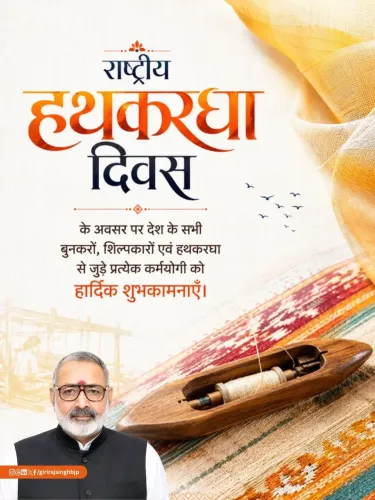
Giriraj Singh pens handloom op-ed on National Handloom Day
Synopsis
On National Handloom Day 2026, Union Textiles Minister Giriraj Singh published an op-ed arguing India's handloom sector — employing millions of weavers — can be transformed into an engine of rural prosperity, women's empowerment, and global competitiveness under PM Modi's leadership.
Key Takeaways
Union Textiles Minister Giriraj Singh published a handloom op-ed on 7 August 2026 , coinciding with National Handloom Day .
The op-ed frames India's handloom heritage as an engine of rural prosperity, women's empowerment, sustainability, and global competitiveness.
National Handloom Day has been observed on 7 August every year since 2015 , marking the anniversary of the Swadeshi movement.
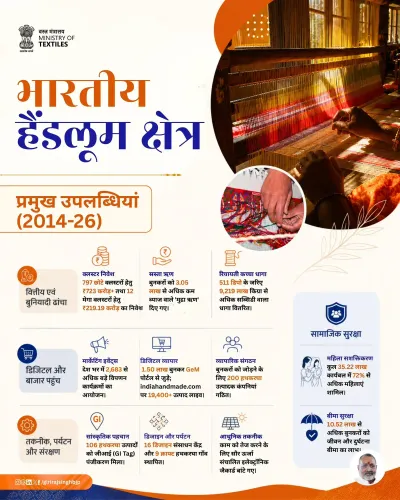
The National Handloom Development Programme underpins government support for weaver clusters, marketing, and GI tagging.
Current policy ties the sector to the Atmanirbhar Bharat umbrella, linking women's self-help groups to formal credit and export channels.
Upcoming ministry announcements on export incentives and cluster development funds will test whether the policy rhetoric translates into concrete gains for weavers.
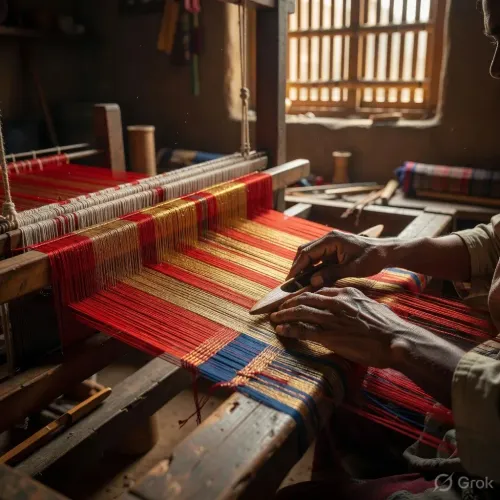
On National Handloom Day, 7 August 2026, Union Textiles Minister Giriraj Singh made the case in a published op-ed that India's handloom heritage is not a relic to be preserved behind glass — it is a live engine waiting to power rural prosperity, women's empowerment, and global competitiveness.
What the op-ed argues
Writing that 'India's handloom heritage is one of our greatest strengths,' Singh frames the sector's transformation as a deliberate policy project under Prime Minister Narendra Modi. The article connects the dots between weaver livelihoods, sustainability goals, and India's ambition to compete in global textile value chains — arguing these are not competing priorities but a single, coherent arc.
Why 7 August carries weight
National Handloom Day has been observed every 7 August since 2015, when the Modi government instituted it to mark the anniversary of the Swadeshi movement and to spotlight the sector's cultural and economic role. The date is a deliberate signal: handloom is not charity — it is identity and industry at once. Successive governments have reinforced this framing through the National Handloom Development Programme, which has channelled support into weaver clusters, marketing infrastructure, and GI tagging to distinguish handloom products from cheaper power-loom competition.
Millions of weavers, one policy bet
The handloom sector employs millions of households across India, with women forming the backbone of weaving communities in states from Assam to Andhra Pradesh. Current policy ties these workers to the Atmanirbhar Bharat framework — linking women's self-help groups to formal credit, branding, and export channels. Singh's op-ed, published on a day dedicated to the sector, is also a public accounting of that bet: that heritage and global competitiveness can be built simultaneously, not traded off against each other.
The next test will come in parliamentary discussions and any forthcoming ministry announcements on handloom export incentives or cluster development funds — moments where the argument in print must translate into budget lines.
Point of View
Particularly ahead of any budget or parliamentary cycle where textiles funding may be contested. The emphasis on women's empowerment is also politically deliberate, aligning the sector with the government's self-help group outreach in rural constituencies. Whether the rhetoric converts into measurable export growth or weaver income gains will determine how durable this framing proves.
NationPress
7 Aug 2026
Frequently Asked Questions
What is National Handloom Day and when is it observed?
National Handloom Day is observed every year on 7 August . It was instituted in 2015 by the Modi government to commemorate the Swadeshi movement and to highlight the handloom sector's cultural and economic significance.
What did Giriraj Singh write in his handloom op-ed?
Singh argued that India's handloom heritage is 'one of our greatest strengths' and outlined how government policy under PM Modi is converting that heritage into rural prosperity, women's empowerment, sustainability, and global competitiveness for India's weavers.
What is the National Handloom Development Programme?
The National Handloom Development Programme is a central government scheme that provides sustained support for weaver clusters, marketing infrastructure, and credit access, and has been a key policy tool for the handloom sector since the mid-2010s.
How does the handloom sector connect to Atmanirbhar Bharat?
Current textiles policy links handloom weavers — especially women in self-help groups — to formal credit, GI-tagged branding, and global export channels under the Atmanirbhar Bharat framework, positioning handloom as both a heritage and a trade asset.
Who is Giriraj Singh?
Giriraj Singh is the Union Minister of Textiles, a senior BJP leader, and the Lok Sabha MP from Begusarai, Bihar .