Giriraj Singh Plants Tree in Vijayawada Under Ek Ped Maa Ke Naam
Synopsis
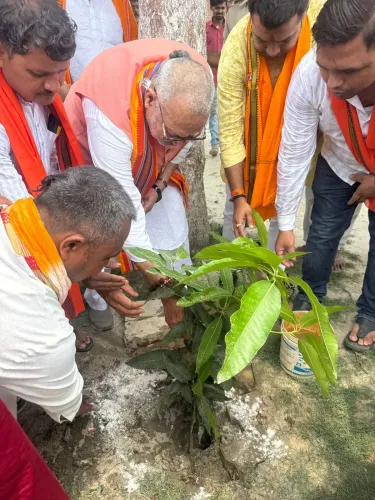
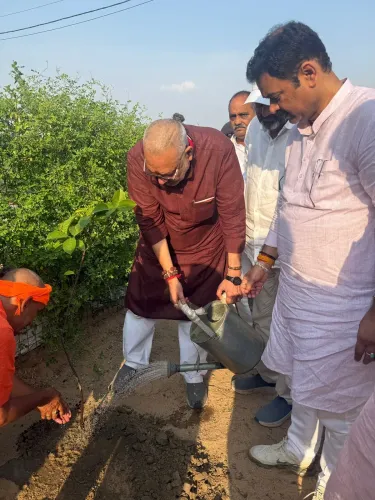
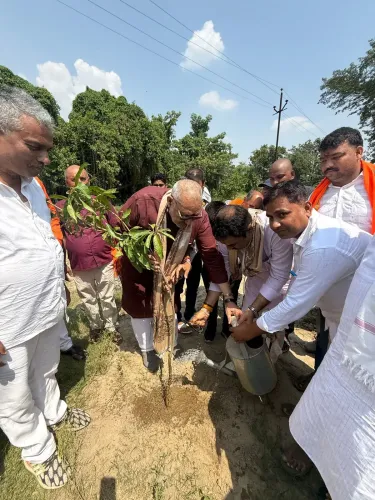
Union Textiles Minister Giriraj Singh planted a sapling in Vijayawada on 30 May 2026 under the Ek Ped Maa Ke Naam campaign, calling the act an expression of gratitude toward nature. The campaign, promoted by the Centre since 2024, frames tree-planting as a tribute to mothers and to the earth.
Key Takeaways
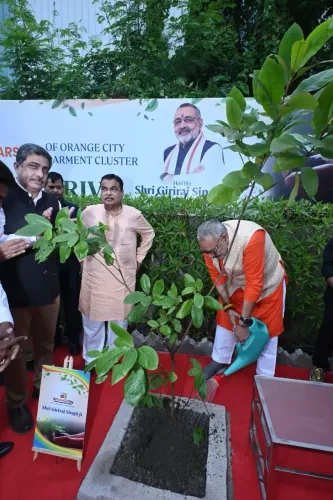
Giriraj Singh planted a tree in Vijayawada, Andhra Pradesh on 30 May 2026 during an official visit to the city.
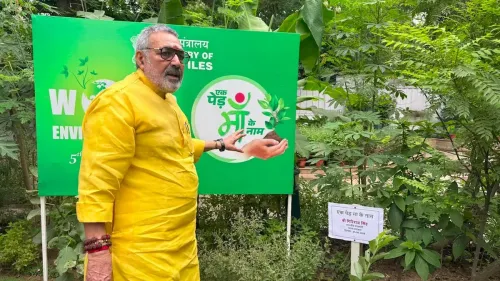
The act was part of the Ek Ped Maa Ke Naam ('One Tree in Mother's Name') campaign promoted by the central government since 2024 .
The minister described the plantation as an expression of gratitude toward nature, which he compared to a selflessly nurturing mother.
India has committed to creating an additional carbon sink of 2.5–3 billion tonnes of CO2 equivalent through forest and tree cover by 2030 under its Paris Agreement pledge.
The campaign's long-term impact depends on sapling survival rates and integration with state-level green-cover programmes such as those in Andhra Pradesh .
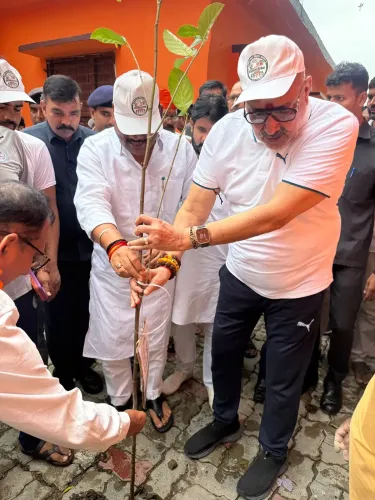
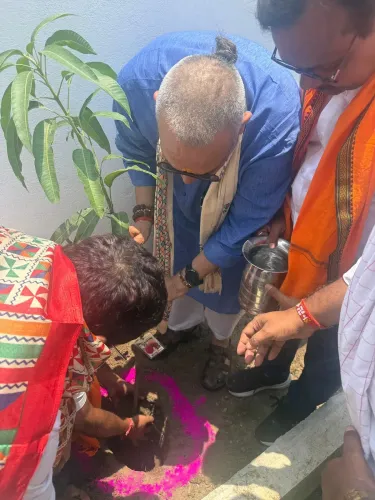
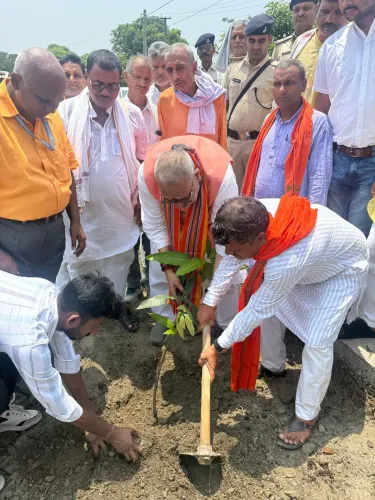
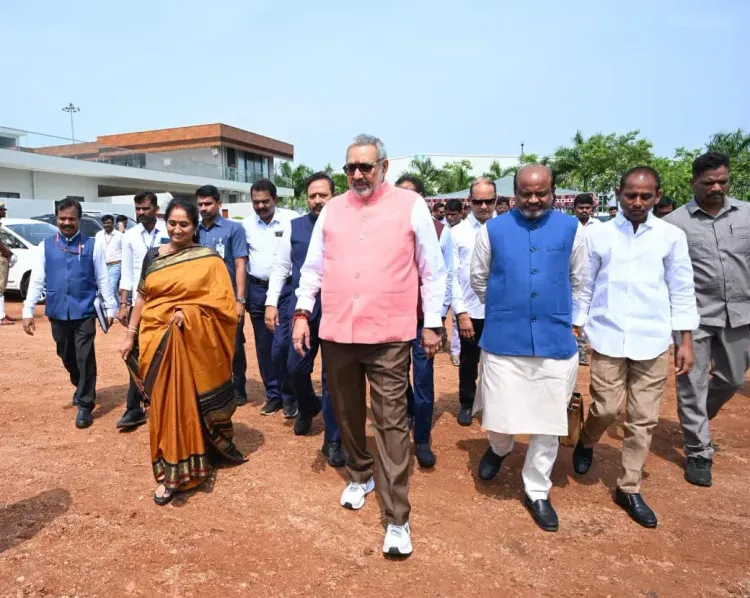
Union Textiles Minister Giriraj Singh participated in a tree plantation drive in Vijayawada, Andhra Pradesh, on 30 May 2026, planting a sapling under the Centre's Ek Ped Maa Ke Naam campaign as part of his visit to the city.
Sharing the act on social media, the minister described it as fulfilling a duty toward 'Dharti Maa' — Mother Earth. In his post, he wrote: 'एक पेड़ माँ के नाम लगाना केवल एक पौधा रोपना नहीं है' ('Planting a tree in a mother's name is not merely planting a sapling'), adding that it is an expression of gratitude toward nature, which nurtures us selflessly, just as a mother does.
Context
The Ek Ped Maa Ke Naam campaign — translating to 'One Tree in Mother's Name' — was promoted by the central government in 2024 as part of annual environment-day activities, calling on citizens across the country to plant trees as a tribute to their mothers and to nature. The campaign frames afforestation as a personal, emotional act rather than a bureaucratic target, seeking to build public participation at scale.
Giriraj Singh, a senior BJP leader and Lok Sabha MP from Begusarai, Bihar, used his Vijayawada visit — primarily linked to his textiles portfolio — to visibly associate himself with the campaign, a pattern common among Union ministers during state-level engagements.
Policy Backdrop
India's afforestation push sits within a broader climate framework. The country committed under the 2015 Paris Agreement to create an additional carbon sink of 2.5 to 3 billion tonnes of CO2 equivalent through additional forest and tree cover by 2030. India further announced a net-zero emissions target by 2070 at COP26, making sustained tree-cover expansion a long-term policy priority.
Successive governments have run symbolic plantation drives since the 1990s, with ministerial participation intensifying after India's Paris pledge. Such drives are coordinated under the National Action Plan on Climate Change, which designates the National Mission for a Green India as a dedicated afforestation vehicle. The Ek Ped Maa Ke Naam campaign operates as a citizen-engagement layer on top of these structural programmes.
Stakeholders and Impact
The campaign's primary audience is the general public, with ministers and public figures acting as visible participants to encourage mass adoption. When senior Union ministers plant saplings during visits to states governed by coalition partners or other parties — as is the case in Andhra Pradesh — the act also carries an implicit signal of cooperative federalism on the environment agenda.
Local communities in and around Vijayawada stand to benefit if plantation drives are followed through with maintenance and survival monitoring. Environmentalists and state forest departments have consistently flagged that the long-term value of such campaigns depends on sapling survival rates, which require post-plantation care beyond the ceremonial event.
What's Next
The Ek Ped Maa Ke Naam campaign is expected to continue drawing ministerial participation through the 2026 environment calendar, particularly around World Environment Day on 5 June. Observers will watch whether Andhra Pradesh's state government integrates centrally planted saplings into its own green-cover tracking systems, and whether the Centre publishes aggregated survival and growth data to substantiate the campaign's afforestation claims. The broader test for such initiatives remains the transition from symbolic gesture to measurable canopy gain.
Point of View
Especially in politically significant states like Andhra Pradesh. The Ek Ped Maa Ke Naam campaign is notable for its emotional framing — linking afforestation to maternal devotion — which is designed to drive public participation beyond the usual institutional machinery. However, the campaign's credibility will increasingly be tested against verifiable outcomes: sapling survival data, canopy cover surveys, and integration into India's Paris Agreement reporting. Until such metrics are consistently published, ministerial plantation events risk being read as communications exercises rather than conservation milestones.
NationPress
14 Oct 2026
Frequently Asked Questions
What is the Ek Ped Maa Ke Naam campaign?
Ek Ped Maa Ke Naam ('One Tree in Mother's Name') is a nationwide tree plantation campaign promoted by the Indian central government since 2024, encouraging citizens to plant trees as a tribute to their mothers and as an act of gratitude toward nature.
Why did Giriraj Singh visit Vijayawada?
Giriraj Singh visited Vijayawada in Andhra Pradesh as part of official engagements linked to his role as Union Textiles Minister, during which he also participated in the Ek Ped Maa Ke Naam tree plantation drive.
What is India's tree cover target under the Paris Agreement?
India committed under the 2015 Paris Agreement to create an additional carbon sink of 2.5 to 3 billion tonnes of CO2 equivalent through additional forest and tree cover by 2030.
Is Ek Ped Maa Ke Naam a government scheme?
Yes, it is a centrally promoted campaign launched as part of annual environment-day activities in 2024, encouraging individuals and public figures to plant trees in honour of their mothers.
What is Giriraj Singh's political background?
Giriraj Singh is a senior BJP leader, Union Minister of Textiles, and Lok Sabha MP from Begusarai, Bihar.