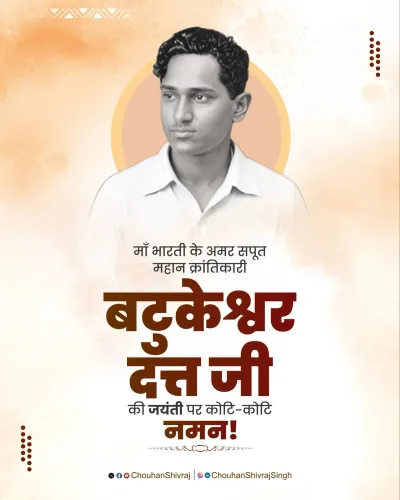
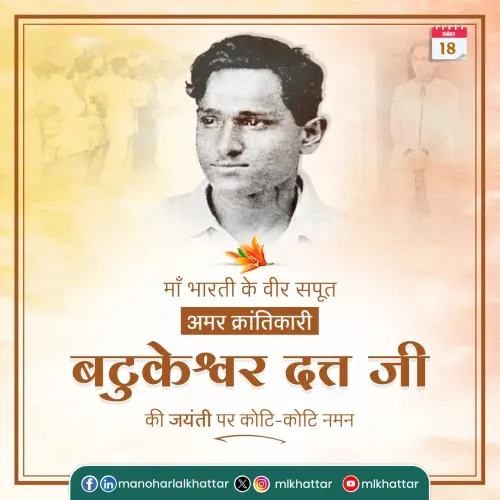
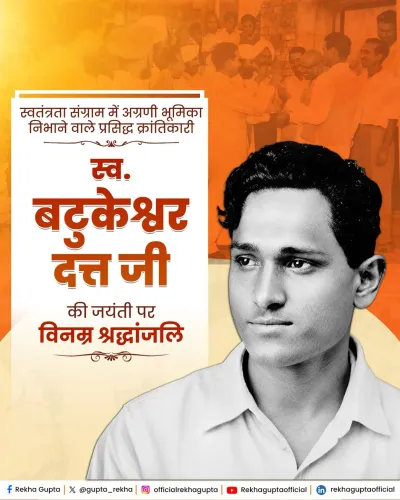
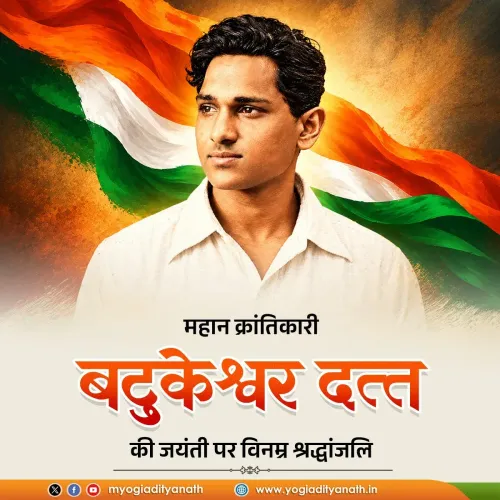
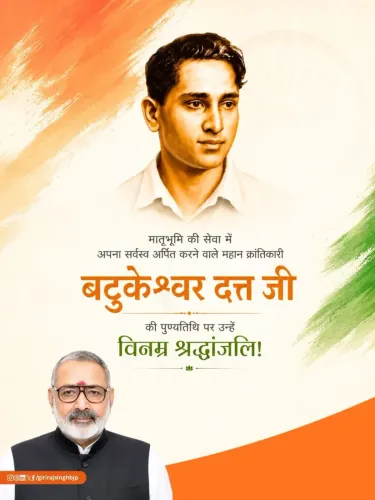
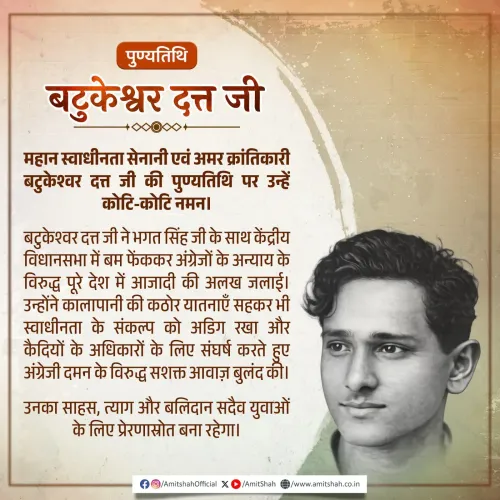
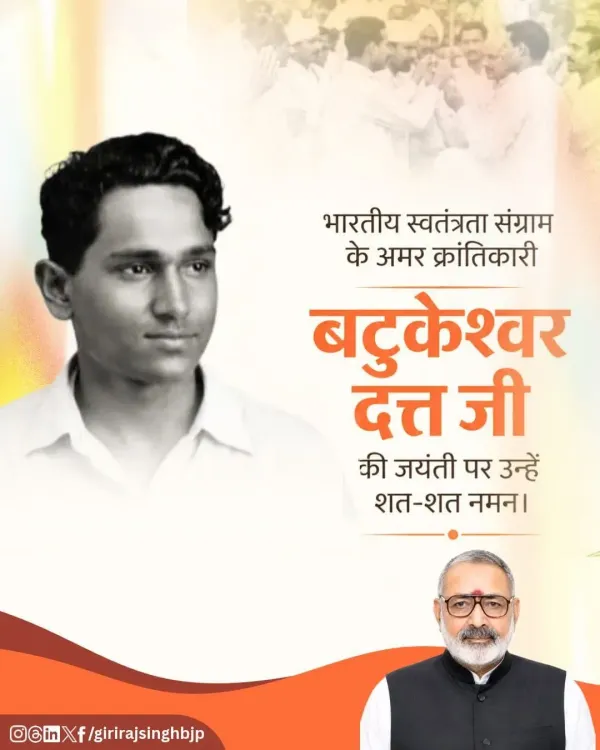
Giriraj Singh pays tribute to revolutionary Batukeshwar Dutt on jayanti
Synopsis
Union Textiles Minister Giriraj Singh honoured revolutionary Batukeshwar Dutt on his birth anniversary, recalling the 1929 Central Legislative Assembly bombing alongside Bhagat Singh and Dutt's subsequent life imprisonment as enduring symbols of India's freedom struggle.
Key Takeaways
Giriraj Singh posted a tribute on X on 18 November 2026 , marking Batukeshwar Dutt's birth anniversary.
Dutt and Bhagat Singh threw bombs in the Central Legislative Assembly on 8 April 1929 to protest the Public Safety Bill and Trade Disputes Bill.
The act was deliberately non-lethal — designed as political protest, not an attempt to cause casualties.
Dutt was sentenced to life imprisonment at the Cellular Jail, Andaman Islands , and released in 1938 .
Singh's tribute is part of a wider BJP pattern of honouring armed-resistance figures in India's independence narrative.
A bomb in the Central Legislative Assembly, thrown not to kill but to make the deaf hear — that act of defiance on 8 April 1929 by Batukeshwar Dutt alongside Bhagat Singh remains one of the most audacious moments of India's freedom struggle. On Wednesday, 18 November 2026, Union Textiles Minister Giriraj Singh marked Dutt's birth anniversary with a tribute on X, honouring the revolutionary's courage and sacrifice.
Posting in Hindi, Singh wrote: 'Batukeshwar Dutt ji ka sahas, deshbhakti aur matrubhumi ke prati samarpan hum sabhi ke liye prernaasrot hai' — 'The courage, patriotism and dedication to the motherland of great revolutionary Batukeshwar Dutt ji of the Indian independence struggle is a source of inspiration for all of us. His sacrifice and martyrdom for the country's freedom will always be remembered. On his birth anniversary, a hundredfold salute to him.'
The assembly bombing that shook colonial India
On 8 April 1929, Batukeshwar Dutt and Bhagat Singh hurled two low-intensity bombs from the public gallery of the Central Legislative Assembly in Delhi, then under British rule. The act was deliberately non-lethal — the intent was political theatre, protest against the repressive Public Safety Bill and the Trade Disputes Bill. The slogan 'Inquilab Zindabad' rang through the chamber as the two men surrendered on the spot.
Dutt was sentenced to life imprisonment and transported to the Cellular Jail in the Andaman Islands. He was released in 1938 after years of incarceration, having endured conditions that broke many but did not break him.
A pattern of reclaiming armed resistance in national memory
Singh's tribute fits a broader political pattern: BJP leaders have consistently used the jayantis and martyrdom anniversaries of figures like Bhagat Singh, Rajguru, Sukhdev, and Chandrashekhar Azad to spotlight the armed-resistance strand of India's independence movement — alongside, and sometimes in contrast to, the Congress-led non-violent narrative. These social-media commemorations function as a form of historical reclamation, asserting that the full spectrum of the freedom struggle deserves equal remembrance.
Dutt's story, in particular, carries a poignant postscript. Despite his role in one of the independence movement's most dramatic episodes, he spent his later years in relative obscurity, reportedly struggling financially — a contrast that subsequent generations have found both troubling and galvanising.
Tributes to Batukeshwar Dutt place him firmly back in the national conversation — a reminder that India's road to independence ran through courtrooms, hunger strikes, prison cells, and yes, a bomb thrown in a colonial assembly hall.
Point of View
The party positions itself as the custodian of the full spectrum of anti-colonial resistance — a subtle but consistent counter-narrative to the Congress legacy. Such tributes carry low policy weight but significant symbolic and electoral resonance, particularly in states like Bihar where Dutt has regional cultural salience. The pattern is likely to intensify around key dates such as 23 March (Bhagat Singh, Rajguru, and Sukhdev martyrdom day) and 28 September (Bhagat Singh's birth anniversary).
NationPress
18 Nov 2026
Frequently Asked Questions
Who was Batukeshwar Dutt and why is he famous?
Batukeshwar Dutt was an Indian revolutionary who, alongside Bhagat Singh, threw bombs in the Central Legislative Assembly on 8 April 1929 to protest the Public Safety Bill and Trade Disputes Bill. The act was non-lethal and intended as a dramatic political statement against British colonial rule.
What happened to Batukeshwar Dutt after the 1929 assembly bombing?
Batukeshwar Dutt was sentenced to life imprisonment and sent to the Cellular Jail in the Andaman Islands. He was released in 1938 after years of harsh incarceration.
Why did Giriraj Singh pay tribute to Batukeshwar Dutt?
Giriraj Singh posted the tribute on 18 November 2026 to mark Batukeshwar Dutt's birth anniversary, honouring his courage, patriotism, and sacrifice during India's independence struggle.
What was the Central Legislative Assembly bombing of 1929 about?
Bhagat Singh and Batukeshwar Dutt threw two low-intensity bombs in the Central Legislative Assembly on 8 April 1929 to protest repressive British legislation — the Public Safety Bill and the Trade Disputes Bill. They surrendered immediately, turning the act into a public political statement.
What is Batukeshwar Dutt's birth anniversary date?
Batukeshwar Dutt's birth anniversary falls on 18 November , which is why tributes from political leaders across parties are posted on this date each year.