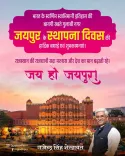
Shekhawat Greets Jaipur on 299th Foundation Day
Synopsis
Union Culture and Tourism Minister Gajendra Singh Shekhawat marked Jaipur's foundation day on 18 November 2026, honouring the Pink City's nearly three-century legacy and its status as a UNESCO World Heritage Site and crown jewel of Rajasthan's heritage tourism.
Key Takeaways
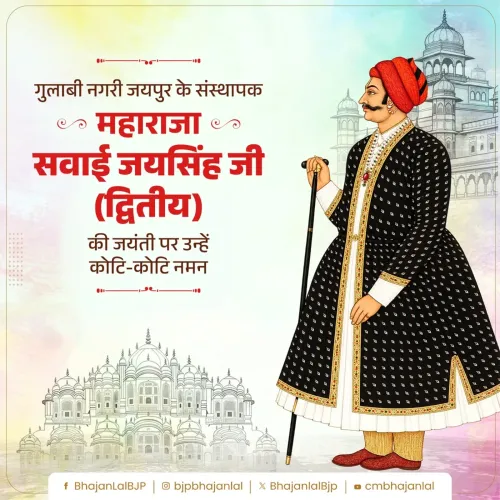
Jaipur was founded on 18 November 1727 by Maharaja Sawai Jai Singh II , making 2026 its 299th foundation day .
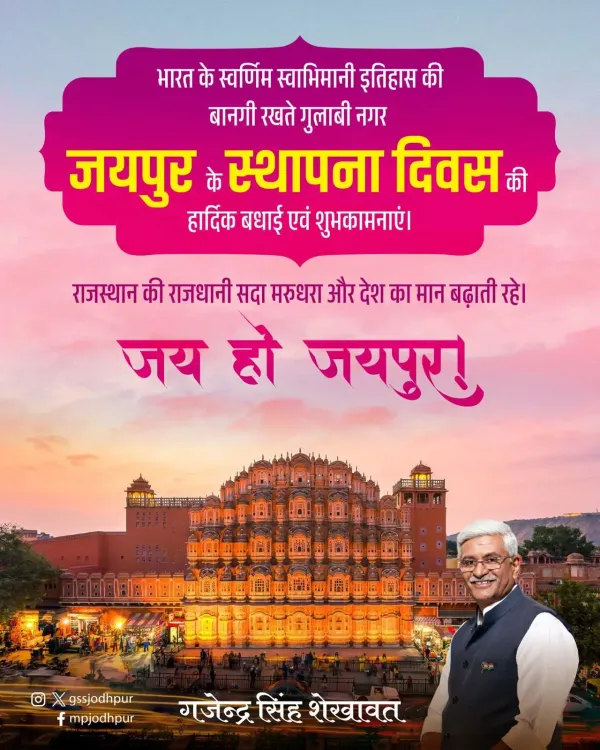
Union Minister Gajendra Singh Shekhawat posted birthday greetings on X, calling Jaipur a reflection of India's 'golden and self-respecting history'.
Jaipur was inscribed as a UNESCO World Heritage Site in 2019 for its exceptional 18th-century grid-planned urban design.
The city is known globally as the Pink City and serves as the capital of Rajasthan .
The Ministry of Culture and Tourism actively promotes Rajasthan's heritage circuit as a key driver of domestic and international tourism.
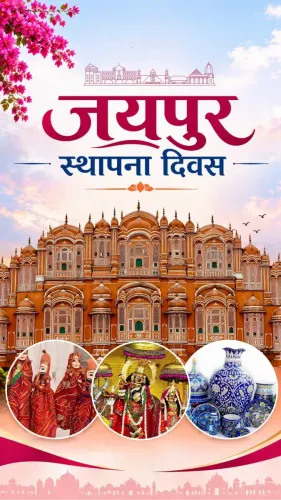
Three centuries of living history, and the Pink City is still turning heads. On Wednesday, 18 November 2026, Union Culture and Tourism Minister Gajendra Singh Shekhawat extended warm wishes to Jaipur on its foundation day, celebrating the city's enduring identity as a symbol of Rajasthan's pride and India's golden heritage.
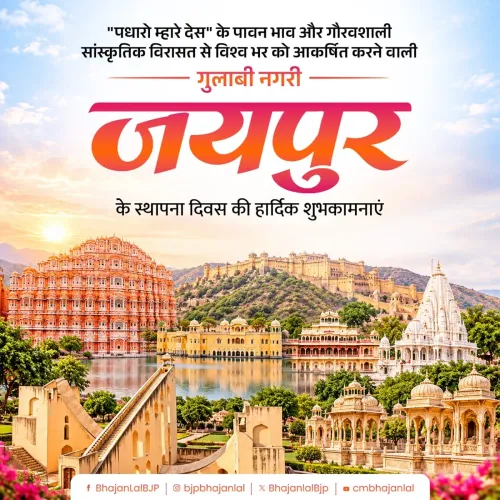
Posting on X in Hindi, Shekhawat wrote: 'भारत के स्वर्णिम स्वाभिमानी इतिहास की बानगी रखते गुलाबी नगर जयपुर के स्थापना दिवस की हार्दिक बधाई एवं शुभकामनाएं।' — 'Heartfelt congratulations and best wishes on the foundation day of the Pink City Jaipur, which preserves the essence of India's glorious and self-respecting history.' He added that Rajasthan's capital should continue to bring honour to the desert land and to the nation — signing off with the rallying call: 'जय हो जयपुर!' ('Glory to Jaipur!').
A City Born on 18 November 1727
Jaipur was founded on 18 November 1727 by Maharaja Sawai Jai Singh II, ruler of Amber, who relocated his capital to the new grid-planned city. The design — wide boulevards, uniform façades washed in terracotta pink, and a rational block system rare in pre-modern urbanism — was visionary for its era. Sawai Jai Singh II also built the celebrated Jantar Mantar astronomical observatory in the city, one of a chain he commissioned across northern India.
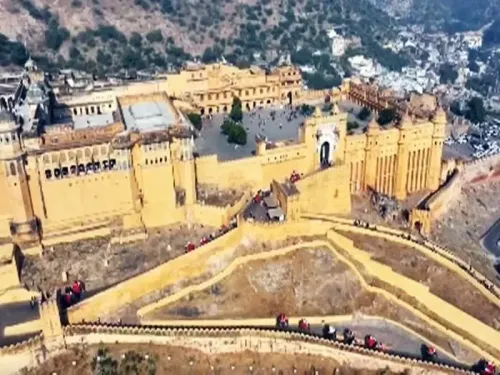
The city's legacy was formally recognised on the global stage when Jaipur was inscribed on the UNESCO World Heritage List in 2019, with its 18th-century grid planning and distinctive Rajput-Mughal architecture cited as a model of South Asian urban heritage. That designation placed Jaipur alongside a small number of planned historic cities worldwide that have retained their original spatial character over centuries.
Culture Ministry's Heritage Diplomacy at Work
Shekhawat's post is more than a civic greeting — it fits a deliberate pattern. Central ministers routinely mark regional foundation days to reinforce cultural continuity and amplify domestic tourism narratives. For the Ministry of Culture and Tourism, Rajasthan's heritage circuit — Jaipur, Jodhpur, Udaipur, Jaisalmer — is among the most commercially significant in the country, drawing millions of domestic and international visitors annually.
As an MP from Jodhpur, Shekhawat has a personal stake in the fortunes of Rajasthan's heritage economy. His ministry has been pushing themed tourism circuits and conservation initiatives that position cities like Jaipur as living monuments rather than museum pieces — a distinction that matters enormously to sustainable visitor growth.
Point of View
Linking regional pride to national identity. With the city approaching its tercentenary in 2027, messages like this are likely to escalate into a larger campaign, potentially timed to major tourism and cultural programming around the 300th-anniversary year.
NationPress
18 Nov 2026
Frequently Asked Questions
When was Jaipur founded and by whom?
Jaipur was founded on 18 November 1727 by Maharaja Sawai Jai Singh II , the ruler of Amber, who shifted his capital to the newly planned city.
Why is Jaipur called the Pink City?
Jaipur is called the Pink City because its historic walled-city buildings are uniformly painted in a distinctive terracotta pink colour, a tradition that dates to the 19th century and gives the city its iconic character.
Is Jaipur a UNESCO World Heritage Site?
Yes. Jaipur was inscribed on the UNESCO World Heritage List in 2019 , recognised for its exceptional 18th-century grid-planned urban design and Rajput-Mughal architecture.
What did Gajendra Singh Shekhawat say about Jaipur's foundation day?
Shekhawat extended congratulations on X, calling Jaipur a reflection of India's 'golden and self-respecting history' and expressing hope that the city would continue to bring honour to Rajasthan and the nation.
What is Jaipur's significance to Rajasthan tourism?
Jaipur is the capital of Rajasthan and the anchor of the state's heritage tourism circuit, attracting millions of domestic and international visitors annually to its palaces, forts, and bazaars.