Giriraj Singh hails Vande Mataram, Indore museum artifacts
Synopsis
Union Textiles Minister Giriraj Singh marked the post-Independence Day period by invoking Vande Mataram as more than a song — pointing to buttons, cufflinks, cloth, and flags preserved at an Indore museum as living proof of India's freedom struggle spirit.
Key Takeaways
Union Textiles Minister Giriraj Singh posted on 19 August 2026 calling Vande Mataram an immortal symbol of national identity and self-respect.
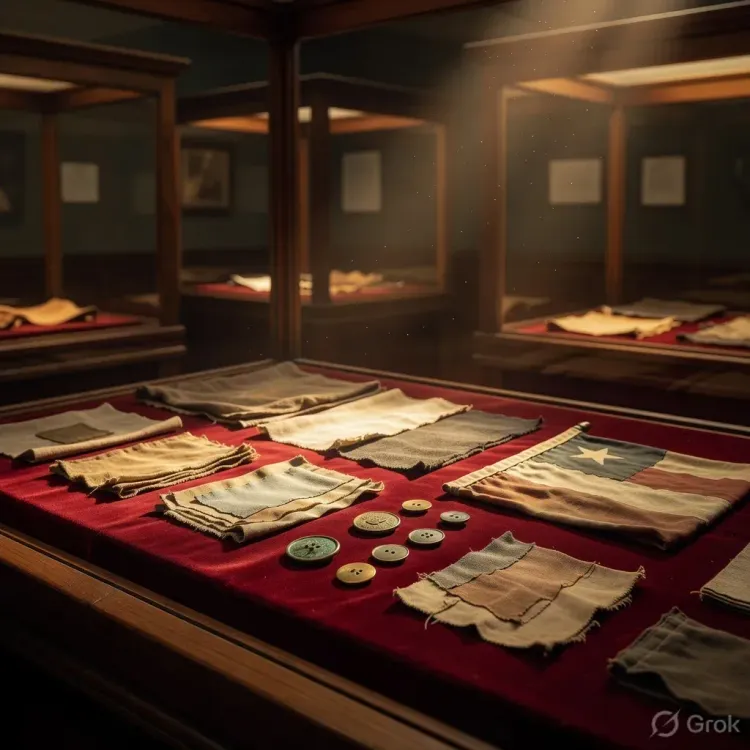
He highlighted artifacts at an Indore, Madhya Pradesh museum — buttons, cufflinks, bolts of cloth, and historical flags — as tangible evidence of the freedom struggle.
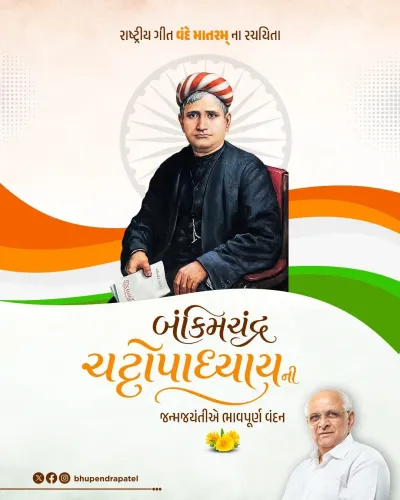
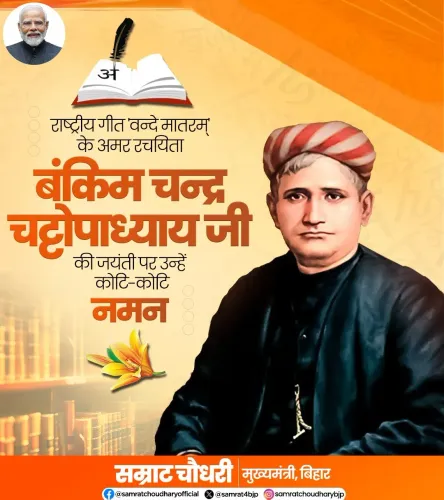
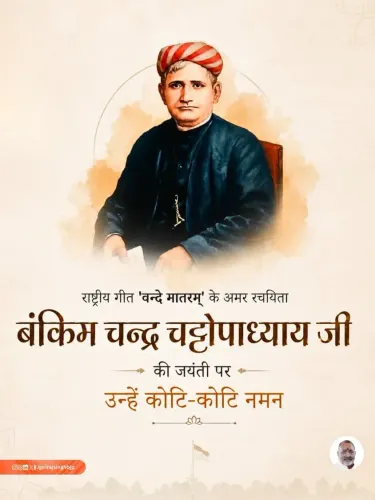
Vande Mataram was composed by Bankim Chandra Chatterjee in 1882 and adopted as India's national song by the Constituent Assembly on 24 January 1950 .
The post connects Singh's Textiles Ministry portfolio to India's textile-rooted heritage of resistance, including khadi and handspun cloth.
The timing follows Independence Day on 15 August , a period when senior ministers routinely spotlight freedom-struggle symbols and heritage institutions.
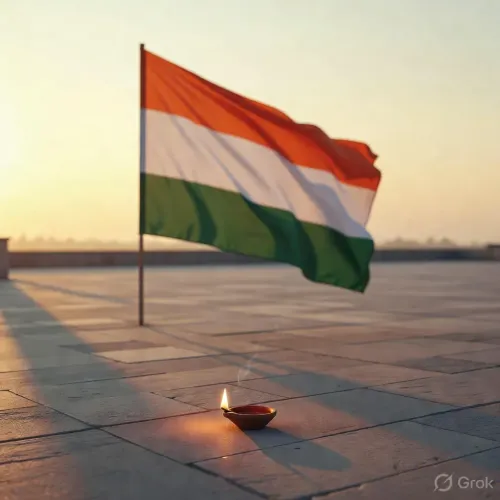
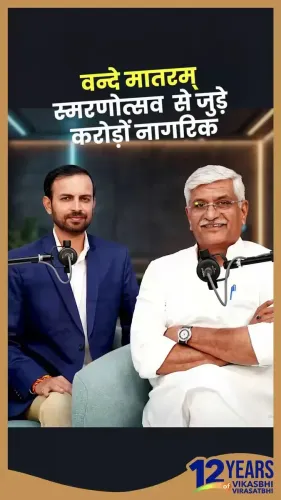
An anthem that once moved millions to defy an empire still echoes in the stitching of old cloth and the clasp of a forgotten cufflink. On Wednesday, 19 August 2026, Union Textiles Minister Giriraj Singh invoked Vande Mataram — not merely as a song, but as what he called an immortal symbol of national identity, inspiration, and self-respect for every Indian — pointing to physical relics preserved at a museum in Indore, Madhya Pradesh, as living proof.
In his post, the Minister wrote: 'Vande Mataram sirf ek geet nahin' — 'Vande Mataram is not merely a song' — before drawing attention to buttons, cufflinks, bolts of cloth, and historical flags safeguarded in the Indore museum as tangible witnesses to the freedom struggle's spirit.
From Bankim Chandra's pen to a museum case in Indore
Vande Mataram was composed by Bankim Chandra Chatterjee in 1882 and became the thundering rallying cry of India's independence movement. The Constituent Assembly formally adopted it as India's national song on 24 January 1950 — two days before the Republic itself was proclaimed. That journey, from a novelist's manuscript to a constitutional declaration, is precisely the arc Singh invoked.
The Indore museum artifacts he referenced — buttons, cufflinks, fabric lengths, flags — are the kind of objects that rarely make headlines but carry enormous weight. They are the material culture of resistance: everyday items worn or carried by those who staked their lives on an idea. Singh's framing ties the textile dimension of that history directly to the present, where his own ministry oversees India's vast fabric and handloom sector.
Ministers, museums, and the politics of heritage memory
Singh's post fits a recognisable pattern: senior ministers use national days and their proximity to independence anniversaries to spotlight freedom-struggle symbols, reinforcing a cultural narrative that connects the current government's identity to the independence movement. For a Textiles Minister specifically, flags and cloth carry an added resonance — khadi and handspun fabric were themselves instruments of political defiance under Gandhi's leadership.
The timing, just days after Independence Day on 15 August, amplifies that register. Museums housing such artifacts become nodes in a broader effort — sometimes formalised through government schemes — to digitise and display freedom-struggle heritage for new generations.
The cufflink and the flag in a glass case in Indore are small things. But Singh's point lands: the anthem that shook colonial India did not live in words alone — it lived in the hands that made the cloth, sewed the buttons, and raised the flag. That story, he argues, is still worth telling.
Point of View
The post is less about a single anthem and more about who gets to curate the memory of that anthem.
NationPress
3 Oct 2026
Frequently Asked Questions
What is Vande Mataram and why is it significant?
Vande Mataram is India's national song, composed by Bankim Chandra Chatterjee in 1882. It became a powerful rallying anthem during the independence movement and was formally adopted by the Constituent Assembly on 24 January 1950.
What artifacts did Giriraj Singh mention in the Indore museum?
Singh referenced buttons, cufflinks, bolts of cloth, and historical flags preserved at a museum in Indore, Madhya Pradesh, describing them as living proof of the freedom struggle's spirit.
Why did Giriraj Singh post about Vande Mataram?
Singh posted on 19 August 2026, days after Independence Day, to highlight Vande Mataram as a symbol of national identity and to draw attention to freedom-struggle artifacts preserved in Indore.
What is Giriraj Singh's role in the Indian government?
Giriraj Singh is the Union Minister of Textiles, a senior BJP leader, and a Lok Sabha MP representing Begusarai constituency in Bihar.
What is the connection between India's Textiles Ministry and the freedom struggle?
Textiles — particularly khadi and handspun cloth — were central instruments of political resistance during India's independence movement, giving the Textiles Ministry a natural cultural link to that heritage.