Giriraj Singh urges India to buy handloom on National Handloom Day
Synopsis
Union Textiles Minister Giriraj Singh marked National Handloom Day on 7 August 2026 by urging Indians to buy handloom products and share #GRWM videos, tying the appeal to PM Modi's Atmanirbhar Bharat and Vocal for Local campaigns to empower the country's weavers.
Key Takeaways
Union Textiles Minister Giriraj Singh posted the appeal on 6 August 2026 , ahead of National Handloom Day on 7 August .
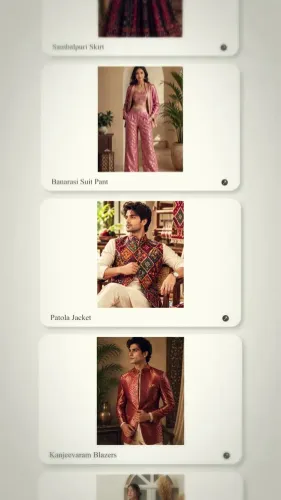
He urged every Indian to buy at least one handloom product and share a #GRWM video in handloom attire on social media.
National Handloom Day has been observed annually since 2015 , commemorating the 1905 Swadeshi Movement.
The call is linked to PM Modi's Atmanirbhar Bharat Abhiyan , launched in May 2020 to promote domestic artisans and manufacturing.
India's handloom sector employs millions of weavers, largely women and rural households, who face stiff competition from power-loom and imported fabrics.
The slogan 'Sashakt bunkar, samridh Bharat' — 'Empowered weaver, prosperous India' — frames weaver welfare as inseparable from national economic self-reliance.
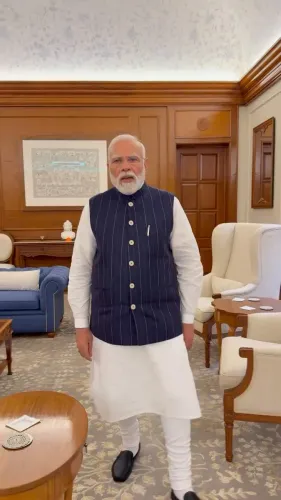
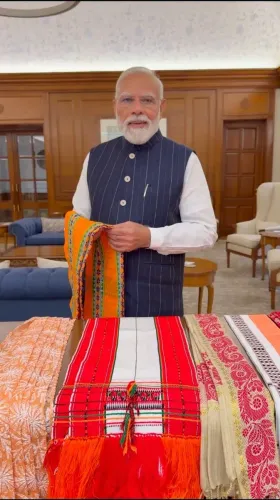
On the eve of National Handloom Day, 7 August, Union Textiles Minister Giriraj Singh issued a nationwide call to action — urging every Indian to buy at least one handloom product, wear it, and share a #GRWM video online to carry the skill of the country's weavers to a global audience.
Posting in Hindi on 6 August 2026, Singh framed the appeal squarely around Prime Minister Narendra Modi's vision: that handloom is not merely clothing, but a living expression of the weaver's labour, the Swadeshi spirit, and the resolve of Atmanirbhar Bharat (self-reliant India). 'Empower the weaver, enrich India,' he wrote, anchoring the personal act of purchase to a national economic mission.
From Swadeshi movement to social-media challenge
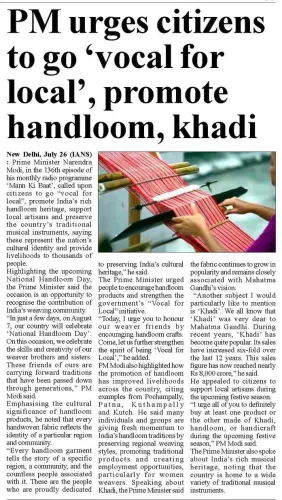
National Handloom Day has been observed every 7 August since 2015, the date chosen to commemorate the original Swadeshi Movement of 1905 — when Indians pledged to use domestically made goods as an act of resistance. The Modi government revived that symbolism a century later, institutionalising the day to spotlight the millions of weavers whose livelihood depends on the sector.
Singh's call to share #GRWM (Get Ready With Me) videos in handloom attire is a deliberate pivot to the language of social media — meeting younger consumers where they already spend their attention. The hashtags #VocalForLocal and #AtmanirbharBharat tie the moment to a campaign architecture the government has built consistently since 2020, when the Atmanirbhar Bharat Abhiyan was launched to push domestic manufacturing and artisan welfare.
Why weavers need more than goodwill
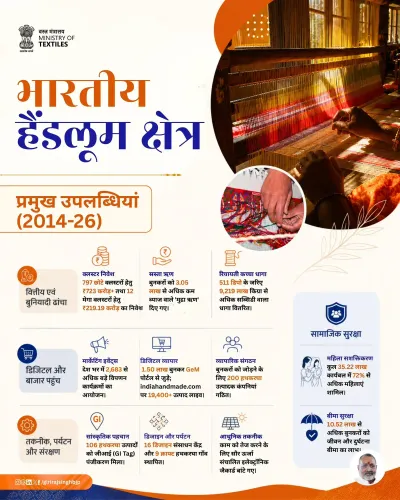
India's handloom sector is one of the largest cottage industries in the world, employing millions of weavers — predominantly women and rural households — across clusters in states such as West Bengal, Andhra Pradesh, Assam, Uttar Pradesh, and Tamil Nadu. The sector competes directly with power-loom and imported synthetic fabrics that undercut handloom on price, making consumer demand campaigns a genuine policy lever, not just optics.
By asking citizens to document and share their handloom choices, Singh is effectively crowdsourcing a visibility campaign — one that costs the exchequer nothing but could nudge consumption in the days immediately around the observance, when retail attention on the category is at its annual peak.
The slogan 'Sashakt bunkar, samridh Bharat' — 'Empowered weaver, prosperous India' — distils the government's consistent argument: that cultural pride and economic self-reliance are not separate goals but the same goal, pursued thread by thread.
Point of View
Social-media-native consumers into a campaign that has traditionally skewed older and elite. Whether the viral ask translates into sustained weaver income, rather than a single-day spike, is the real policy question the government has yet to answer publicly.
NationPress
6 Aug 2026
Frequently Asked Questions
When is National Handloom Day celebrated in India?
National Handloom Day is celebrated every year on 7 August . It was first observed in 2015 to honour India's handloom weavers and commemorate the Swadeshi Movement of 1905.
What did Giriraj Singh say on National Handloom Day 2026?
Union Textiles Minister Giriraj Singh urged Indians to buy at least one handloom product, wear it, and share a #GRWM video on social media to showcase the skill of Indian weavers and support the Atmanirbhar Bharat mission.
What is the Atmanirbhar Bharat Abhiyan?
Atmanirbhar Bharat Abhiyan is a self-reliance initiative launched by the Modi government in May 2020 to boost domestic manufacturing, reduce import dependence, and support local artisans and industries.
Why does the government promote handloom buying?
India's handloom sector employs millions of weavers, mostly women and rural households, who face intense competition from cheaper power-loom and imported fabrics. Government campaigns aim to boost consumer demand and protect weaver livelihoods.
What does Vocal for Local mean in the context of handloom?
' Vocal for Local ' is a campaign urging Indians to prefer domestically made products. In the handloom context, it means consciously choosing Indian handwoven textiles over machine-made or imported alternatives to support local weavers.