What Did PM Modi Say About the Admired Naga Culture on Statehood Day?
Click to start listening
Synopsis
On Nagaland's Statehood Day, Prime Minister Narendra Modi underscored the beauty of Naga culture and the state's journey toward prosperity. Alongside, Chief Minister Neiphiu Rio encouraged unity for a sustainable future. Celebrations included the Hornbill Festival showcasing Naga traditions.
Key Takeaways
- Nagaland Statehood Day is celebrated on December 1.
- PM Modi congratulated the people of Nagaland for their cultural richness.
- The Hornbill Festival showcases Naga traditions and unity.
- Chief Minister Rio emphasized a commitment to progress and inclusivity.
- Nagaland achieved statehood in 1963, following a long struggle.
New Delhi, Dec 1 (NationPress) Prime Minister Narendra Modi extended his heartfelt wishes to the citizens of Nagaland on their Statehood Day, emphasizing the aspiration that this northeastern state continues its journey towards prosperity and progress.
In a post on X, he stated, "Warm wishes to the people of Nagaland on their Statehood Day. The magnificent Naga culture, deeply rooted in service, bravery, and compassion, is widely respected. The people of Nagaland have excelled in numerous fields. May the state continue to thrive and flourish in the future."
Nagaland's Chief Minister Neiphiu Rio also conveyed his thoughts via social media on this significant day.
"We pay tribute to our leaders who protected our rights and identity, as well as the visionaries who designed our future. Let's unite for a prosperous, inclusive, and sustainable Nagaland, reaffirming our dedication to its advancement and well-being," Rio shared on X.
Nagaland was officially established as a separate state on December 1, 1963, with Kohima designated as its capital.
The path to statehood was paved by the State of Nagaland Act, 1962, passed by the Parliament.
Post-India's independence in 1947, the Naga region remained a part of Assam, but a vigorous nationalist movement soon emerged, advocating for the political unification of Naga tribes, with some extremist factions demanding complete separation from the Indian Union.
In 1957, the Naga Hills region of Assam and the Tuensang frontier division were consolidated into a single administrative unit directly managed by the Government of India.
By 1960, it was decided that Nagaland would become a part of the Indian Union. Nagaland attained full statehood in 1963, and a democratically elected government took office the following year.
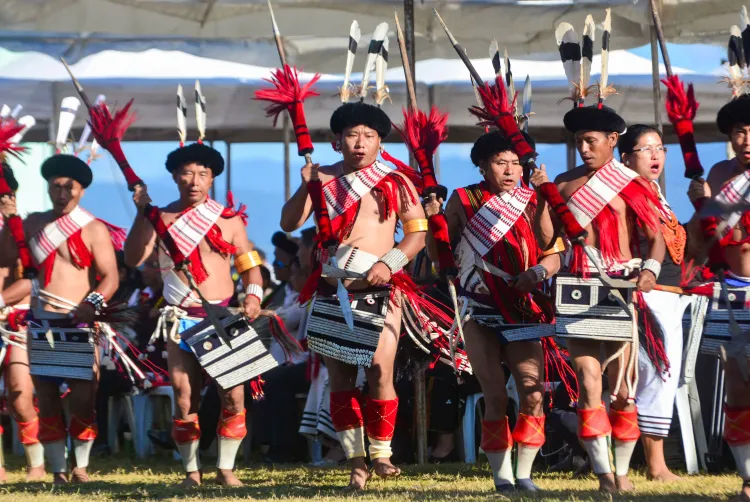
In conjunction with the Statehood Day festivities, the ten-day Hornbill Festival resumed, uniting all prominent Naga tribes to showcase their vibrant traditions through folklore, music, crafts, and culinary delights.
Point of View
It's essential to recognize the significance of Nagaland's Statehood Day. The celebration not only reflects the pride of the Naga people but also serves as a reminder of the region's journey towards an inclusive future. The unity exhibited during this time is vital for the nation's collective progress.
NationPress
01/12/2025
Frequently Asked Questions
When did Nagaland achieve statehood?
Nagaland was officially recognized as a separate state on December 1, 1963.
What is the Hornbill Festival?
The Hornbill Festival is a ten-day celebration that showcases the vibrant traditions of the Naga tribes, featuring folklore, music, crafts, and cuisine.
Who is the current Chief Minister of Nagaland?
The current Chief Minister of Nagaland is Neiphiu Rio.
What did PM Modi say about Naga culture?
PM Modi praised the glorious Naga culture, emphasizing its roots in service, courage, and compassion.
What is the significance of Statehood Day?
Statehood Day commemorates the establishment of Nagaland as a separate state, marking its journey towards self-governance and identity.