Goa CM Sawant Hails India–New Zealand Trade Deal
Synopsis
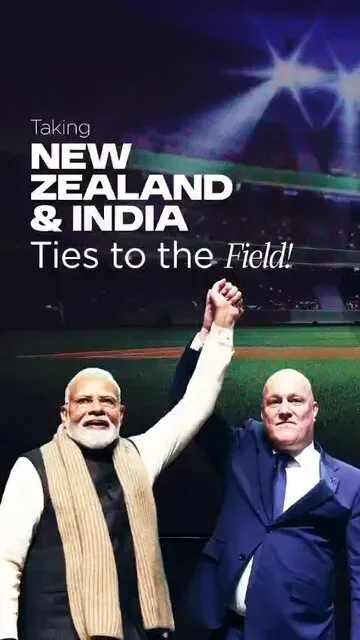
Goa Chief Minister Pramod Sawant on 12 July 2026 hailed a reported historic India–New Zealand trade deal on X, saying it opens new opportunities in trade, investment and innovation under PM Modi's leadership, marking a new chapter in Bharat–New Zealand relations.
Key Takeaways
Goa CM Pramod Sawant on 12 July 2026 publicly welcomed a reported historic trade deal between India and New Zealand .
The post credits Prime Minister Narendra Modi 's leadership for advancing the bilateral strategic partnership.
India–New Zealand FTA negotiations were first launched in 2010 and relaunched at a virtual leaders' summit in 2020 .
The deal, if concluded, would follow the India–Australia Economic Cooperation and Trade Agreement signed in 2022 as part of India's Indo-Pacific trade push.
Key stakeholders include Indian IT and services exporters , New Zealand dairy producers , and sectors such as education and tourism.
Parliamentary ratification and joint working groups on sanitary-phytosanitary standards and services liberalisation are expected as next steps.
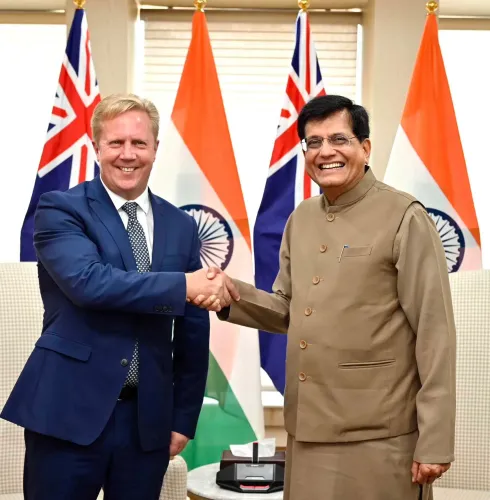
Goa Chief Minister Pramod Sawant on Sunday, 12 July 2026, welcomed what he described as a historic trade agreement between India and New Zealand, calling it a new chapter in bilateral relations that opens fresh avenues in trade, investment and innovation.
Context
Posting on X, CM Sawant wrote that 'the historic trade deal and growing strategic partnership mark a new chapter in Bharat–New Zealand relations, opening new opportunities in trade, investment and innovation.' He attributed the development to the leadership of Prime Minister Narendra Modi, framing it as part of India's broader pursuit of global partnerships for 'shared growth and prosperity.'
The post comes as India has been accelerating its bilateral free trade agreement agenda, particularly with mid-sized developed economies in the Indo-Pacific region. New Zealand, a longstanding Commonwealth partner, has been a focus of this outreach given its significance in education, dairy trade and strategic cooperation.
Policy Backdrop
India and New Zealand first launched formal FTA negotiations in 2010, though the talks were paused for several years before being relaunched at a virtual leaders' summit in 2020. The renewed push mirrors India's successful conclusion of the India–Australia Economic Cooperation and Trade Agreement in 2022, which was similarly aimed at securing a deal with a developed agricultural economy.
Since 2014, Prime Minister Modi's government has pursued a multi-alignment economic strategy, signing or advancing trade agreements with partners including the UAE, Australia, and blocs such as the EU. New Zealand fits into this Indo-Pacific outreach architecture, with both sides sharing interests in services liberalisation, technology and agri-trade.
The emphasis on 'trade, investment and innovation' in CM Sawant's post reflects the standard framing India has used for its recent bilateral economic frameworks — going beyond goods to encompass digital economy and startup cooperation.
Stakeholders and Impact
Indian IT services firms and exporters stand to gain from improved market access, while New Zealand's dairy and agricultural sectors have historically sought greater entry into the Indian market. Any deal would need to navigate sensitive sanitary and phytosanitary standards that have complicated past negotiations.
For Goa, which has growing hospitality, education and services sectors, a deal with New Zealand could translate into increased bilateral tourism and student exchange flows. CM Sawant's amplification of the announcement underscores the BJP's strategy of linking state-level leadership voices to national foreign policy wins.
What's Next
If a formal agreement has been concluded, the next steps would include the parliamentary ratification process in both countries, as well as the formation of joint working groups on services trade liberalisation, investment protection and sanitary-phytosanitary issues. Timelines for tariff phase-downs and sector-specific carve-outs are typically negotiated in the months following a framework announcement.
Analysts will watch whether the deal includes provisions on dairy market access — a perennial sticking point with New Zealand — and how India balances agricultural sensitivities with its broader Indo-Pacific partnership goals. The strategic dimension, including potential defence and maritime cooperation clauses, is also expected to draw scrutiny in New Delhi and Wellington.
Point of View
Where state leaders echo national foreign policy milestones to reinforce the party's governance narrative ahead of electoral cycles. The India–New Zealand engagement fits squarely into Prime Minister Modi's Indo-Pacific multi-alignment doctrine, which has prioritised locking in bilateral FTAs with mid-sized developed economies since 2014. The framing around 'shared growth and prosperity' signals that India is presenting the deal as a win for both sides rather than a concession-heavy negotiation. However, the durability of the agreement will hinge on how sensitively New Zealand's dairy access demands are handled — a fault line that has derailed previous rounds of talks.
NationPress
11 Oct 2026
Frequently Asked Questions
What is the India–New Zealand trade deal announced in 2026?
India and New Zealand reportedly concluded a historic bilateral trade agreement in 2026 aimed at expanding cooperation in trade, investment and innovation, as highlighted by Goa CM Pramod Sawant on 12 July 2026.
When did India and New Zealand start FTA negotiations?
India and New Zealand first launched free trade agreement negotiations in 2010 . Talks were paused for several years before being formally relaunched at a virtual leaders' summit in 2020 .
Why is Goa CM Pramod Sawant commenting on India's foreign policy?
As a senior BJP leader and state chief minister, Pramod Sawant regularly amplifies national foreign policy achievements on social media, aligning state-level political messaging with the central government's governance narrative.
How does the India–New Zealand deal fit into Modi's trade agenda?
It is part of India's broader Indo-Pacific outreach strategy since 2014, which has included the India–Australia Economic Cooperation and Trade Agreement in 2022 and ongoing talks with the EU, UAE and other partners.
Which sectors benefit most from an India–New Zealand trade deal?
Indian IT services firms and exporters, as well as New Zealand's dairy and agricultural producers, are among the key stakeholders. Education, tourism and digital economy cooperation are also expected to benefit.