Is the Free Trade Pact with New Zealand India’s First Women-Led FTA?
Synopsis
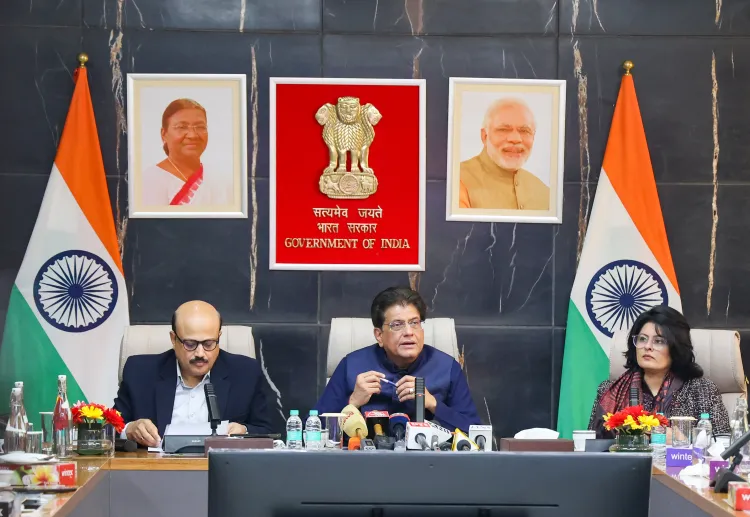
Discover how the India-New Zealand Free Trade Agreement is setting a groundbreaking precedent as India's first women-led FTA. With a predominantly female negotiating team, this agreement not only aims to enhance economic ties but also showcases India's commitment to inclusivity and empowerment. Learn about the broader implications for trade and cooperation.
Key Takeaways
Historic Achievement: First women-led FTA in India.
Market Access: Duty elimination on 100% of Indian exports.
Long-Term Investment: $20 billion commitment over 15 years.
Broader Goals: Aimed at strengthening the economy and improving lives.
Global Partnerships: Enhances India's position as a trusted global partner.
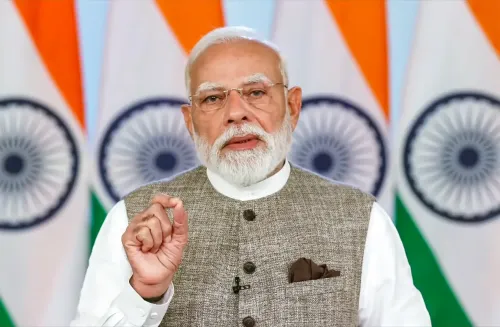
New Delhi, Dec 23 (NationPress) Prime Minister Narendra Modi remarked on Tuesday that the India-New Zealand Free Trade Agreement (FTA) marks a historic achievement, being the first of its kind led by women in India, with a negotiating team predominantly composed of women.
PM Modi shared insights from an article authored by Union Commerce and Industry Minister Piyush Goyal, which elaborates on how India's FTAs extend far beyond mere tariff reductions, aiming to bolster the economy and enhance the livelihoods of countless individuals.
He emphasized, “The India-New Zealand FTA is a significant milestone, as it is India’s inaugural women-led FTA. Almost the entire negotiating team comprised women”, according to the Prime Minister.
In response to Goyal's post on X, the Prime Minister noted, “In this enlightening article, Union Minister Shri @PiyushGoyal articulates that India’s FTAs today transcend tariff reductions, being part of a broader strategy to fortify the economy and uplift millions.”
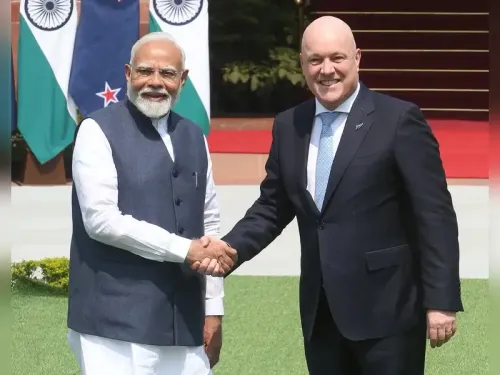
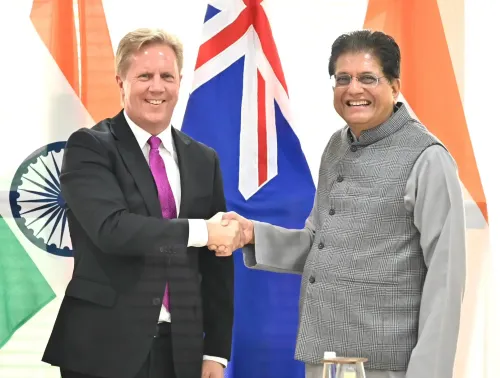
This FTA signifies a pivotal moment in India's trade diplomacy, paving the way for comprehensive economic collaboration. It aims to enhance market access for Indian products, broaden opportunities in services, mobility, and deepen cooperation in agriculture, investments, and emerging sectors, yielding substantial advantages across the economy.
The agreement abolishes duties on 100 percent of Indian exports, coupled with a $20 billion investment pledge over 15 years to fortify long-term economic and strategic ties. Furthermore, New Zealand's market access proposal entails the immediate removal of duties (zero duty) on all 100 percent of tariff lines (8,284 tariff lines) from the moment of “Entry into Force” (EIF).
The benefits of this agreement are anticipated to be widespread, impacting farmers, MSMEs, students, and skilled professionals alike, reinforcing India's role as a reliable and forward-thinking global partner, while furthering the vision of a globally integrated Viksit Bharat 2047, as stated by the government.
Point of View
I believe the India-New Zealand FTA represents a significant stride not just in trade diplomacy but also in gender representation. The fact that it is led by women showcases India's evolving approach to inclusivity in governance. This agreement is a testament to India's commitment to strengthening global partnerships while uplifting the economy and society as a whole.
NationPress
27 Sept 2026
Frequently Asked Questions
What is the significance of the India-New Zealand FTA?
The India-New Zealand FTA is significant as it is India's first women-led trade agreement, which highlights the country's commitment to gender inclusivity while enhancing economic cooperation.
How does the FTA benefit Indian exporters?
The FTA eliminates duties on 100% of Indian exports, thereby providing Indian exporters with enhanced market access and reducing costs.
What are the broader goals of India's FTAs?
India's FTAs aim to go beyond tariff reductions, focusing on strengthening the economy and improving the quality of life for millions of people.
How much investment is committed through the FTA?
The FTA includes a commitment of $20 billion in investment over the next 15 years to bolster long-term economic and strategic cooperation.
Who led the negotiating team for this FTA?
The negotiating team for the India-New Zealand FTA was predominantly composed of women, marking a historic achievement in trade agreements.