Goa CM urges Mamlatdars, Panchayats to use mediation for grievances
Synopsis
Goa's Chief Minister has appealed to Mamlatdars, Deputy Collectors and Panchayats to actively use mediation mechanisms for faster and peaceful grievance resolution, aligning the state with India's broader push for decentralised, time-bound citizen redressal at the grassroots level.
Key Takeaways
The Chief Minister of Goa appealed on 24 June 2026 to revenue and local government officials to use mediation for grievance resolution.
Mamlatdars (taluka level), Deputy Collectors (sub-divisional level), and Panchayats (village level) are the three tiers addressed in the appeal.
The directive aims to resolve citizen grievances faster and peacefully without escalation to formal litigation.
The move aligns with India's Legal Services Authorities Act, 1987 framework and national emphasis on alternative dispute resolution.
Follow-up circulars from Goa's revenue department on mediation cell formation are expected to operationalise the appeal.
Citizens dealing with land disputes, property certificates, and local infrastructure complaints are the primary beneficiaries.
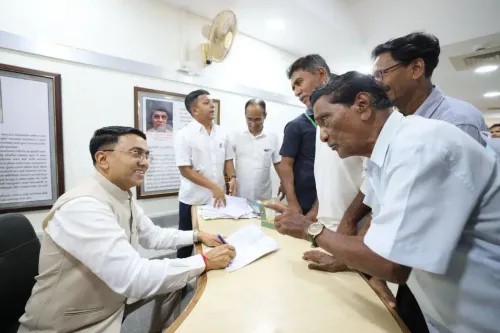
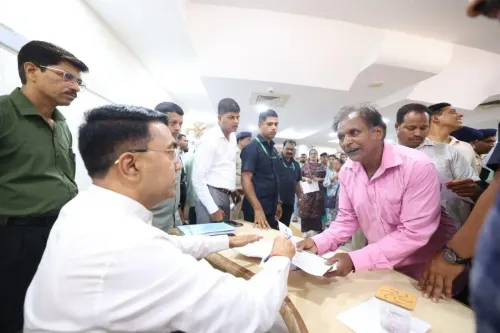
The Chief Minister's Office of Goa, on Wednesday, 24 June 2026, announced that the Chief Minister of Goa has appealed to Mamlatdars, Deputy Collectors, and Panchayats across the state to actively utilise mediation mechanisms for faster, peaceful, and people-centric grievance resolution.
Context
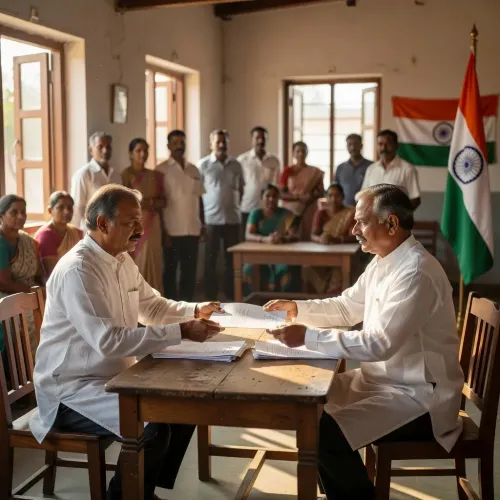
The appeal targets three tiers of Goa's administrative machinery — Mamlatdars at the taluka level, Deputy Collectors at the sub-divisional level, and elected Panchayats at the village level. Together, these bodies form the front line of citizen interface for land disputes, certificate issuance, local development grievances, and community conflicts. The Chief Minister's directive signals a push to resolve such matters within the administrative system rather than allowing them to escalate into prolonged legal proceedings.
Policy Backdrop
India's framework for alternative dispute resolution has deep legislative roots. The Legal Services Authorities Act, 1987 established Lok Adalats and formal mediation structures at multiple levels of the justice and administrative system. Successive governments at the Centre and in states have expanded these mechanisms to reduce the burden on courts and improve the speed of citizen redressal. Goa's revenue and local self-government machinery is now being directed to embed mediation more actively into its day-to-day functioning, aligning the state with a broader national pattern of decentralised, time-bound grievance disposal.
Across Indian states, district and sub-district bodies have been encouraged to form dedicated mediation cells and conciliation panels. The emphasis on Panchayati Raj institutions in this process reflects the national policy view that grassroots bodies are best placed to resolve community-level disputes quickly and with local legitimacy.
Stakeholders and Impact
Goa's citizens — particularly those navigating land record disputes, property certificate delays, or local infrastructure complaints — stand to benefit most directly if mediation is adopted systematically. Mamlatdars, who already handle a high volume of revenue and certification work at the taluka level, would serve as a first point of mediated settlement before disputes move upward. Deputy Collectors can intervene at an intermediate stage, while Panchayats are positioned to resolve hyperlocal community disagreements without any formal legal referral.
For revenue officials, the directive implies a shift in role — from passive processors of applications to active facilitators of dialogue between disputing parties. This requires both procedural guidance and, in many cases, capacity-building in mediation techniques.
What's Next
Attention will now turn to follow-up action from Goa's revenue department, including the possible issuance of circulars detailing how mediation cells are to be constituted within taluka and sub-divisional offices. Measurable outcomes — such as reported reductions in pending grievances or disposal time metrics across talukas — will determine whether the appeal translates into structural change. The Chief Minister's directive sets a direction; the administrative machinery's response will define its real impact on citizens seeking faster, peaceful resolution of their complaints.
Point of View
Partly to ease judicial backlogs and partly to improve citizen satisfaction metrics. For Goa, a small state with a compact administrative structure, the directive is achievable in scale but will require genuine capacity-building among revenue officials unfamiliar with facilitation roles. The real test will come in whether measurable disposal-time data is published, giving the reform accountability teeth beyond the announcement.
NationPress
24 Jun 2026
Frequently Asked Questions
What did Goa's Chief Minister appeal to Mamlatdars and Panchayats about?
The Chief Minister of Goa appealed to Mamlatdars, Deputy Collectors and Panchayats to actively use mediation mechanisms to resolve citizen grievances faster, more peacefully, and in a people-centric manner.
What is a Mamlatdar in Goa?
A Mamlatdar is a taluka-level revenue official in Goa responsible for land records, issuing certificates, and handling initial citizen grievances at the sub-district level.
How does mediation help in grievance resolution in India?
Mediation allows disputing parties to reach a settlement through a neutral facilitator without going to court, reducing delays and litigation costs. India's framework under the Legal Services Authorities Act, 1987 supports such alternative dispute resolution at multiple administrative levels.
Which officials in Goa handle public grievances?
In Goa, public grievances are handled at three levels: Mamlatdars at the taluka level, Deputy Collectors at the sub-divisional level, and Panchayats at the village level, each covering different types of local disputes and administrative complaints.
What is the significance of Panchayats in dispute resolution in Goa?
Panchayats are elected village-level bodies in Goa that are closest to citizens and best placed to resolve hyperlocal community disputes quickly and with local legitimacy, making them a key part of any grassroots mediation strategy.