Indian Government Refutes Viral Claim of Israeli Spy Arrest in Saudi Arabia
Synopsis
In a recent statement, the Ministry of External Affairs of India dismissed a viral social media allegation about the arrest of an Indian national in Saudi Arabia, clarifying that the claim lacks credible evidence. Stay informed about the truth behind this misinformation amidst rising global tensions.
Key Takeaways
The MEA has dismissed a viral claim about an Indian being arrested in Saudi Arabia.
The misinformation is part of a broader trend related to West Asia tensions.
The claim lacks credible evidence or confirmation from official sources.
Public caution against unverified information is advised.
The account spreading the claim is known for politically biased narratives.
New Delhi, March 7 (NationPress) The Ministry of External Affairs (MEA) on Saturday highlighted a viral social media post that was disseminating false claims regarding the supposed arrest of an Indian citizen in Saudi Arabia for alleged espionage on behalf of Israel.
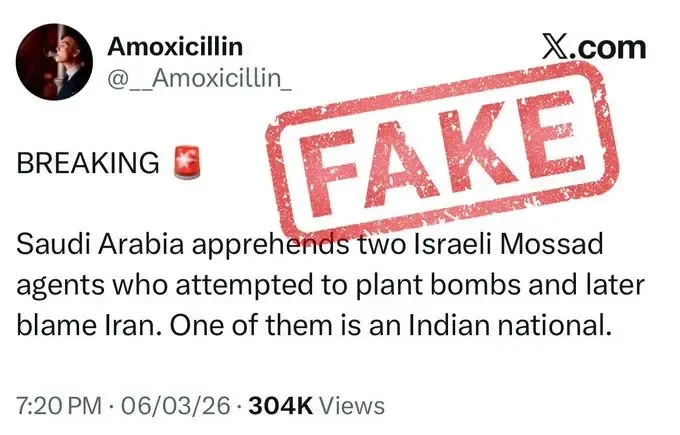
This assertion, which circulated on the platform X, claimed that Saudi officials had detained two individuals connected to Israel's intelligence agency, Mossad, one of whom was an Indian national. The accusation suggested they were involved in a conspiracy to orchestrate bomb attacks to implicate Iran.
Refuting this allegation, the MEA provided a statement and cautioned the public against falling for such misleading information spreading across social media.
"Exercise caution against such outlandish and unverified claims circulating on social media!" the ministry urged as it addressed the viral post.
This misinformation is part of a larger trend related to the escalating tensions in West Asia. The specific claim regarding the detention of an Indian national lacks credible evidence or confirmation from any official bodies, according to a government representative.
The misleading narrative originated from an account on X named 'Amoxicillin', which made the claim about the purported arrest of the two alleged Mossad operatives.
This account has a history of sharing politically biased content, often promoting narratives that favor the Congress party while disseminating unverified claims.
It frequently posts messages lauding Lok Sabha Leader of Opposition Rahul Gandhi, emphasizing his political remarks with accolades for the Congress leader.
In multiple posts, the account has also characterized Rahul Gandhi's statements as pointed critiques of what it labels "Sanghis," a term commonly used online to refer to supporters of the BJP, the RSS, or other right-wing factions.
Simultaneously, the account shares content that mocks or disparages the BJP and its supporters, often using expressions like "Sanghi ecosystem" or "bhakts" in its commentary.
As misinformation spreads rapidly on social media, the MEA's clarification comes at a time when authorities are urging citizens to be vigilant, particularly during times of heightened global tensions, when unverified claims can quickly gain popularity.
Point of View
I emphasize the importance of verifying information before sharing it, especially against the backdrop of rising misinformation during politically sensitive times. The MEA's prompt action in clarifying false claims is commendable and serves as a reminder to the public to critically assess the information they encounter online.
NationPress
19 Sept 2026
Frequently Asked Questions
What did the MEA clarify about the viral claim?
The MEA clarified that the claim regarding the arrest of an Indian national in Saudi Arabia for being an Israeli spy is unsubstantiated and lacks credible evidence.
Where did the misinformation originate?
The misleading information originated from a social media account on X named 'Amoxicillin', which has a history of sharing politically biased content.
Why is misinformation a concern during times of international tension?
Misinformation can quickly spread and escalate tensions, making it essential for the public to be cautious and verify information before believing or sharing it.