Piyush Goyal announces Buddha Vihar for Kandivali, North Mumbai
Synopsis
Union Commerce Minister Piyush Goyal has announced construction of a grand Buddha Vihar in Kandivali, North Mumbai under the Samaj Kalyan Nidhi, promising a centre for spiritual practice, meditation, and community activities for the area's Buddhist population.
Key Takeaways
A Buddha Vihar will be built in Kandivali, North Mumbai for the local Buddhist community.
The project is funded under the Samaj Kalyan Nidhi (Social Welfare Fund).
The vihar is envisioned as a centre for spiritual practice, knowledge, meditation, and community activities .
Union Minister Piyush Goyal announced the initiative, describing it as an 'important and welcome step' for North Mumbai's Buddhist society.
Exact funding amount, implementing agency, and construction timeline have not yet been specified publicly.
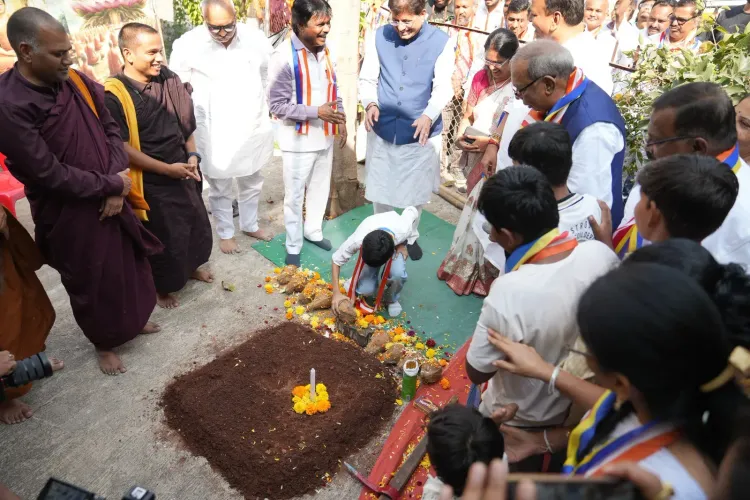
A grand Buddha Vihar is set to come up in Kandivali, North Mumbai — a community and spiritual centre that Union Commerce and Industry Minister Piyush Goyal has announced for the Buddhist community of the constituency he represents, under the Samaj Kalyan Nidhi (Social Welfare Fund).
What Kandivali's Buddhist community is getting
Goyal described the initiative as 'ek mahatvapurn aur sukhad pahal' — 'an important and welcome step' — for the Buddhist community of North Mumbai. The proposed vihar, he said, will serve not only as a place of spiritual practice but as a hub for 'knowledge, meditation and community activities.' The announcement was accompanied by a live video address, signalling active outreach to the locality's Buddhist residents.
Kandivali hosts a sizeable Buddhist population, many tracing their roots to the Ambedkarite conversion movement of the mid-twentieth century. For this community, a dedicated vihar carries both religious and social weight — a space for dharma study, collective gatherings, and cultural continuity in the middle of one of Mumbai's densest suburban corridors.
Samaj Kalyan Nidhi: the welfare channel behind the project
The project is routed through the Samaj Kalyan Nidhi, a social welfare fund mechanism used to support community and minority development infrastructure. Indian governments have periodically channelled such funds toward religious and community spaces for Buddhist populations — a pattern that sits within broader minority welfare frameworks administered at the state and central levels.
The announcement fits a well-established template: a senior central minister spotlighting a local constituency project through a welfare-fund instrument. What to watch next is the tendering process, land allocation, and the construction timeline — details that the current announcement does not specify.
North Mumbai's Buddhist belt and what this project signals
North Mumbai's Buddhist community has long sought dedicated infrastructure for collective practice and social engagement. A vihar of this scale — described as 'grand' (bhavya) — would mark a significant addition to the neighbourhood's civic and spiritual landscape. The broader signal is one of welfare-fund resources being directed toward community-building infrastructure at the hyperlocal level, with a senior minister lending personal visibility to the project.
The real test will come when ground is broken: funding quantum, the implementing agency, and a firm timeline remain to be publicly detailed — and those specifics will determine whether this announcement translates into brick and mortar on Kandivali's skyline.
Point of View
Who represents North Mumbai's interests, spotlighting a Buddhist vihar project taps into a community with deep roots in the Ambedkarite tradition and a history of political mobilisation. The routing through the Samaj Kalyan Nidhi keeps the project within established welfare frameworks, lending it institutional legitimacy. Whether the announcement accelerates into a funded, tendered project will be the real indicator of its policy weight.
NationPress
21 Nov 2026
Frequently Asked Questions
What is the Buddha Vihar announced by Piyush Goyal in Kandivali?
It is a proposed grand community and spiritual centre in Kandivali, North Mumbai, intended to serve the local Buddhist community as a space for meditation, knowledge, and social gatherings, announced under the Samaj Kalyan Nidhi welfare fund.
What is Samaj Kalyan Nidhi and how does it fund the Kandivali Buddha Vihar?
The Samaj Kalyan Nidhi is a social welfare fund used to support community and minority development infrastructure in India. The Kandivali Buddha Vihar project has been announced under this fund, though the exact funding amount and implementing agency have not yet been disclosed.
Where exactly in Mumbai will the new Buddha Vihar be built?
The vihar is planned for Kandivali, a locality in North Mumbai, Maharashtra, which has a significant Buddhist population.
When will construction of the Kandivali Buddha Vihar begin?
A specific construction timeline has not been announced yet. The next steps to watch include the tendering process and land allocation for the project.
Why is a Buddha Vihar significant for North Mumbai's Buddhist community?
Kandivali and surrounding North Mumbai areas have a large Buddhist population, many connected to the Ambedkarite conversion movement. A dedicated vihar provides a permanent space for religious practice, dharma study, and community activities, which the community has long sought.