Nadda Tells Medical Graduates: Know the System You Will Serve
Synopsis
Union Health Minister J. P. Nadda addressed medical graduates, highlighting 12 years of progress in healthcare under PM Modi, citing accessibility, affordability, and quality as core pillars, and urging new doctors to align with India's broader health system vision.
Key Takeaways
Union Health Minister J.
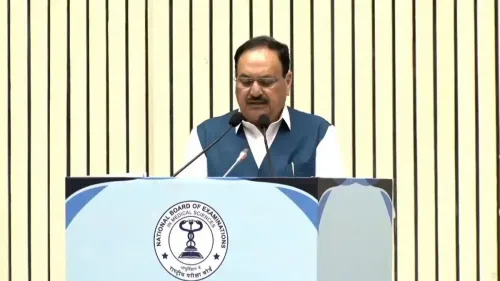
Nadda addressed medical graduates on 21 November 2026 , crediting 12 years of PM Modi's leadership with advancing medical education, healthcare, and research.
He identified three pillars of the government's health vision: accessibility, affordability, and quality .
The National Health Policy (2017) and Ayushman Bharat (2018) are the two landmark policy anchors underpinning this progress.
New AIIMS campuses and expanded undergraduate medical seats since 2014 form the structural backbone of the education push.
Nadda urged graduates to understand healthcare system fundamentals, not just clinical skills, and contribute to a 'common vision.' Parliamentary discussions on the next health budget and medical education regulatory changes remain key indicators to watch.
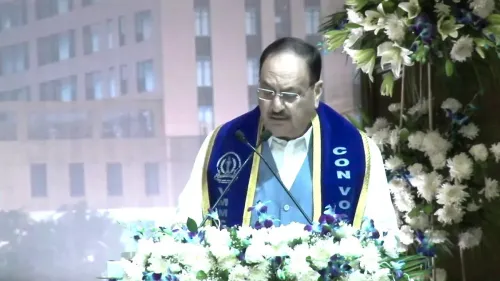
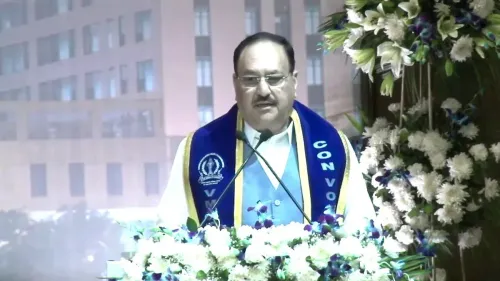
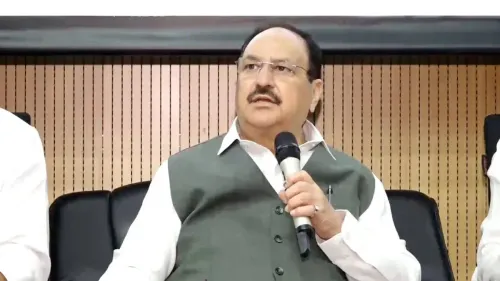
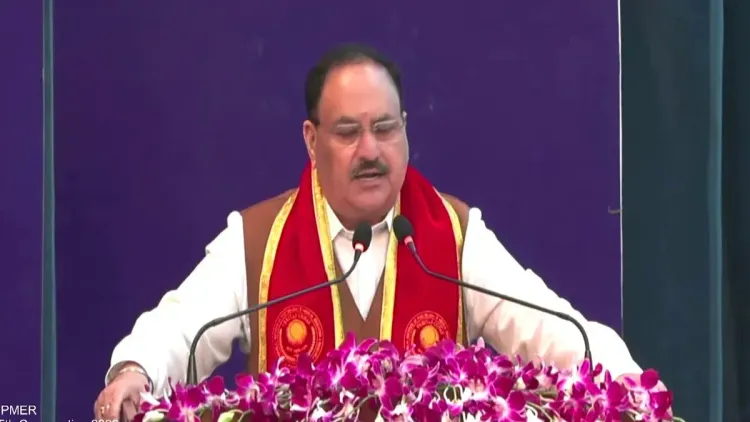
A graduating class of doctors was reminded on Saturday, 21 November 2026 that their gold medals and advanced degrees are only half the story — the other half is understanding the healthcare system they are now stepping into. Union Health Minister J. P. Nadda addressed medical graduates, crediting Prime Minister Narendra Modi's twelve-year tenure with reshaping India's health landscape from the ground up.
Twelve Years, One Vision: What Nadda Put on the Record
Nadda's message was direct: 'Under the leadership of Hon'ble PM Shri Narendra Modi ji over the past 12 years, India has witnessed significant progress in medical education, healthcare, and research.' He framed that progress around three pillars — accessibility, affordability, and quality — and asked new doctors to internalise all three, not just their clinical specialisations.
The call to 'understand the fundamentals of our healthcare system and work together towards a common vision' was pointed. It signalled that technical excellence alone is not the benchmark the government is setting for the next generation of health professionals.
The Infrastructure Shift Behind the Rhetoric
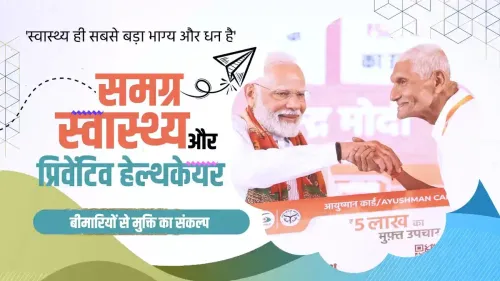
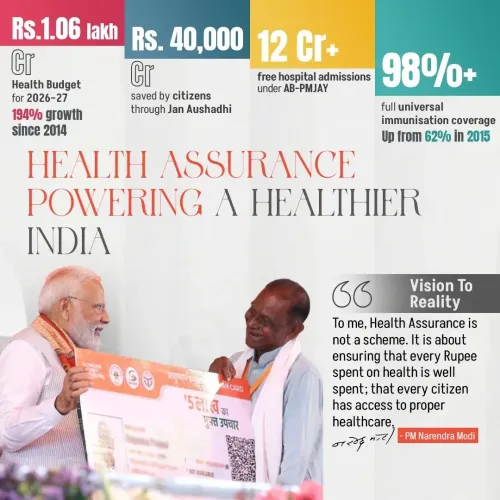
The backdrop to Nadda's address is a decade of measurable structural change. Since 2014, successive central budgets have funded new AIIMS campuses across states that previously had no premier public medical institution, and undergraduate medical seats have expanded substantially. The National Health Policy of 2017 reoriented the system toward preventive and primary care, while the landmark Ayushman Bharat scheme, launched in 2018, extended health coverage to hundreds of millions of low-income citizens — one of the largest government-funded health insurance programmes in the world.
For a graduating doctor, these are not abstract policy footnotes. They define where patients will come from, what coverage those patients carry, and which facilities will anchor the public health grid they work within.
The Charge to New Doctors
Nadda's address carried an implicit expectation: that medical graduates treat public health goals as professional responsibilities, not just government targets. The emphasis on 'working together towards a common vision' echoed a recurring theme in health ministry communications — that expanding infrastructure only delivers results when the workforce is aligned with system-wide objectives, from rural primary health centres to tertiary referral hospitals.
The minister's presence at a graduation event also underscores the political weight the ruling dispensation places on medical education as a symbol of governance delivery — a space where infrastructure investment, regulatory reform, and workforce development converge in one graduating cohort.
India's next health budget and any fresh medical education regulatory changes will test whether that vision translates into sustained structural momentum — or remains a compelling convocation address.
Point of View
Smoothing over the turbulence of the pandemic years. For health policy watchers, the real signal is the emphasis on system literacy for new doctors — a soft acknowledgement that India's expanded physical infrastructure still needs a workforce that thinks in public-health terms, not just individual clinical outcomes. Whether that aspiration translates into structural incentives, such as rural posting reforms or primary care salaries, will determine its lasting impact.
NationPress
21 Nov 2026
Frequently Asked Questions
What did J. P. Nadda say at the medical graduation event?
Nadda credited PM Modi's 12-year leadership with significant progress in medical education, healthcare, and research, and urged new graduates to understand India's healthcare system and work toward a common vision of accessible, affordable, and quality care.
What is Ayushman Bharat and why does it matter for medical graduates?
Ayushman Bharat, launched in 2018, is one of the world's largest government-funded health insurance programmes, extending coverage to hundreds of millions of low-income Indians. For new doctors, it defines a major segment of the patient population they will serve.
How has India expanded medical education under PM Modi?
Since 2014, India has established new AIIMS campuses across multiple states and significantly increased undergraduate medical seats, aiming to reduce the doctor-to-population gap and improve geographic access to quality medical care.
What is India's National Health Policy 2017?
The National Health Policy 2017 reoriented India's healthcare framework toward preventive and primary care, universal health coverage, and improved quality standards — forming the policy backbone for subsequent schemes including Ayushman Bharat.
What should Indian medical graduates focus on beyond clinical skills according to Nadda?
Nadda specifically urged graduates to understand the fundamentals of India's healthcare system and align with a broader collective vision, signalling that public health thinking and system awareness are as important as individual clinical expertise.