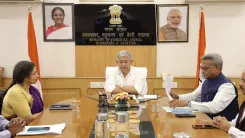
Goyal calls Rahul Gandhi Congress's biggest 'Red Flag'
Synopsis
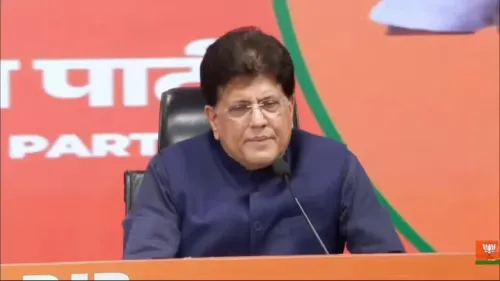
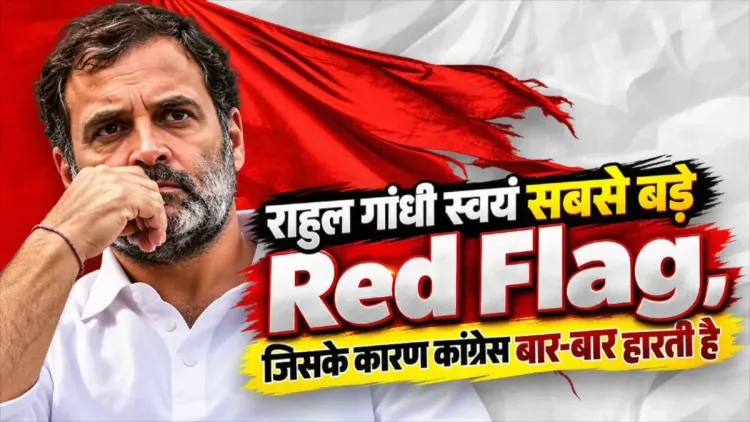
Union Commerce Minister Piyush Goyal posted on X calling Rahul Gandhi Congress's biggest 'red flag' and the chief reason the party repeatedly loses elections, continuing BJP's sustained campaign to frame Gandhi as an electoral liability for the opposition.
Key Takeaways
Piyush Goyal , Union Commerce Minister and Rajya Sabha Leader of the House, publicly called Rahul Gandhi Congress's biggest 'red flag' on October 13, 2026 .
The post — in Hindi with a video attached — directly attributes Congress's repeated election losses to Gandhi's leadership.
In 2014 , Congress fell to a historic low of 44 Lok Sabha seats ; the party saw only a marginal recovery in 2019 .
The statement continues a BJP pattern since 2014 of framing Gandhi as an electoral liability rather than a serious rival.
Goyal's institutional role as Leader of the House in the Rajya Sabha gives the remark added political weight beyond routine social-media sparring.
Responses from Congress spokespersons and upcoming state elections in late 2026 and 2027 will determine how this exchange escalates.
In a sharp political broadside, Union Commerce and Industry Minister Piyush Goyal declared on Tuesday, October 13, 2026 that Rahul Gandhi is himself the single biggest 'red flag' responsible for Congress's repeated electoral defeats — a blunt charge that cuts straight to the heart of India's defining opposition question.
Posting on X, Goyal wrote: 'Rahul Gandhi swayam sabse bada Red Flag, jiske kaaran Congress baar-baar harti hai...' ('Rahul Gandhi is himself the biggest red flag, because of whom Congress loses again and again...'). The post was accompanied by a video, amplifying the statement beyond a passing remark into deliberate political messaging.
A decade of defeats — and one constant factor
The charge carries statistical weight that BJP leaders have long leaned on. In the 2014 Lok Sabha elections, Congress was reduced to just 44 seats — its lowest-ever tally in Parliament's lower house. The 2019 elections saw the BJP return with an enlarged majority while Congress's recovery remained marginal. Goyal's framing places Gandhi not as a victim of circumstance but as the structural cause of that decline.
The 'red flag' metaphor is pointed: in contemporary political lexicon it signals an unmistakable warning sign that rational actors ought to heed. By applying it to the leader of the opposition, Goyal is arguing that Congress voters and workers are ignoring a danger hiding in plain sight.
BJP's long-running opposition playbook
This post fits a well-worn pattern. Since 2014, senior BJP leaders have consistently framed Gandhi not as a formidable rival but as an electoral liability for his own party — a line of attack that simultaneously delegitimises the opposition and energises the ruling party's base. Goyal, as Leader of the House in the Rajya Sabha, carries institutional weight that elevates this from a routine social-media jab to an on-record parliamentary-leadership position.
With state assembly elections on the horizon in late 2026 and 2027, such messaging is unlikely to be isolated. Watch for Congress spokespersons to respond and for the exchange to sharpen as polling dates approach — the opening salvo of a season of political reckoning.
Point of View
It keeps the spotlight on Gandhi's leadership as the opposition's structural weakness. By using the culturally resonant 'red flag' framing, the party signals to swing voters that Congress's problems are self-inflicted and enduring — not cyclical. The timing, as the electoral calendar fills up for 2027, suggests this is less a spontaneous comment and more the opening note of a coordinated messaging campaign. Whether Congress can offer a credible counter-narrative before polling season will define the terms of the next political battle.
NationPress
13 Oct 2026
Frequently Asked Questions
What did Piyush Goyal say about Rahul Gandhi?
Goyal posted on X calling Rahul Gandhi the biggest 'red flag' in Congress, arguing Gandhi is the primary reason the party repeatedly loses elections.
Why does BJP keep blaming Rahul Gandhi for Congress losses?
BJP has consistently framed Rahul Gandhi as an electoral liability since 2014, when Congress hit its lowest-ever seat count of 44 in the Lok Sabha. The strategy aims to delegitimise the opposition while energising BJP's own base.
How many seats did Congress win in the 2014 Lok Sabha elections?
Congress won just 44 seats in the 2014 Lok Sabha elections, its lowest-ever tally in the lower house of Parliament.
Who is Piyush Goyal?
Piyush Goyal is India's Union Minister of Commerce and Industry, a senior BJP leader, and the Leader of the House in the Rajya Sabha.
What does 'red flag' mean in political terms?
In contemporary political usage, a 'red flag' refers to an unmistakable warning sign — Goyal's use implies Gandhi is a clear and persistent liability that Congress continues to overlook.