Piyush Goyal hails India's 2.5 lakh startups, 130+ unicorns
Synopsis
Commerce Minister Piyush Goyal celebrated India's status as the world's third-largest startup ecosystem — with 2.5 lakh startups and 130+ unicorns — while urging successful founders to give back to those who never got the same opportunities.
Key Takeaways
India is recognised as the world's third-largest startup ecosystem , behind only the US and China.
The ecosystem has grown to 2.5 lakh registered startups and more than 130 unicorns .
The Startup India initiative , launched in 2016 , provided the original policy foundation for this growth.
Minister Piyush Goyal explicitly called on successful entrepreneurs to mentor and uplift those who lacked equal opportunities.
Goyal framed young India's risk appetite as the core engine behind the ecosystem's global rise.
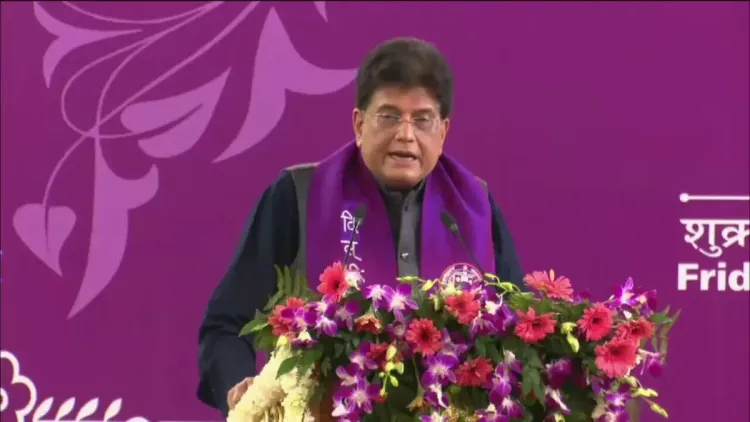
India now counts 2.5 lakh registered startups and more than 130 unicorns — cementing its rank as the world's third-largest startup ecosystem — and Union Commerce and Industry Minister Piyush Goyal wants the entrepreneurs driving that number to remember the ones left behind. In a post on X on Friday, 20 November 2026, Goyal paired the milestone figures with a pointed call to action: success carries a responsibility to give others a head start they never had.
From Startup India to 2.5 lakh strong
The numbers Goyal cited mark a staggering distance travelled since the Startup India initiative was launched in 2016. That flagship programme set out to build a policy scaffold — tax exemptions, simplified compliance, funding windows — under which young Indians could experiment without fear. A decade on, the ecosystem has grown into one of the most densely populated innovation landscapes on earth, trailing only the United States and China.
More than 130 unicorns — privately held companies valued above one billion dollars — now call India home. That figure alone signals that Indian startups are no longer a curiosity for global capital; they are a destination.
The 'lift someone up' call inside the celebration
Goyal did not stop at the scorecard. 'The greatest satisfaction comes not just from changing your own life, but also from making a difference in someone else's,' he wrote — a line aimed squarely at founders who have already made it. The implicit ask: mentor, hire, invest in, or simply acknowledge the young entrepreneur who never had the network, the college pedigree, or the city advantage that many first-generation founders took for granted.
It is a rare note of equity inside what could easily have been a straight promotional post. The minister is signalling that scale without inclusion is an incomplete story.
Young India as the engine — and the audience
'Young India is willing to experiment, take risks and create opportunities,' Goyal wrote, framing the country's demographic dividend not as a talking point but as a live economic force. India's median age sits well below that of most large economies, and the government has consistently pointed to that youth bulge as the structural advantage that will drive the next phase of growth. The startup ecosystem is the arena where that advantage is being tested in real time.
The minister's message lands at a moment when global investors are watching India's innovation pipeline closely — and when the pressure on founders to deliver not just returns but jobs, and not just jobs but equitable opportunity, has never been sharper. That is the bet Goyal is publicly reinforcing: India's third-place ranking is a floor, not a ceiling.
Point of View
Then immediately attach a social-equity kicker that pre-empts criticism about who the boom actually benefits. The 'lift someone up' line is not accidental — it reflects a broader pivot in official startup discourse toward inclusion and Tier-2/3 city entrepreneurship, as the government seeks to show that the unicorn economy reaches beyond elite metro campuses. Framing young India's risk appetite as an asset also quietly answers concerns about jobless growth: the minister is positioning founders, not factories, as the country's new employment engine.
NationPress
20 Nov 2026
Frequently Asked Questions
How many startups are registered in India in 2026?
Commerce Minister Piyush Goyal cited 2.5 lakh (250,000) registered startups in India as of November 2026, though this figure has not been independently verified from official government databases.
How many unicorns does India have?
India has more than 130 unicorns — startups valued above one billion dollars — according to figures cited by Minister Piyush Goyal in November 2026.
What rank does India hold in the global startup ecosystem?
India is ranked the world's third-largest startup ecosystem , behind the United States and China.
What is the Startup India initiative?
Startup India is a flagship government scheme launched in 2016 to support entrepreneurship through tax benefits, simplified compliance, funding access, and regulatory ease for new businesses.
What did Piyush Goyal say about inclusive entrepreneurship?
Goyal urged successful founders to 'lift someone who never got the same head start,' saying the greatest satisfaction comes from 'making a difference in someone else's' life — a call for mentorship and equitable opportunity within the startup community.