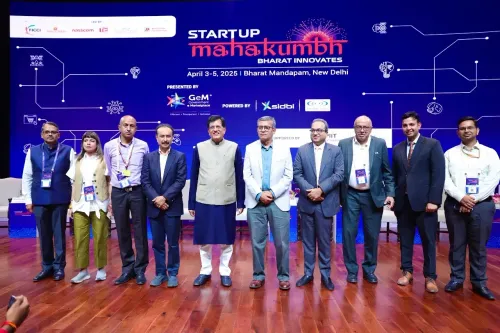
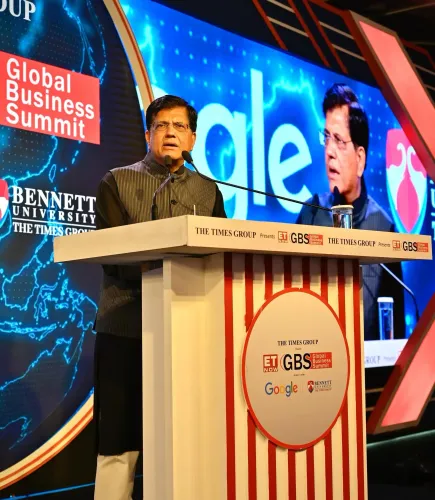
Goyal: India now world's 3rd largest startup ecosystem
Synopsis
Union Commerce Minister Piyush Goyal announced on 23 May 2026 that India now has over 2,30,000 DPIIT-recognised startups, placing it third globally behind only the United States and China — a milestone built on a decade of policy reforms, digital infrastructure, and targeted incentives since the Startup India launch in 2016.
Key Takeaways
India has crossed 2,30,000 DPIIT-recognised startups , according to Minister Piyush Goyal .
India ranks as the world's third-largest startup ecosystem , behind only the United States and China .
The Startup India initiative, launched in January 2016 , provides tax exemptions, faster patent processing, and simplified compliance for eligible startups.
Digital public goods such as Aadhaar and UPI have served as a foundational layer enabling low-cost, scalable startup models.
India surpassed the United Kingdom in unicorn count by 2021 , accelerating its climb to the third-place ranking.
The next DPIIT quarterly data release and upcoming Union Budget measures will be key indicators of future momentum.
Union Commerce and Industry Minister Piyush Goyal on Saturday, 23 May 2026 highlighted that India has crossed 2 lakh 30 thousand recognised startups, cementing its position as the third-largest startup ecosystem in the world.
Context
Posting on X, Minister Goyal stated — '2 lakh 30 hazar se zyada recognised startups ke saath Bharat, duniya ka teesra sabse bada startup ecosystem hai' — that with more than 2,30,000 recognised startups, India stands as the world's third-largest startup ecosystem. The remark underscores a decade of sustained momentum in Indian entrepreneurship since the formal push began in 2015-16.
India trails only the United States and China in startup ecosystem size, a ranking it secured after overtaking the United Kingdom in unicorn count by 2021. The milestone reflects both the scale of domestic demand and rising global investor confidence in Indian founders.
Policy Backdrop
The Startup India initiative, launched in January 2016, is the flagship programme underpinning this growth. It introduced tax exemptions for eligible startups, faster patent processing, and simplified compliance norms to lower the barrier for early-stage ventures.
Beyond direct incentives, India's digital public infrastructure — including Aadhaar and UPI — has functioned as a foundational layer, enabling startups to build scalable products at low cost. The Department for Promotion of Industry and Internal Trade (DPIIT) administers the recognition framework that formally counts startups toward the national tally.
Regulatory reforms across sectors, combined with a maturing venture capital market, have helped India sustain startup formation rates well above the global average over the past several years.
Stakeholders and Impact
Startup founders and venture investors are the most direct beneficiaries of the policy ecosystem Minister Goyal referenced. Recognition under DPIIT unlocks tax benefits, self-certification under labour and environment laws, and access to government procurement opportunities.
For the broader economy, a thriving startup ecosystem translates into job creation, technology-led productivity gains, and export potential in sectors such as software, fintech, and health technology. India's growing pool of recognised startups also strengthens its negotiating position in bilateral trade and investment discussions — a domain that falls squarely within Goyal's ministerial remit.
What's Next
Analysts and founders will watch the next quarterly DPIIT startup recognition data release to track whether the pace of new recognitions is accelerating or plateauing. Any fresh tax or compliance measures in the forthcoming Union Budget or economic survey could either reinforce or reshape the trajectory.
With India's startup count now a diplomatic and economic talking point, the government is likely to continue deploying the figure in trade negotiations and investment summits. Sustaining the momentum will require deepening access to risk capital beyond the top metros and ensuring that recognition translates into tangible, long-term growth for founders across the country.
Point of View
Lending diplomatic weight to commerce-ministry engagements. The milestone also serves as a political validation of the Startup India programme, one of the signature economic initiatives of the BJP-led government since 2016. Whether the figure translates into deeper outcomes — sustained unicorn creation, rural startup penetration, and export-led growth — will determine how durable this narrative proves over the next electoral cycle.
NationPress
7 Oct 2026
Frequently Asked Questions
Is India really the third-largest startup ecosystem in the world?
Yes, India is recognised as the third-largest startup ecosystem globally, trailing only the United States and China, based on the number of DPIIT-recognised startups which has crossed 2,30,000.
How many startups are recognised in India in 2026?
According to Union Commerce Minister Piyush Goyal, India has more than 2 lakh 30 thousand (2,30,000) startups recognised by the Department for Promotion of Industry and Internal Trade (DPIIT) as of May 2026.
What is the Startup India scheme and who runs it?
Startup India is a flagship government programme launched in January 2016 and administered by DPIIT under the Ministry of Commerce and Industry. It offers tax exemptions, faster patent processing, and simplified compliance to eligible early-stage ventures.
How did India become the third-largest startup ecosystem?
India's rise was driven by a combination of the Startup India policy launched in 2016, digital public infrastructure like Aadhaar and UPI, regulatory reforms, and a growing domestic venture capital market. India overtook the United Kingdom in unicorn count by 2021.
What benefits do DPIIT-recognised startups get in India?
DPIIT-recognised startups are eligible for income tax exemptions, self-certification under select labour and environment laws, faster intellectual property processing, and access to government procurement opportunities.