Goyal at India-Egypt Startup Forum: 140+ Firms Join Push
Synopsis
Union Commerce Minister Piyush Goyal addressed the India-Egypt Startup Forum on 16 November 2026, backed by 140-plus Indian companies, urging collaboration in digital payments, healthcare, agriculture and emerging technologies between two ancient civilisations.
Key Takeaways
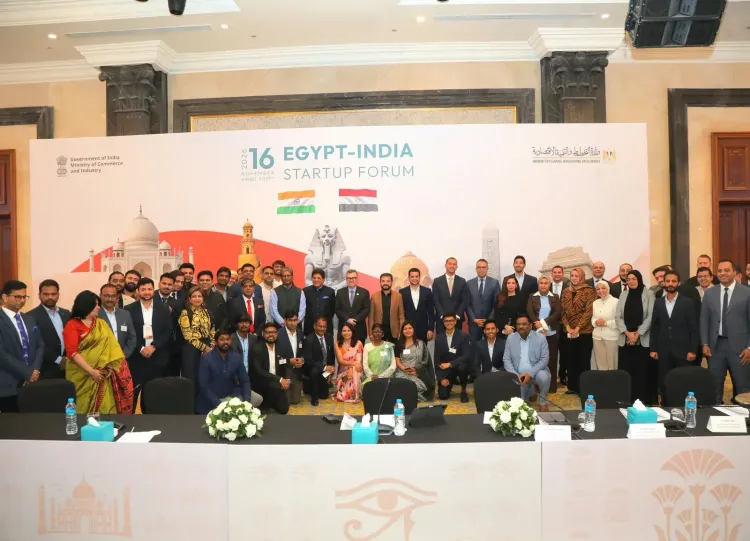
Over 140 Indian companies and startups accompanied Minister Goyal's delegation to the India-Egypt Startup Forum on 16 November 2026 .
Goyal highlighted five key collaboration verticals: digital payments, affordable healthcare, agriculture, tourism and emerging technologies .
The forum is part of India's broader startup diplomacy strategy targeting Africa and Middle East markets since the Startup India launch in 2016 .
Egypt is positioned as a strategic gateway to the African Continental Free Trade Area for Indian startups.
Goyal framed the engagement as mutual learning and co-creation, not a one-way technology export drive.
Follow-up MoUs and joint pilot projects in digital payments and agritech are the near-term outcomes to watch.
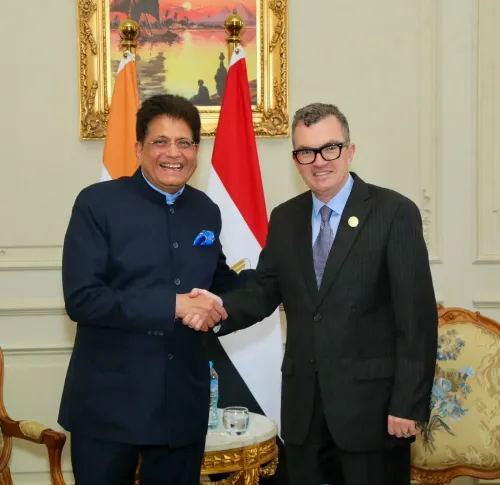
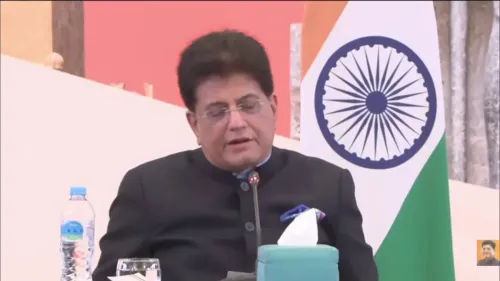
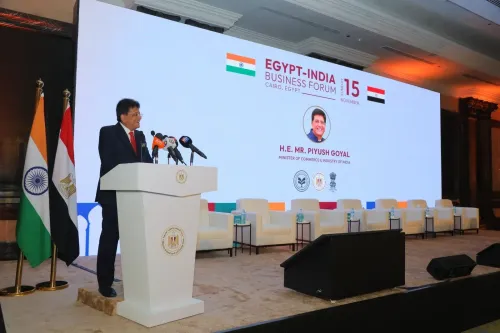
Two of the world's oldest civilisations met in startup mode on Monday, 16 November 2026, as Union Commerce and Industry Minister Piyush Goyal addressed the India-Egypt Startup Forum, calling for co-created solutions across digital payments, healthcare, agriculture, tourism and emerging technologies — with a delegation of over 140 Indian companies and startups backing the ambition in the room.
What brought 140 Indian firms to Cairo
Minister Goyal framed the gathering around shared civilisational depth: 'Startups from two of the world's oldest civilisations came together to explore new possibilities for collaboration.' The scale of the accompanying delegation — 140-plus Indian companies and startups — signals that this was not a symbolic handshake but a structured market-entry effort. It reflects India's broader playbook of pairing high-level ministerial visits with business-facing forums designed to generate deal-flow, not just goodwill.
Goyal spotlighted India's startup ecosystem — now among the world's largest — as the centrepiece of the pitch, pointing to sectors where Indian frugal-innovation models have already proved their scalability at home and are increasingly being exported. Digital payments infrastructure, affordable healthtech and agritech solutions topped the list of potential collaboration verticals.
India's startup diplomacy finds its Egyptian footing
The forum fits a pattern India has been building steadily since the Startup India initiative launched in 2016: using bilateral startup forums with Africa and Middle East partners to open new markets beyond traditional trade relationships. Egypt is a particularly strategic node in this architecture — it is a gateway to the African Continental Free Trade Area, giving Indian startups a potential springboard into a continental market of over a billion consumers.
Historical ties between India and Egypt — both ancient civilisations with long-standing diplomatic warmth — give the economic pitch an unusual credibility. When a minister invokes shared heritage in the same breath as UPI and affordable diagnostics, the message lands differently than a cold trade proposal. That cultural bridge is now carrying commercial weight.
What the two sides can actually build together
Goyal pointed to five concrete verticals: digital payments, affordable healthcare, agriculture, tourism and emerging technologies. Each represents a domain where Indian startups have demonstrated scale under resource constraints — precisely the conditions Egyptian entrepreneurs understand. The 'learn from each other, collaborate and co-create' framing positions the engagement as a two-way exchange rather than an export drive, which matters when building lasting partnerships with a proud, ancient economy.
The immediate watch-point is whether the forum produces follow-up MoUs or joint pilot projects, particularly in digital payments and agritech — the two sectors where Indian solutions are most export-ready and Egyptian demand is most established. With 140 companies already in the room, the pipeline for concrete outcomes is real.
India's startup diplomacy has found a new address in Cairo — and it arrived with a full delegation and a business card.
Point of View
New Delhi is signalling that bilateral forums must produce pipeline, not just communiqués. Egypt's position as the northern gateway to the African Continental Free Trade Area makes this engagement strategically significant for India's long-term export diversification away from traditional Western markets. If even a fraction of the 140-company delegation converts forum contacts into market entries, the Commerce Ministry will have a replicable template it can roll out from Nairobi to Riyadh.
NationPress
16 Nov 2026
Frequently Asked Questions
What is the India-Egypt Startup Forum?
The India-Egypt Startup Forum is a bilateral business engagement event bringing together Indian and Egyptian startups and entrepreneurs to explore collaboration in sectors such as digital payments, healthcare, agriculture and emerging technologies.
How many Indian companies attended the forum with Piyush Goyal?
Over 140 Indian companies and startups accompanied Minister Piyush Goyal's delegation to the India-Egypt Startup Forum on 16 November 2026.
What sectors did Piyush Goyal highlight for India-Egypt startup collaboration?
Minister Goyal highlighted digital payments, affordable healthcare, agriculture, tourism and emerging technologies as key verticals for collaboration between Indian and Egyptian startups.
Why is Egypt important for India's startup diplomacy?
Egypt serves as a strategic gateway to the African Continental Free Trade Area , giving Indian startups access to a continental market of over a billion consumers, while also sharing longstanding historical and diplomatic ties with India.
What is Startup India and when was it launched?
Startup India is the Government of India's flagship initiative, launched in 2016 , to build a supportive ecosystem for innovation, ease regulatory burdens and position India as a global entrepreneurship hub.