Pralhad Joshi Hails 4th Singapore-India Hackathon
Synopsis
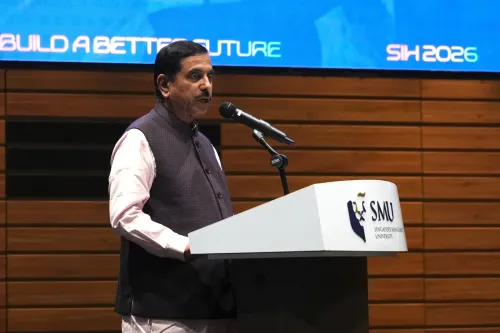
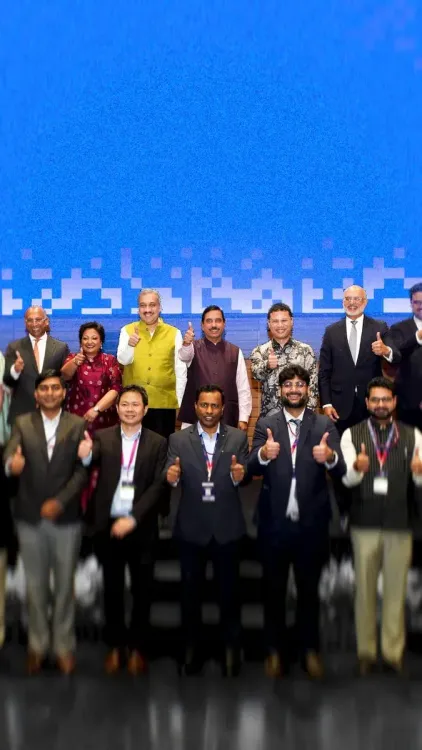
Union Minister Pralhad Joshi lauded the 4th Singapore-India Hackathon on November 16, 2026, describing it as a fresh driver of bilateral momentum by uniting young innovators from both nations to co-develop solutions to real-world challenges.
Key Takeaways
Union Minister Pralhad Joshi on November 16, 2026 hailed the 4th Singapore-India Hackathon as a driver of renewed bilateral momentum.
The hackathon unites young innovators from India and Singapore to co-develop solutions to real-world challenges.
India-Singapore technology cooperation is rooted in the Comprehensive Economic Cooperation Agreement (CECA) signed in 2005 .
The event forms part of India's broader people-to-people and youth engagement strategy with ASEAN partners.
Four consecutive editions signal the hackathon has become an institutionalised feature of the bilateral relationship, not a one-off initiative.
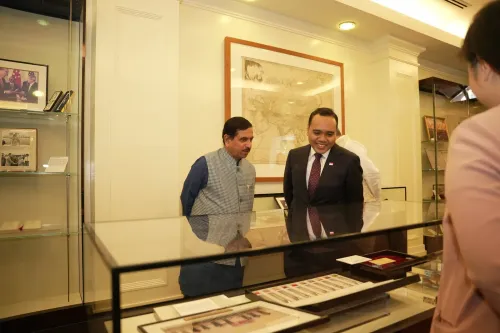
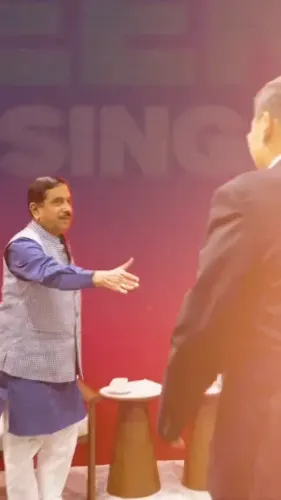
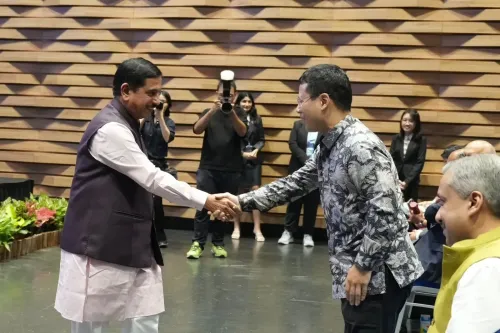
When young engineers and coders from two nations sit down together to solve real problems, bilateral diplomacy gets its most durable currency. Union Consumer Affairs Minister Pralhad Joshi on Monday, November 16, 2026, celebrated the conclusion of the 4th Singapore-India Hackathon, calling it a catalyst that has given India-Singapore relations 'a new and remarkable momentum.'
Youth innovation as diplomatic glue
The hackathon brings together young innovators from both countries to exchange ideas, collaborate, and develop solutions to real-world challenges — a format that moves bilateral engagement well beyond trade agreements and ministerial handshakes. India and Singapore have deep structural ties, anchored since 2005 by the Comprehensive Economic Cooperation Agreement (CECA), which explicitly envisioned expanded cooperation in science, technology, and innovation. Joint hackathons are one of the most visible — and arguably most grassroots — expressions of that commitment.
India's ASEAN tech outreach, edition by edition
This is the fourth edition of a platform that has become a steady fixture in India-Singapore people-to-people engagement. Each edition asks participants to tackle shared challenges, turning the event into a live laboratory for bilateral problem-solving rather than a ceremonial exchange. India's broader push to deepen innovation ties with ASEAN partners makes Singapore — a regional hub for digital infrastructure and deep-tech investment — a natural anchor for that strategy. The hackathon model, replicated across multiple bilateral partnerships, reflects New Delhi's deliberate use of youth-tech diplomacy as a foreign-policy instrument.
Minister Joshi's post carries the hashtags #SingaporeIndiaHackathon2026 and #SIH2026, signalling active governmental ownership of the event's public narrative. Whether any of the solutions developed in this edition advance to pilot or implementation phases will be the real test of the platform's long-term value — and the clearest signal of whether the momentum Joshi describes translates from rhetoric into results.
Point of View
Anchored by CECA since 2005, is increasingly expressed through innovation-layer diplomacy — a signal that New Delhi views people-to-people tech engagement as a durable complement to formal economic agreements. At four editions and counting, the hackathon has acquired enough institutional weight to be a genuine policy asset, not just a photo-opportunity. The question for policymakers is whether the pipeline from hackathon ideas to implemented solutions is being actively managed — because that is where the real bilateral dividend sits.
NationPress
16 Nov 2026
Frequently Asked Questions
What is the Singapore-India Hackathon?
The Singapore-India Hackathon is a bilateral annual platform that brings together young innovators from India and Singapore to collaboratively develop solutions to real-world challenges, forming part of the two countries' broader science, technology, and innovation cooperation.
How many editions of the Singapore-India Hackathon have been held?
As of 2026, four editions of the Singapore-India Hackathon have been held, with the 4th edition being celebrated by Minister Pralhad Joshi in November 2026.
What is the basis of India-Singapore cooperation in technology?
India and Singapore signed the Comprehensive Economic Cooperation Agreement (CECA) in 2005, which included provisions for expanding cooperation in science, technology, and innovation — the foundation for joint initiatives like the hackathon.
What did Pralhad Joshi say about the Singapore-India Hackathon?
Minister Pralhad Joshi said the 4th Singapore-India Hackathon has given India-Singapore relations 'a new and remarkable momentum' by uniting young innovators from both nations to exchange ideas, collaborate, and develop solutions to real-world challenges.
Why does India participate in bilateral hackathons with ASEAN countries?
India uses youth-focused innovation platforms like the Singapore-India Hackathon as part of its broader strategy to deepen people-to-people and technology ties with ASEAN partners, complementing formal diplomatic and trade agreements.