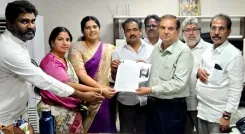
Kishan Reddy Hails Tribal Student Anvesh's IIT Journey
Synopsis
Union Minister G. Kishan Reddy spotlighted tribal student Anvesh's journey from Eklavya Model Residential School Balanagar to IIT Kanpur Physics, citing it as proof that government-backed free education is opening doors for tribal youth across India.
Key Takeaways
Anvesh , a tribal student from Hyderabad, Telangana , enrolled at IIT Kanpur to study Physics after attending Eklavya Model Residential School, Balanagar .
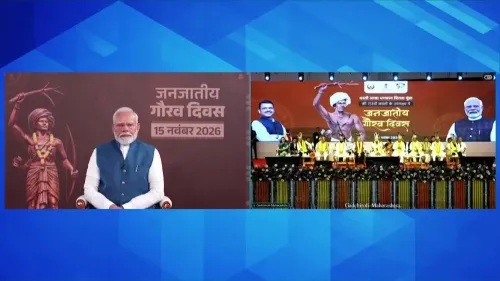
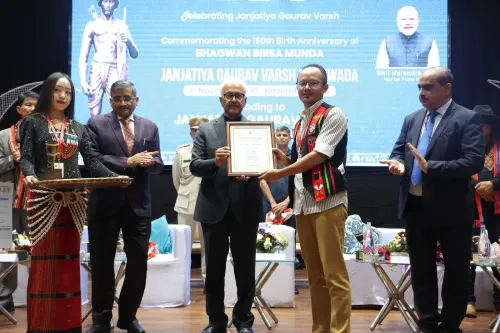
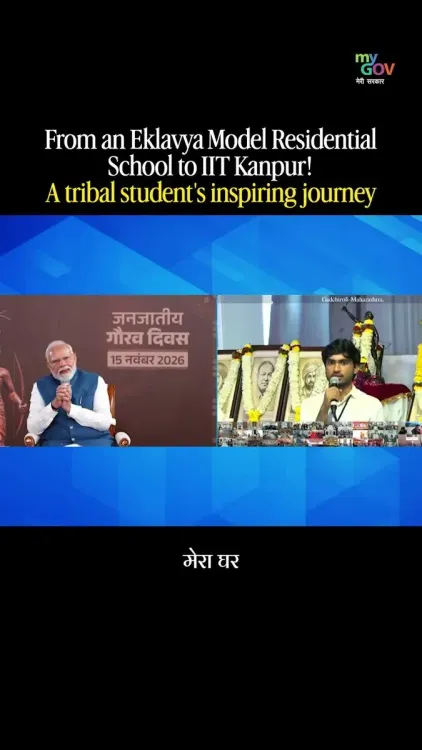
PM Narendra Modi personally interacted with Anvesh at the Janjatiya Gaurav Diwas national programme held in Gadchiroli, Maharashtra on 15 November .
The Eklavya Model Residential School (EMRS) scheme was launched in 1997–98 to provide free residential education and competitive exam coaching to Scheduled Tribe students.
Post- 2018–19 , the scheme targeted one EMRS per block where tribal population exceeds 50% , significantly expanding reach.
Kishan Reddy shared the story on 16 November 2026 under the #JanjatiyaGauravDivas campaign.
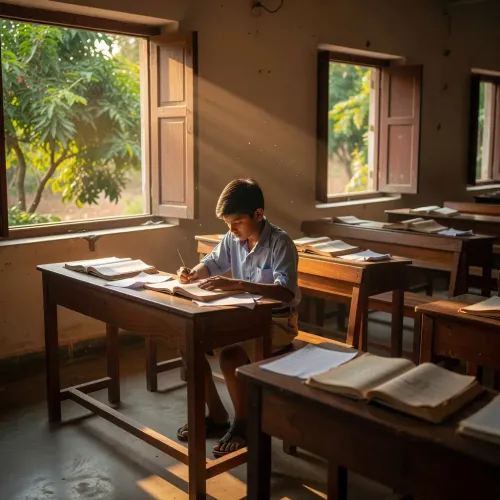
From a government residential school in Hyderabad's Balanagar to the physics labs of IIT Kanpur — tribal student Anvesh's journey captured the attention of Prime Minister Narendra Modi himself at the Janjatiya Gaurav Diwas programme in Gadchiroli, and Union Coal and Mines Minister G. Kishan Reddy has now amplified the story on 16 November 2026 as a testament to what free, quality education can unlock.
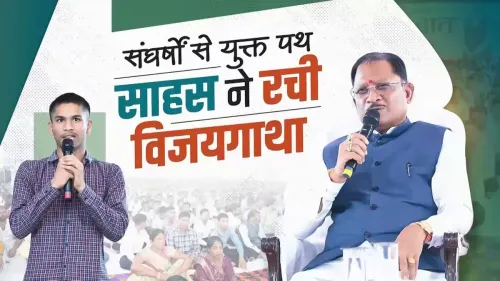
Reddy wrote: 'Anvesh, a tribal student from Hyderabad, Telangana, has made an inspiring journey from Eklavya Model Residential School, Balanagar, to IIT Kanpur, where he is pursuing Physics.' He added that PM Modi, at the Gadchiroli event, 'interacted with Anvesh and heard his inspiring story' — a moment the minister linked directly to the broader promise of government-backed tribal education schemes.
What the Eklavya School Network Actually Does
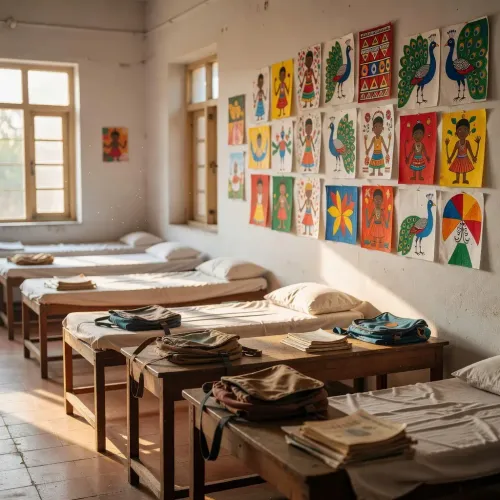
Anvesh's school — an Eklavya Model Residential School (EMRS) — is part of a network launched by the Ministry of Tribal Affairs in 1997–98 specifically to deliver free residential education to Scheduled Tribe students in remote areas, far from the urban coaching ecosystem that upper-income students take for granted. The schools also provide structured preparation for competitive entrance exams, the kind of coaching that can be the difference between a JEE attempt that lands and one that doesn't.
The scheme received a significant push after 2018–19, when the government set a target of establishing one EMRS in every block where tribal populations exceed 50% of the total. Scaling the network was a direct acknowledgement that physical proximity to quality schooling — not just intent — determines who gets a shot at India's premier institutions.
Gadchiroli, Birsa Munda, and the Politics of Visibility
Janjatiya Gaurav Diwas falls on 15 November every year — the birth anniversary of freedom fighter and tribal icon Birsa Munda. Gadchiroli, the Maharashtra district that hosted this year's national programme, is itself a tribal-majority region with a long history of developmental challenges. Choosing it as the venue sends a signal the government is plainly interested in sending.
PM Modi's on-stage interaction with Anvesh was precisely the kind of moment the administration has calibrated to merge welfare delivery with cultural pride — showing, through one student's story, that the state's investment in tribal education is producing outcomes, not just intentions.
A Bigger Pipeline Waiting to Be Watched
Anvesh's story is a data point, not the full dataset. The real measure will come in the next academic cycle's numbers: how many JEE seats, how many NEET qualifications, how many UPSC names trace their early schooling to an EMRS campus. Parliamentary budget discussions and tribal education allocation announcements will tell whether the network is expanding fast enough to match the ambition behind Reddy's post.
One tribal student at IIT Kanpur studying Physics is a headline. A hundred of them, year after year, is a policy outcome. The government has set that bar — the numbers will decide if it clears it.
Point of View
Anchored to Birsa Munda's legacy, gives the government a recurring annual platform to conflate cultural respect for tribal communities with tangible policy outcomes. The Eklavya school network, over two and a half decades old and now being rapidly scaled, is the most defensible evidence the Centre has of structural investment in tribal education — which is precisely why stories like Anvesh's are politically valuable and worth scrutinising for scale. The real test of the programme's depth will come not from prime-time interactions but from aggregate JEE and NEET data disaggregated by EMRS attendance.
NationPress
16 Nov 2026
Frequently Asked Questions
What is the Eklavya Model Residential School scheme?
The Eklavya Model Residential School (EMRS) scheme is a Government of India initiative launched in 1997–98 by the Ministry of Tribal Affairs to provide free quality residential education and competitive exam coaching to Scheduled Tribe students, particularly in remote tribal areas.
Who is Anvesh and why is he in the news?
Anvesh is a tribal student from Hyderabad, Telangana who studied at Eklavya Model Residential School, Balanagar, and secured admission to IIT Kanpur to study Physics. He was highlighted after PM Narendra Modi interacted with him at the Janjatiya Gaurav Diwas programme in Gadchiroli in November 2026.
What is Janjatiya Gaurav Diwas and when is it observed?
Janjatiya Gaurav Diwas is an annual national observance held on 15 November to mark the birth anniversary of tribal freedom fighter Birsa Munda and to celebrate tribal heritage and contributions.
Where was the Janjatiya Gaurav Diwas 2026 programme held?
The Janjatiya Gaurav Diwas 2026 national programme was held in Gadchiroli, a tribal-majority district in Maharashtra.
How has the EMRS scheme expanded in recent years?
After 2018–19, the government set a target of establishing one Eklavya Model Residential School in every block where the tribal population exceeds 50%, significantly scaling the network beyond its original coverage.