Piyush Goyal: India has earned world's trust through perseverance
Synopsis
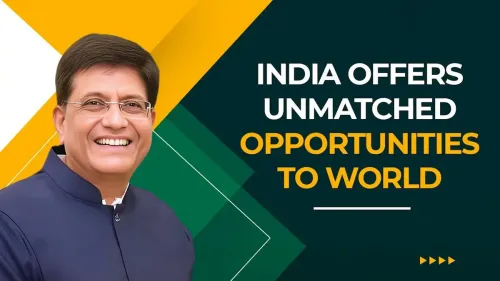
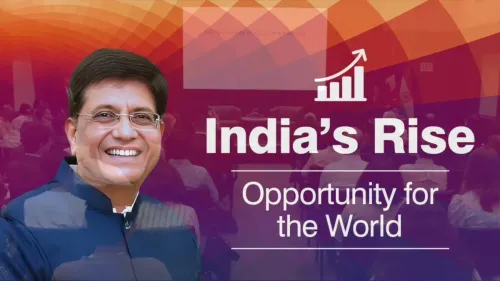
Union Commerce Minister Piyush Goyal declared on 27 May 2026 that India has weathered every storm and earned global trust through perseverance and action, reinforcing the government's narrative of economic resilience built on a decade of structural reforms and expanding trade diplomacy.
Key Takeaways
Piyush Goyal , Union Commerce and Industry Minister and Rajya Sabha Leader of the House, posted the statement on 27 May 2026 .
The post asserts India has 'earned the trust of the world through perseverance and action,' framing economic resilience as a deliberate policy outcome.
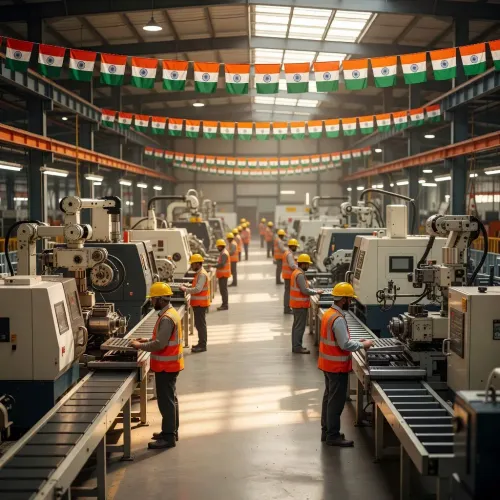
The Make in India scheme ( 2014 ) and Atmanirbhar Bharat package ( 2020 ) form the policy foundation cited for this resilience narrative.
India's G20 presidency in 2023 was a key platform for projecting this narrative of inclusive growth and supply-chain reliability.
Pending India-EU and India-UK free trade agreements remain the most watched near-term tests of India's trade diplomacy.
Key stakeholders include Indian exporters , the MSME sector , and foreign investors tracking policy continuity.
Union Commerce and Industry Minister Piyush Goyal on Wednesday, 27 May 2026 posted a pointed message on X affirming India's economic and diplomatic standing, stating that the country has 'weathered every storm, emerged stronger, and earned the trust of the world through perseverance and action.'
Context
The statement, brief but emphatic, arrives at a moment when India's trade and economic posture is under close international scrutiny. Goyal, who has led the Commerce Ministry since 2019 and serves as Leader of the House in the Rajya Sabha, has consistently framed India's economic trajectory as one defined by resilience against external shocks rather than dependence on favourable global conditions. The post carries no specific trigger or event reference, but its timing — amid ongoing negotiations on pending free trade agreements and a volatile global trade environment — gives it clear policy resonance.
Policy Backdrop
India's claim to global economic trust rests on a sequence of structural initiatives spanning more than a decade. The Make in India scheme, launched in September 2014, set out to position the country as a preferred global manufacturing destination and has been cited as a foundation for rising foreign direct investment inflows. The Atmanirbhar Bharat package, announced in May 2020, was designed to absorb the shock of the pandemic while accelerating domestic production capacity across critical sectors.
India's G20 presidency, assumed in December 2022 and carried through 2023, amplified this narrative on the world stage, with New Delhi advancing priorities around inclusive growth, supply-chain resilience, and multilateral cooperation. Successive statements from the Commerce Ministry have drawn a direct line between these domestic reforms and India's improved standing in global supply-chain indices.
Stakeholders and Impact
The constituencies most directly addressed by this framing include Indian exporters, the MSME sector, and foreign investors weighing long-term commitments in the country. For exporters, the message reinforces the government's intent to sustain and diversify market access even as global trade fragmentation intensifies. For investors, the emphasis on 'perseverance and action' signals policy continuity — a factor that has featured prominently in India's pitch to multinational firms reconsidering supply-chain geography.
The MSME sector, which forms the backbone of India's export ecosystem, stands to benefit most directly from any expansion of bilateral trade corridors. Goyal's ministry has been the primary driver of ongoing free trade agreement negotiations with the European Union and the United Kingdom, both of which remain at advanced but unresolved stages.
What's Next
The immediate policy watch centres on the pace of the pending India-EU and India-UK free trade agreements, where progress would give concrete weight to the minister's assertion of earned global trust. India's positioning at the next WTO ministerial conference will also be a test of whether the country's diplomatic capital translates into durable rule-setting influence. As the Commerce Ministry continues to anchor its messaging in the language of resilience and reform, the gap between rhetorical confidence and concluded agreements will be the metric by which observers measure the claim.
Point of View
Broad enough to address multiple audiences simultaneously. Coming from the minister who oversees both trade negotiations and the government's manufacturing push, the language of 'perseverance and action' is not incidental; it maps directly onto the Commerce Ministry's decade-long effort to reframe India as a rule-following, reform-driven economy rather than a difficult market. The timing, amid stalled FTA talks and a turbulent global trade order, suggests the message is aimed as much at negotiating partners abroad as at domestic business confidence. If the pending EU and UK trade deals close, the statement will read as prescient; if they stall further, it risks becoming a rhetorical placeholder.
NationPress
10 Oct 2026
Frequently Asked Questions
What did Piyush Goyal say about India on 27 May 2026?
Piyush Goyal posted on X that India has 'weathered every storm, emerged stronger, and earned the trust of the world through perseverance and action,' affirming the country's economic and diplomatic standing.
What is Piyush Goyal's role in the Indian government?
Piyush Goyal is the Union Minister of Commerce and Industry and serves as Leader of the House in the Rajya Sabha, overseeing trade policy and economic diplomacy since 2019.
What is the Make in India scheme?
Make in India is a government initiative launched in September 2014 to position India as a global manufacturing hub, attract foreign direct investment, and boost exports across sectors.
What trade deals is India currently negotiating?
India is in advanced negotiations for free trade agreements with the European Union and the United Kingdom, both of which remain unresolved and are closely watched by exporters and investors.
How has India demonstrated economic resilience according to the Commerce Ministry?
The Commerce Ministry has consistently pointed to structural reforms including Make in India, the Atmanirbhar Bharat package of 2020, and India's G20 presidency in 2023 as evidence of the country's capacity to withstand global economic shocks.