Piyush Goyal Keynotes India-Estonia Business Forum
Synopsis
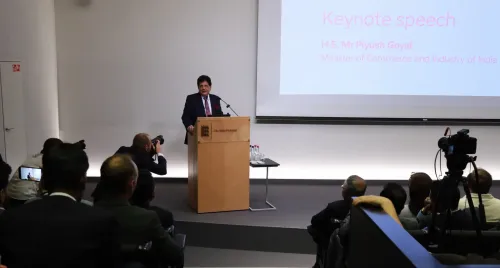
Union Commerce Minister Piyush Goyal keynoted the India-Estonia Business Forum on 17 July 2026 alongside Estonian Foreign Minister Margus Tsahkna, pitching India's digital and manufacturing strengths backed by the India-EU FTA framework as the foundation for deeper bilateral and EU-wide economic ties.
Key Takeaways
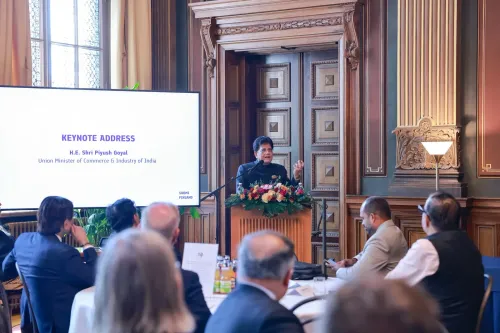
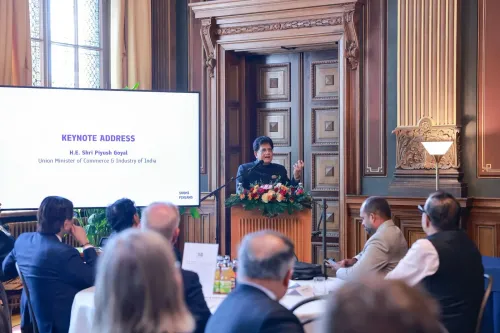
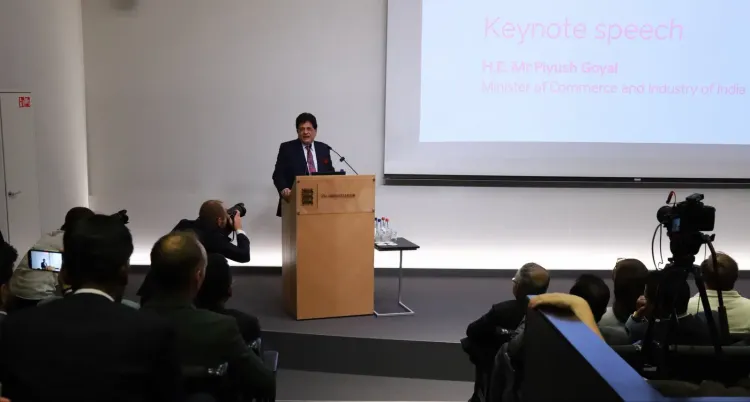
Minister Piyush Goyal delivered the keynote at the India-Estonia Business Forum on 17 July 2026 .
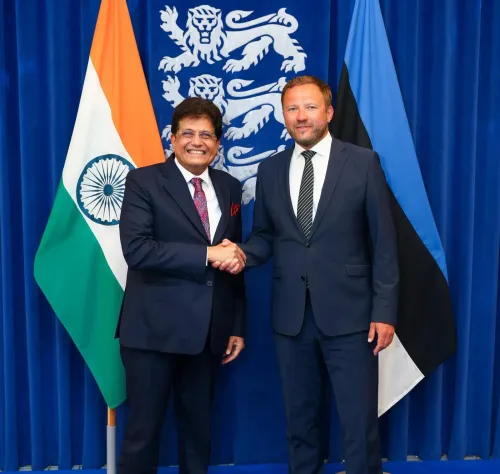
Estonian Foreign Minister Margus Tsahkna was present at the forum.
Goyal highlighted the convergence of India's digital leadership and manufacturing scale as a bilateral growth driver.
The India-EU FTA framework was cited as a structural enabler for deepening India-EU economic ties.
Goyal invited Estonian businesses to make long-term investments, citing India's reformed, transparent and competitive business environment.
India's bilateral EU member-state engagement runs parallel to ongoing multilateral India-EU FTA negotiations first launched in 2007 .
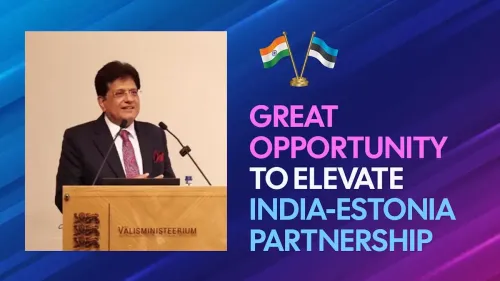
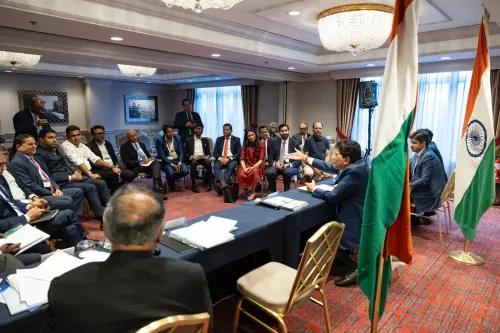
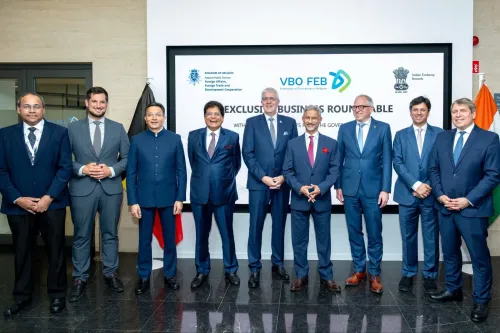
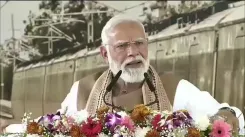
Union Commerce and Industry Minister Piyush Goyal delivered the keynote address at the India-Estonia Business Forum on Friday, 17 July 2026, in the presence of Estonian Foreign Minister Margus Tsahkna, underscoring the potential of combining India's digital strengths with its manufacturing base to deepen bilateral and broader India-EU ties.
Context
Speaking at the forum, Minister Goyal highlighted how India's digital leadership and scale, when paired with world-class manufacturing capabilities, can serve as a powerful engine for bilateral relations with Estonia — and by extension, for the broader India-EU partnership. He specifically cited the framework of the India-EU Free Trade Agreement as a structural enabler for this ambition. Goyal also extended a direct invitation to Estonian businesses to explore long-term investment in India, pointing to the country's 'transparent, stable and competitive business environment' shaped by sweeping reform measures in recent years.
Policy Backdrop
The India-EU Broad-based Trade and Investment Agreement — commonly referred to as the India-EU FTA — has a long negotiating history, with formal talks first launched in 2007 and subsequently relaunched after a prolonged pause. Progress in these negotiations has taken on renewed urgency as both sides seek to diversify supply chains and deepen economic linkages. Goyal's remarks at the forum align with India's broader economic diplomacy strategy of engaging individual EU member states bilaterally, even as multilateral FTA talks continue at the bloc level.
This approach draws on two flagship domestic programmes: the Make in India initiative launched in 2014 to attract foreign investment and boost manufacturing, and the Digital India programme launched in 2015 to expand digital infrastructure. Together, these have positioned India as both a large-scale digital services provider and an emerging manufacturing hub — a dual proposition that Goyal placed at the centre of his pitch to Estonian investors.
Stakeholders and Impact
Estonia, a Baltic EU member state, is internationally recognised for its pioneering digital governance model and a technology-driven economy. Its businesses are seen as natural partners for India's IT and digital sectors, while India's production-linked incentive schemes and eased FDI rules since 2014 make it an attractive destination for long-term capital. Goyal's direct outreach to Estonian investors signals that India views Tallinn not merely as a small EU economy but as a gateway to European digital expertise and capital.
Indian exporters stand to benefit if the India-EU FTA negotiations advance, as improved market access to the EU's single market could significantly expand opportunities for goods and services. Conversely, Estonian and broader European firms gain access to one of the world's fastest-growing large consumer markets, supported by a regulatory environment that has been progressively reformed through insolvency law overhauls and streamlined FDI approval processes.
What's Next
Attention will now turn to whether the forum translates into concrete follow-up investment commitments from Estonian firms in digital or manufacturing sectors. The next round of India-EU FTA negotiations will be a key indicator of how much momentum bilateral engagements such as this one can inject into the broader multilateral process. Minister Goyal's keynote, framed around structural reform and digital synergy, signals that India intends to keep individual EU member-state diplomacy active as a parallel track to bloc-level talks — a strategy that could accelerate the overall pace of the India-EU economic relationship.
Point of View
Goyal is also signalling to Brussels that bilateral traction with member states will be used as leverage in bloc-level talks. The forum thus serves a dual purpose: immediate investment outreach and long-game FTA diplomacy.
NationPress
16 Oct 2026
Frequently Asked Questions
What is the India-Estonia Business Forum?
The India-Estonia Business Forum is a bilateral platform bringing together government officials and business leaders from both countries to explore trade and investment opportunities, held in the presence of senior ministers from each side.
What did Piyush Goyal say at the India-Estonia Business Forum?
Minister Goyal highlighted India's digital leadership and manufacturing scale as complementary strengths, cited the India-EU FTA as an enabling framework, and invited Estonian businesses to make long-term investments in India's reformed business environment.
What is the India-EU FTA and where do negotiations stand?
The India-EU Broad-based Trade and Investment Agreement is a comprehensive trade deal whose negotiations were first launched in 2007, paused, and subsequently relaunched. Talks are ongoing, with both sides seeking to deepen economic integration.
Why is Estonia significant for India's trade diplomacy?
Estonia is recognised globally for its advanced digital governance model and technology sector, making it a natural partner for India's IT and digital strengths, even as it also serves as an entry point into the broader European Union market.
Who is Margus Tsahkna?
Margus Tsahkna is the Foreign Minister of Estonia, who was present at the India-Estonia Business Forum on 17 July 2026 alongside Union Commerce Minister Piyush Goyal.