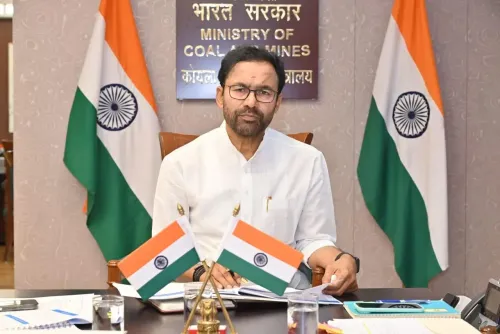
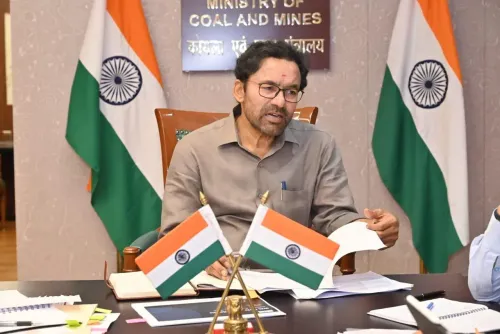
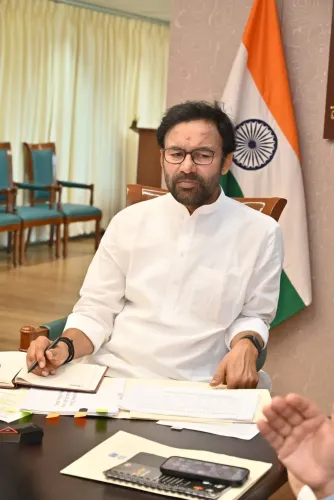
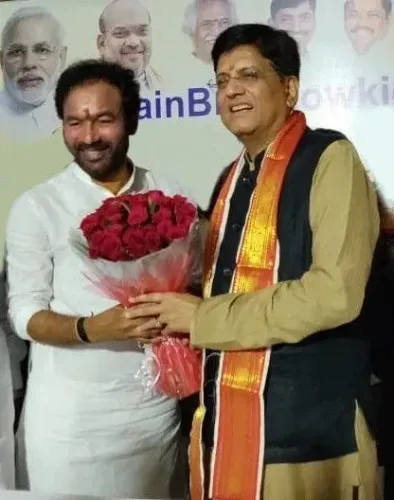
Goyal, Kishan Reddy Chair Meet on Coal, Mining Priorities
Synopsis
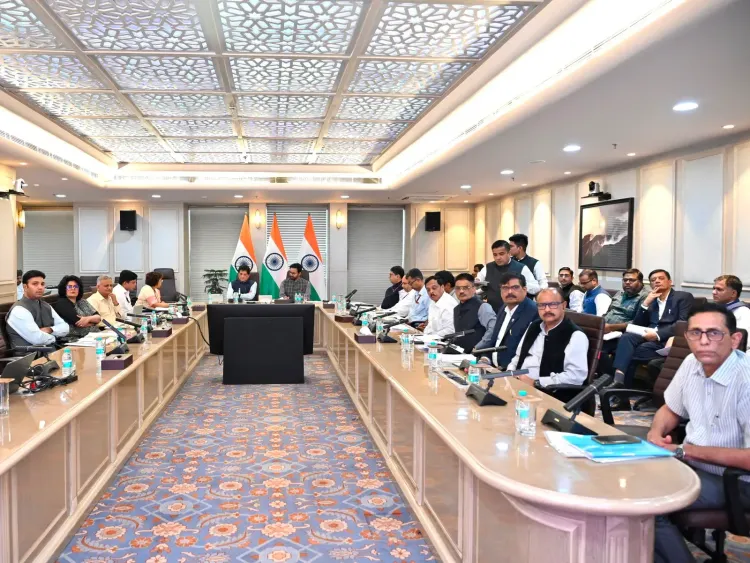
Union Commerce Minister Piyush Goyal and Coal Minister G. Kishan Reddy co-chaired a high-level meeting on 7 July 2026 to review coal and mining sector priorities, deliberating on sustainable mining, resource efficiency, private investment, and coal gasification opportunities tied to India's Viksit Bharat 2047 vision.
Key Takeaways
Kishan Reddy co-chaired an inter-ministerial meeting on 7 July 2026 to review coal and mining sector priorities.
Key agenda items included resource availability, accelerating mine development, and encouraging greater industry participation.
The ministers deliberated on sustainable mining, resource efficiency, investment promotion, and stakeholder collaboration.
Coal gasification was discussed as a strategic opportunity to enhance India's energy security and support industrial growth.
The meeting aligns with the government's Viksit Bharat 2047 vision and the broader Atmanirbhar Bharat framework for reducing import dependence.
The Ministry of Coal has a stated target of 100 million tonnes of coal gasification capacity by 2030 .
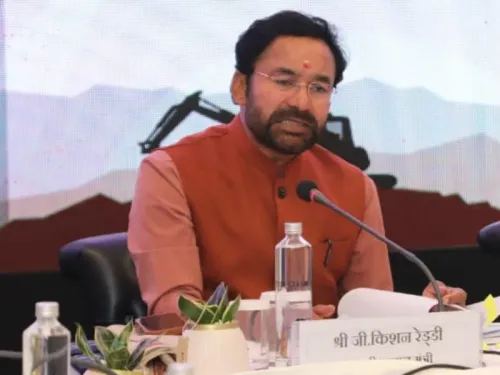
Union Commerce and Industry Minister Piyush Goyal on Tuesday, 7 July 2026, co-chaired a high-level inter-ministerial meeting with Minister of Coal and Mines G. Kishan Reddy to review key priorities across the coal and mining sectors, with a focus on resource availability, mine development, and industry participation.
Context
The meeting brought together the Commerce and Coal ministries in a joint review aimed at aligning resource development with industrial growth objectives. Goyal described the deliberations as covering 'measures to promote sustainable mining, enhance resource efficiency, encourage investments, and strengthen collaboration across stakeholders.' The joint format signals an integrated approach rather than siloed sectoral management.
The two ministers also explored opportunities in coal gasification as a means to enhance India's energy security and support broader industrial expansion — framing these as steps toward the government's long-term Viksit Bharat 2047 vision.
Policy Backdrop
The meeting builds on a series of legislative and administrative reforms that have reshaped India's mining landscape in recent years. The Mines and Minerals (Development and Regulation) Amendment Act, 2021 introduced auction-based reforms and eased private sector entry into commercial mining, opening the sector to greater competition and investment.
On the coal gasification front, the Ministry of Coal has previously announced a mission targeting 100 million tonnes of coal gasification capacity by 2030, aimed at reducing dependence on imported fuels and petrochemicals. The technology converts coal into syngas, which can substitute for natural gas in fertiliser production, power generation, and chemicals manufacturing — making it a bridge fuel in India's energy transition strategy.
The broader push sits within the Atmanirbhar Bharat framework, which seeks to raise domestic coal output, reduce import reliance, and link resource development with self-sufficient industrial supply chains.
Stakeholders and Impact
The sectors most directly affected by the meeting's agenda include mining companies, energy-intensive industries such as steel, cement, and fertilisers, and private investors eyeing opportunities unlocked by auction reforms. Accelerating mine development would have downstream effects on power generation capacity and industrial input costs.
The emphasis on sustainability and resource efficiency also points to growing regulatory expectations for the mining sector, as India balances its 2070 net-zero commitment with near-term energy demands. Coal gasification is increasingly positioned as a technology that can reconcile these competing pressures by extracting more value from domestic coal reserves while reducing direct combustion.
Inter-ministerial coordination of this kind — linking Commerce with Coal — reflects an effort to ensure that trade and industry policy is synchronised with upstream resource planning, reducing bottlenecks that have historically slowed industrial project timelines.
What's Next
Follow-up announcements from this meeting could include revised coal production targets, gasification pilot project approvals, or further amendments to mining rules that may be placed before Parliament. The involvement of the Commerce Ministry suggests that some outcomes may also feed into trade policy, including potential adjustments to coal import norms or export frameworks for processed minerals. Progress on these fronts will be a key indicator of how effectively India translates inter-ministerial coordination into on-ground outcomes for its energy and industrial sectors.
Point of View
Potentially reducing India's vulnerability on petrochemical imports. The Viksit Bharat 2047 framing gives the meeting political weight beyond routine administrative coordination, tying near-term sectoral decisions to the government's flagship long-horizon development narrative. Sustained inter-ministerial momentum of this kind will be tested by how quickly follow-up actions — gasification pilots, mine auction timelines, investment clearances — materialise on the ground.
NationPress
7 Jul 2026
Frequently Asked Questions
Why did Commerce Minister Piyush Goyal attend a coal and mining review meeting?
Piyush Goyal co-chaired the meeting to align Commerce and Industry priorities with coal and mining sector development, reflecting an integrated approach where resource availability and industrial growth policy are coordinated across ministries.
What is coal gasification and why is India focusing on it?
Coal gasification converts coal into synthetic gas (syngas) that can replace natural gas in power, fertilisers, and chemicals. India is pursuing it to reduce dependence on imported fuels and petrochemicals, with a Ministry of Coal target of 100 million tonnes of gasification capacity by 2030.
What is Viksit Bharat 2047?
Viksit Bharat 2047 is the Indian government's vision to make India a fully developed nation by the centenary of its independence in 2047, encompassing goals around energy security, industrial self-reliance, and economic growth.
What reforms have been made to India's mining sector in recent years?
The Mines and Minerals (Development and Regulation) Amendment Act, 2021 introduced auction-based allocation of mining blocks and eased private sector participation in commercial mining, aimed at boosting domestic production and attracting investment.
What outcomes are expected from the Goyal-Kishan Reddy coal meeting?
Possible follow-up actions include revised coal production targets, approvals for coal gasification pilot projects, and potential amendments to mining regulations that could be placed before Parliament, though no specific decisions have been officially announced yet.